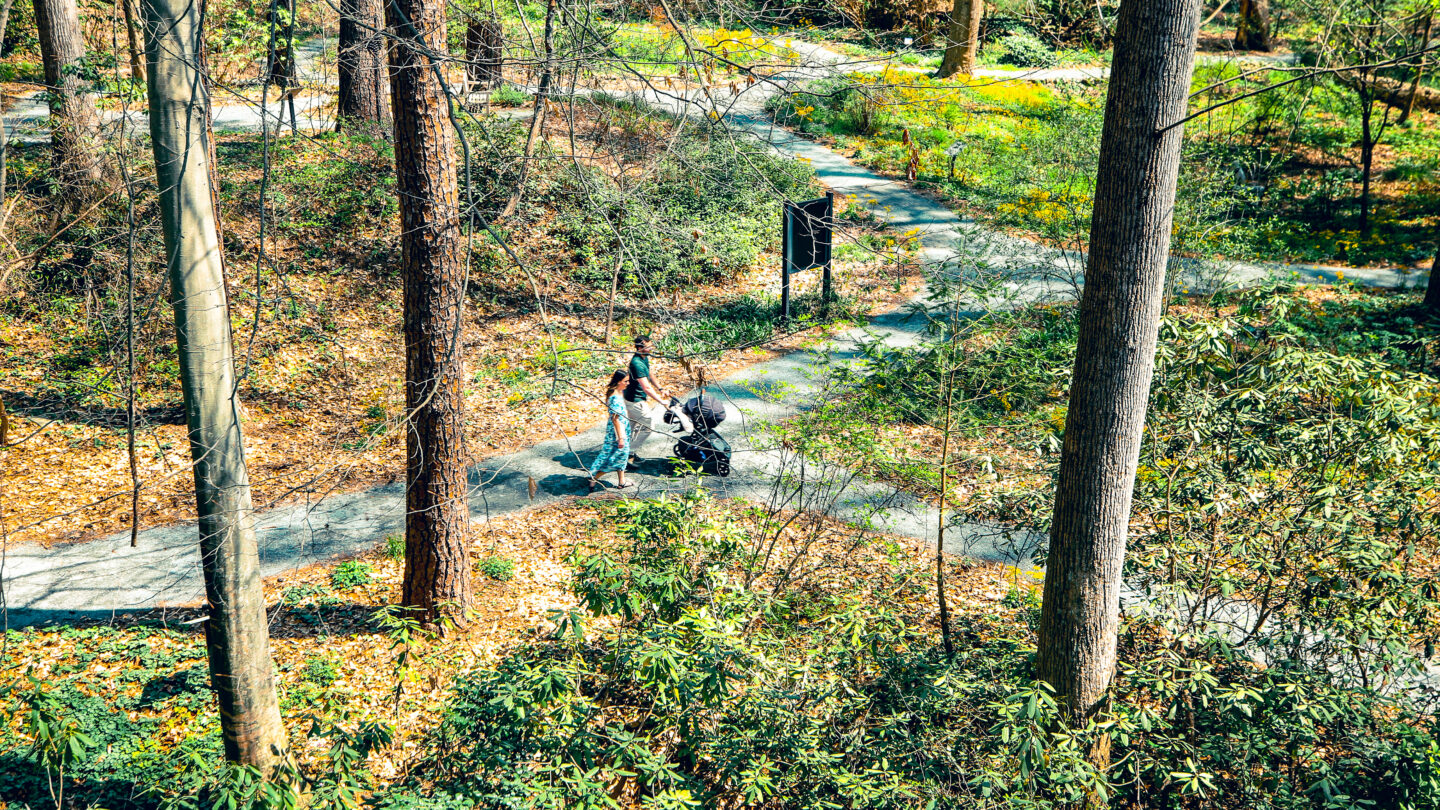
In the 1930s, when the Inman family lived in the recently built Swan House, the children never played in the old quarry that spanned three acres behind their property. The quarry had ceased containing the biotite gneiss that had been used in much of the construction of the city of Atlanta, and in the years since, the quarry had become a weed paradise and a natural detention pond.
Mildred “Mimi” Inman Bryant, who grew up in Swan House, told Atlanta History Center in 1993 that the quarry had been an “impenetrable jungle.” Through the decades, this jungle grew, and the quarry was all but forgotten.
Then, in 1974, it was rediscovered by the Atlanta Historical Society. They had been looking to expand their new headquarters with the proposed McElreath Hall, and came across a hidden pit that held within the history of Atlanta’s biodiversity. The Mimosa Garden Club took it on as a project, and hired nationally recognized horticulturalist Eugene Cline to turn the old quarry into a teaching garden with all plants native to Georgia.
“We have built wild flower beds and trails so visitors can see the flowers close up without stepping on them,” Cline said to The Atlanta Journal in 1976. “The flowers have been planted in a naturalistic manner – not a formal one. The beds follow the terrain of the soil. The garden will look more natural when it ages.”
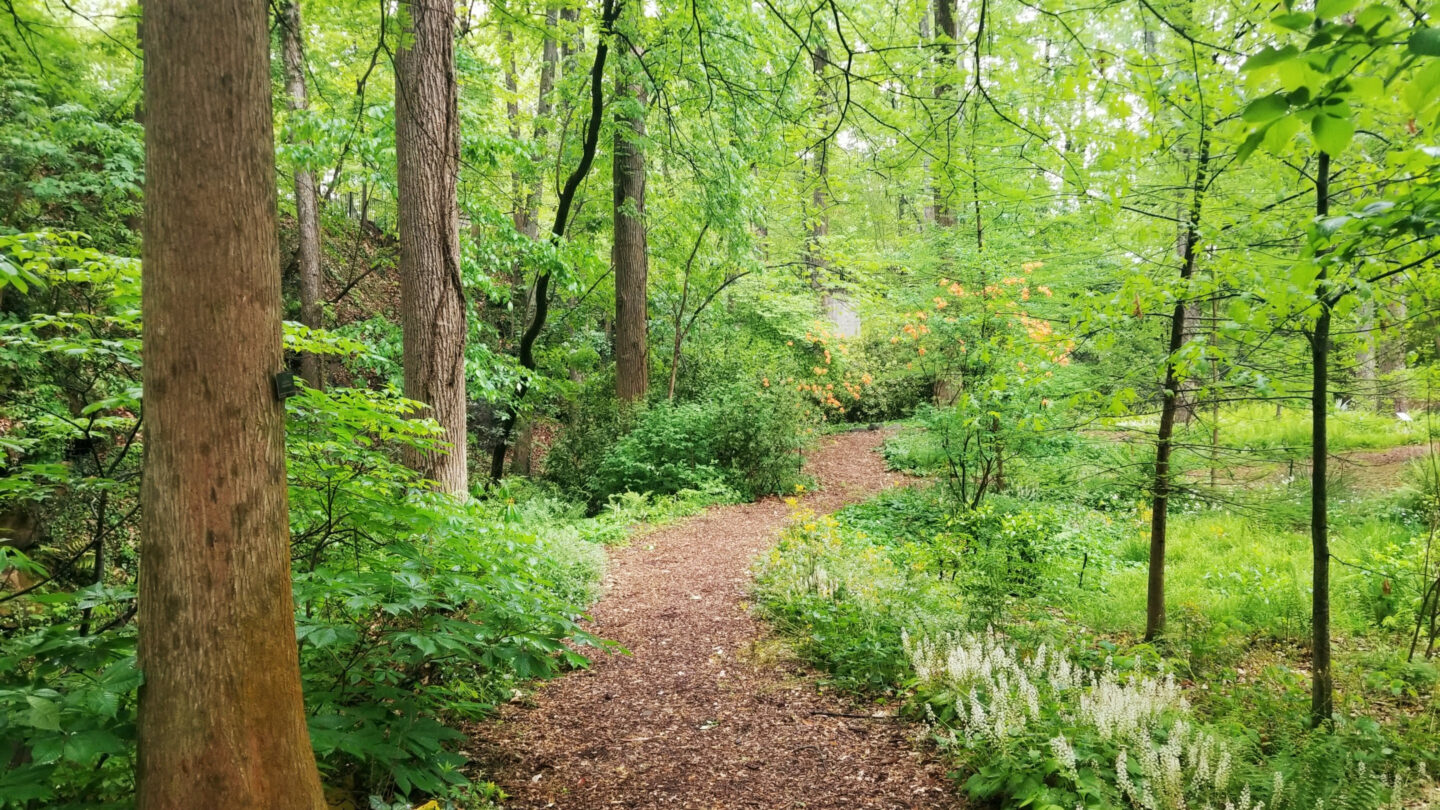
50 years later, the Quarry Garden at Atlanta History Center is now a sanctuary for Georgia’s largest native plant collection. A waterfall cuts through the high walls of the 25-foot-deep former rock quarry, down to a stream and nearby pond. The towering canopy shades plants once used for medicinal, spiritual, and practical purposes by the Muscogee (Creek) and early settlers. Though the Quarry Garden is only celebrating its 50th anniversary as a public garden, the history told within goes back centuries. Get as close as Eugene Cline hoped with a visit to the Quarry Garden at Atlanta History Center today!


