“Uncle Abe must be the next President or our work is all lost…I want peace as bad as anybody but I want it to end in a way to last… “
— Private William Tittle, 55th Ohio, near Atlanta, Georgia, November 5, 1864
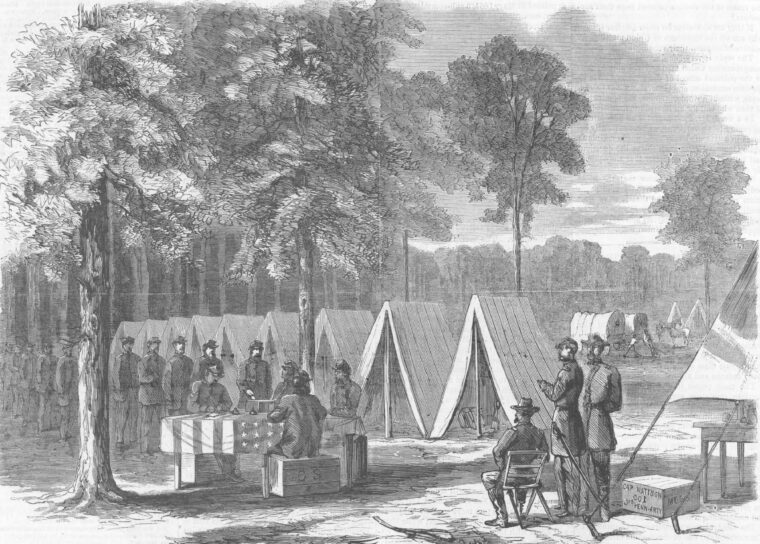
Members of the 3rd Pennsylvania Heavy Artillery voting in U.S. House of Representative elections, October 1864.
Courtesy University of Michigan
Widespread use of absentee voting in America can trace its origins to the Civil War. With the largest mobilization of American troops up until that point, many states recognized the need for soldiers fighting in the field to take part in the elections that decided how the war should be fought, especially the 1864 presidential election.
After 3 years of battles and bloodshed, the voters weighed whether to keep President Abraham Lincoln in office. Lincoln ran under the National Union banner with a promise to stay the course, reunify the country, and demand the unconditional surrender of the Confederacy. The Democratic Party nominated former General George McClellan and adopted a platform calling for peace by any means—including allowing for an independent Confederacy.
Votes came from all corners of the war – regiments manning the front lines, wounded men in hospitals, and guards at prison camps.
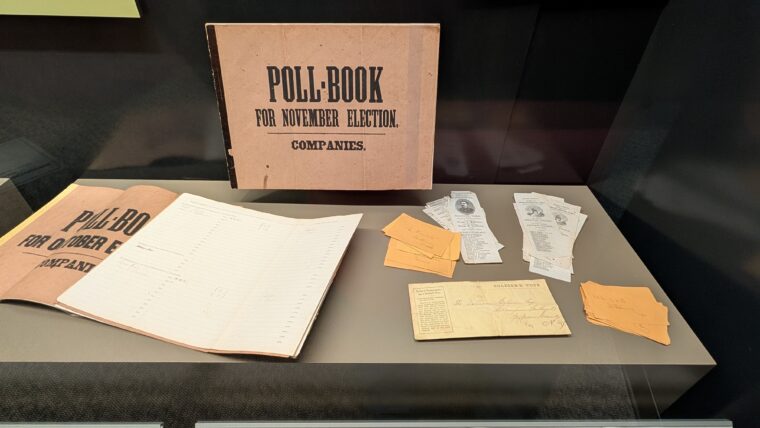
Poll books, ballots, and poll location cards for the 1864 presidential election currently on display in “More Perfect Union” exhibition at the Atlanta History Center.
Wisconsin had been allowing its soldiers to vote remotely as early as 1862, but by the presidential election of 1864, 17 other states implemented some degree of absentee voting.
Each state was left to its own devices to decide how to tally the soldier’s vote. Minnesota asked soldiers to present their ballots in sealed envelopes to appointed election commissioners, who would then deliver them to state officials. New York allowed soldiers to mail sealed ballots to a proxy in their home district, who cast the ballot on their behalf. Pennsylvania used the same system of proxy voting for soldiers detached from their units. Most states authorized polling places to be set up in the field wherever large groups of soldiers were stationed.
In many cases, officers were in charge of the polling stations, but under Ohio law, men present at the polls were allowed to elect by voice three election judges and two clerks who signed oaths to “studiously endeavor to prevent fraud.” Each voter presented his ballot to the judges, announcing his name and residence, which was recorded in poll books. When all votes had been cast, the judges opened the ballot boxes and recorded each vote on tally sheets. The votes were strung on thread along with a card noting the location of the poll. These strings were sent, along with the tally sheets and poll books, to the state’s canvassing board, and copies sent to county election officials.
And in these votes (and letters back home), their response was decisive; nearly 75% of soldiers in the field chose to keep Lincoln and to continue the fight.
Buoyed by the fall of Atlanta in September 1864, the country agreed. When the votes were tallied, Lincoln received 55% of the popular vote and swept every state in the Electoral College except Kentucky, Delaware, and New Jersey. In the concurrent House and Senate elections, Republican and National Union-aligned candidates increased their margins, turning slim majorities in each chamber into substantial ones.
With this mandate from the American people, Lincoln presided over the surrender of the Confederacy, the abolition of slavery, and a reunified country. The fate of the American Experiment was decided not just on the battlefield, but also at the ballot box.
Voting History Over the Years
1789-1868
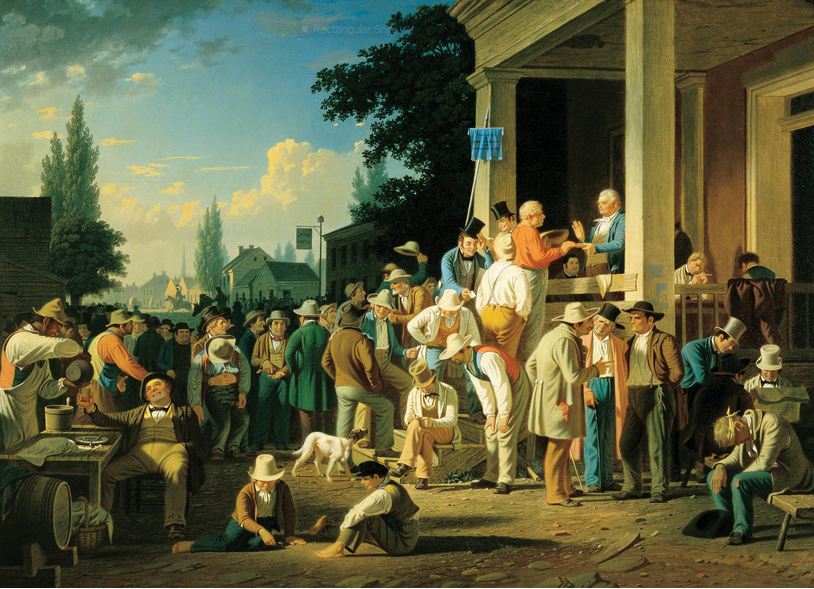
In the beginning
During the first few decades of America, the right to vote was restricted to white males, over 21, who owned property. Most states abolished property qualifications by the 1820s. [source]
1862-1864
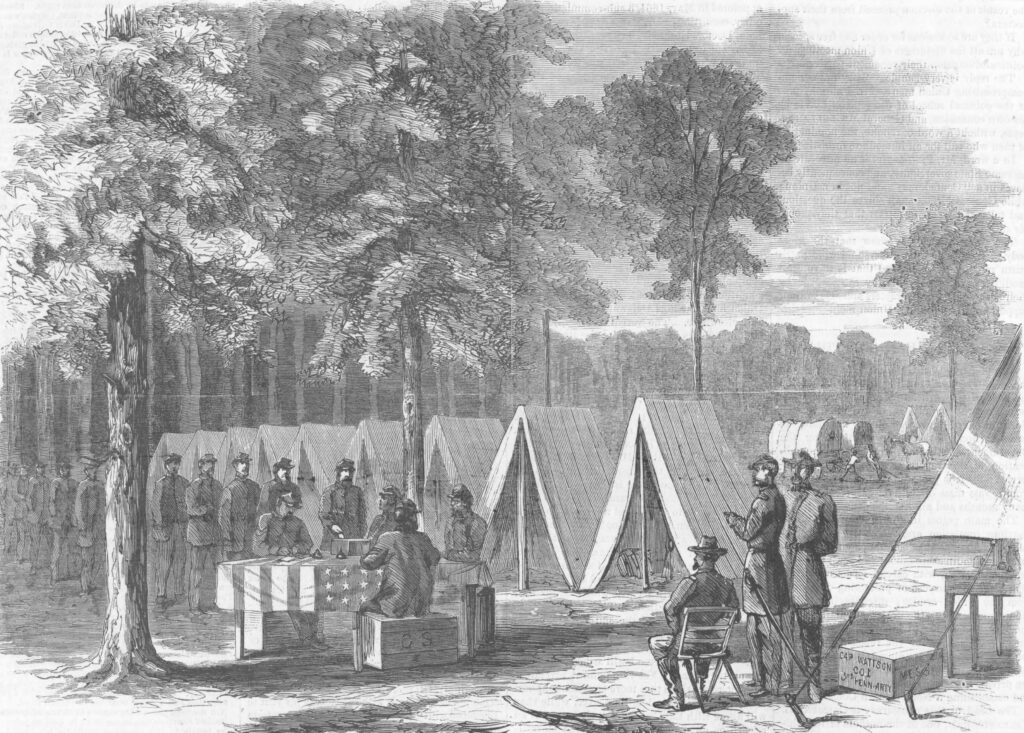
Absentee Voting
Widespread use of absentee voting in America first appeared during the Civil War. Wisconsin allowed its soldiers to vote remotely as early as 1862, and by the presidential election of 1864, seventeen other states (MN, OH, VT, WV, MI, MO, KY, IA, KS, MD, ME, CA, MA, NY, CT, PA, and NH) had various procedures in place.
1869
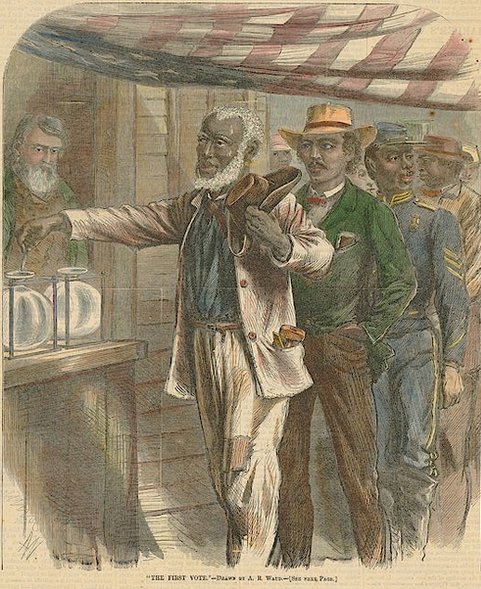
Fifteenth Amendment
Passed by Congress in 1869 and ratified in 1870, the Fifteenth Amendment prohibits voting discrimination on the basis of race. [source]
1884
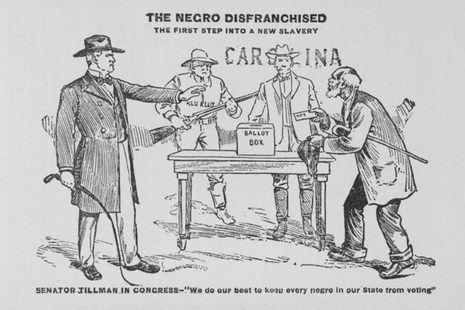
Jim Crow Era
President Rutherford B. Hayes, to settle the controversial 1876 Presidential Election, ends Reconstruction in the South. Now unimpeded, Southern Democrats implement legislation throughout the South to limit Black voting rights. Examples of Jim Crow suppression include laws mandating poll taxes and literacy tests to vote, as well as threats and violence against the Black community.
1890
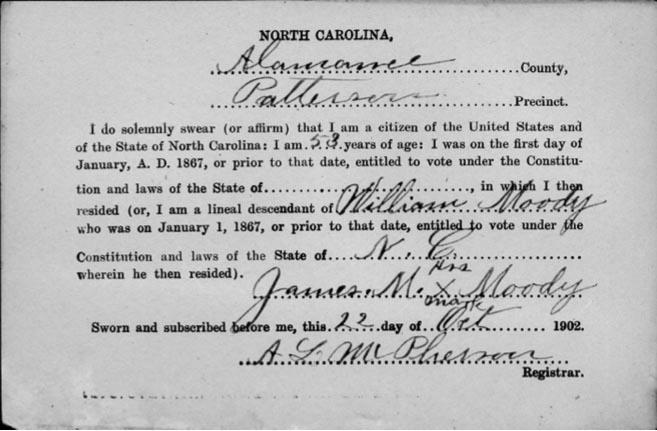
Grandfather Clauses
Mississippi adopts first grandfather clause, which exempted voters from literacy tests and other polling restrictions if their grandfathers had voted. This functionally barred Black voters from the polls. Other states would follow suit, including Louisiana, Virginia, and Georgia.
1920
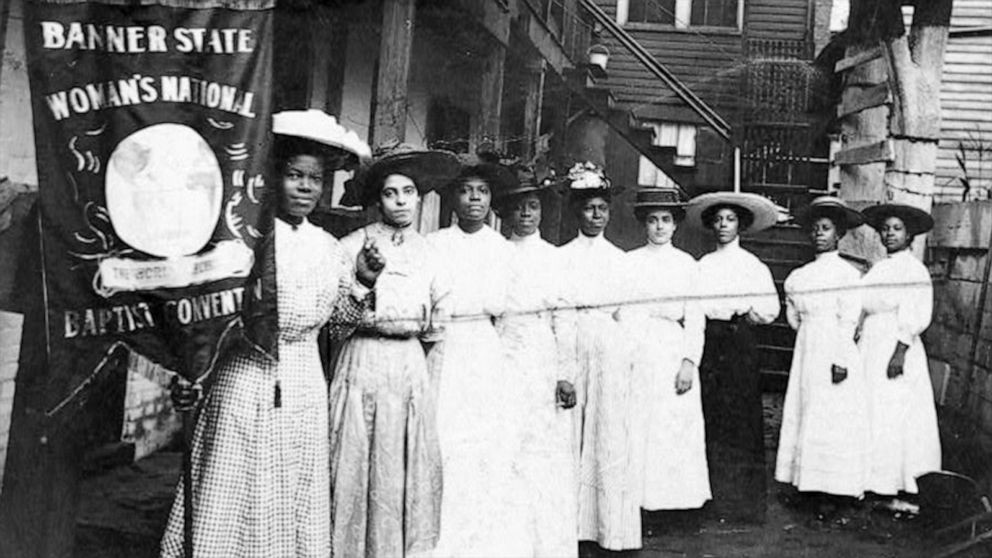
Nineteenth Amendment
Ratification of the Nineteenth Amendment prohibits voting discrimination on the basis of sex. In practice, the same restrictions that hindered the ability of non-white men to vote still applied to non-white women.
1924
Indian Citizenship Act
Though the Indian Citizenship Act extends citizenship to all Native Americans, the law falls short in extending voting rights, as states still find ways to deny voting access. [source]
1943
GA First to Lower Voting Age
Georgia becomes the first—and for 12 years, the only—state to lower the voting age to 18. The campaign — which argued that those who were old enough to fight in World War II should be old enough to vote—foreshadowed the successful campaign to lower the voting age nationwide in the aftermath of the Vietnam War. [source]
1964
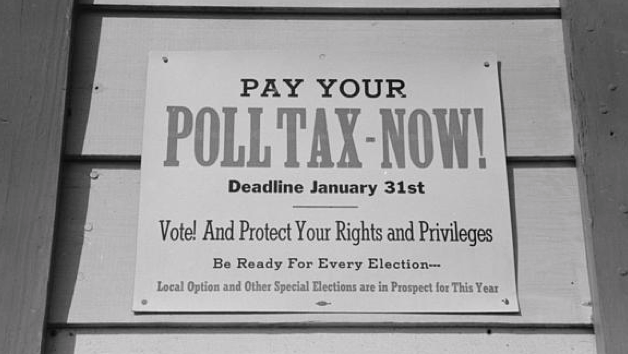
Twenty-fourth Amendment
Poll taxes for federal elections are outlawed with the ratification of twenty-fourth amendment.
1965
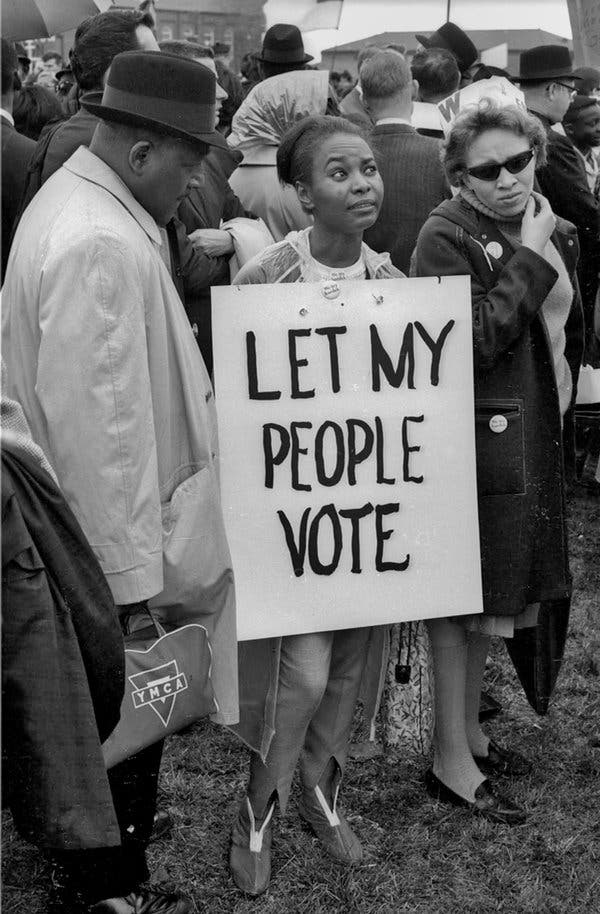
Voting Rights Act of 1965
Over 500 peaceful marchers travel from Selma to Montgomery to raise awareness for African American voting rights. The Voting Rights Act of 1965 is subsequently passed, prohibiting any election practice that denies the right to vote on account of race. By 1965, 250,000 new Black voters are registered.
1971
Twenty-sixth Amendment
Nation lowers voting age to 18 in aftermath of Vietnam War.
1973
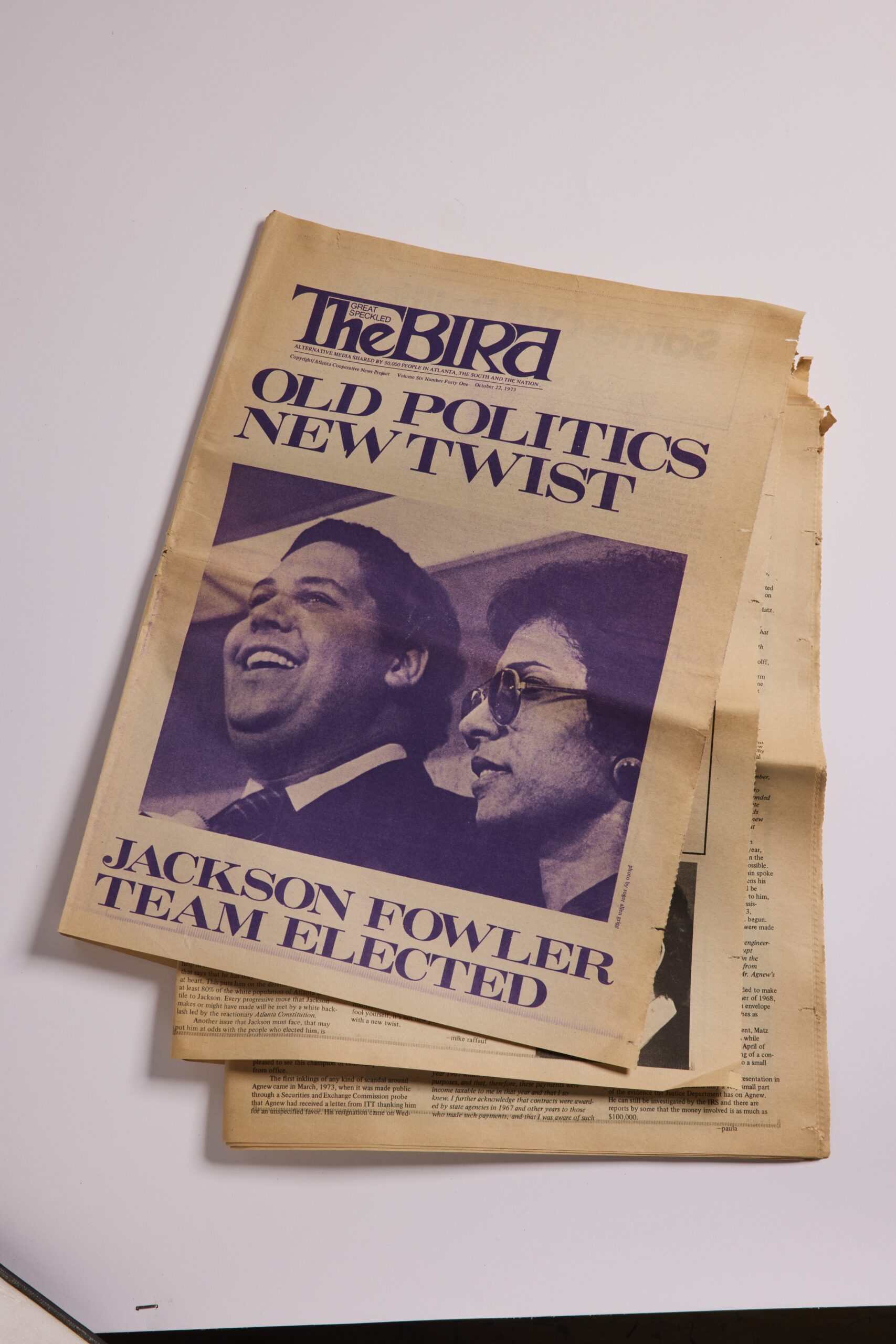
With a new Charter approved by the US Attorney General’s Civil Rights Division, Atlanta elects Maynard Jackson, the first Black mayor of Atlanta and of a major Southern city. [source]
1986
Uniformed and Overseas Citizens Absentee Voting Act
United States Military and Uniformed Services, Merchant Marine, other citizens
overseas, living on bases in the United States, abroad, or aboard ship are given the
ability to vote by absentee ballot.
1990
Georgia’s elected officials begin to match its electorate – by 1990, Georgia has 495 serving Black elected officials at different levels of government.
2011
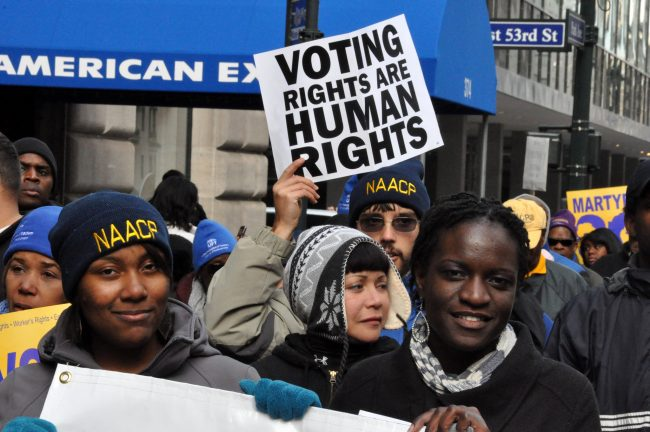
Voter Registration
State legislatures throughout the country introduced new laws limiting minority voters, including photo ID requirements, cuts to early voting and restrictions to voter registration. Many of these states have histories of voter discrimination and are covered under the VRA, including New York, Virginia, North Carolina, South Carolina, Georgia, Florida, Alabama, Mississippi, Louisiana, Texas, California, and others.
2013
Shelby County v. Holder
In Shelby County v. Holder, the United States Supreme Court, in a 5-4 decision, rules that Section 4 of the Voting Rights Act is unconstitutional. The majority opinion argues that that the section governing whether a state’s voting procedure should be reviewed is outdated, and must be readdressed by Congress. As of this piece, Congress has yet to adopt new rules. It is the first of many SCOTUS decisions deliberating on the Voting Rights Act. [source]
2020
Voting during COVID
Amidst a pandemic, voters turned out to the polls in record numbers, casting over 150 million votes for the first time in American history. This turnout would not have been possible without expanded voting practices first developed for the Civil War, with 69.4% of votes cast either by mail or in early voting. [source]
Additional Reading
Visit “More Perfect Union: The American Civil War Era” exhibition during your next visit to Atlanta History Center.
Grab Tickets