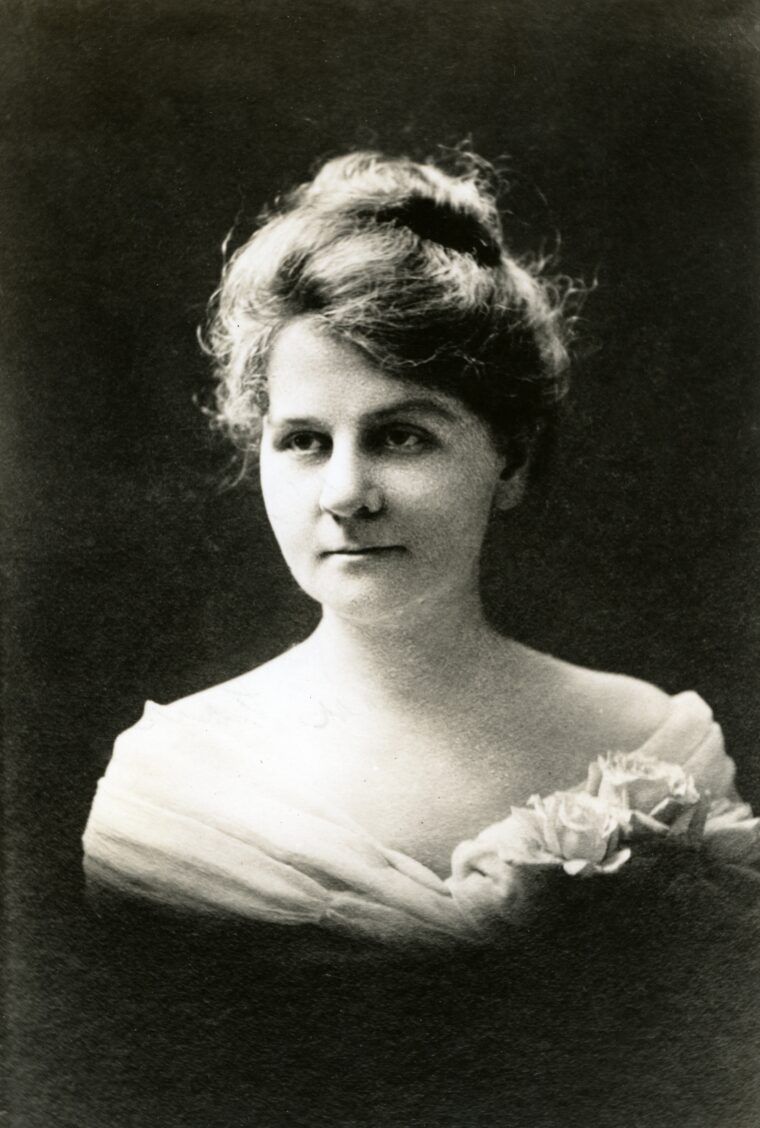
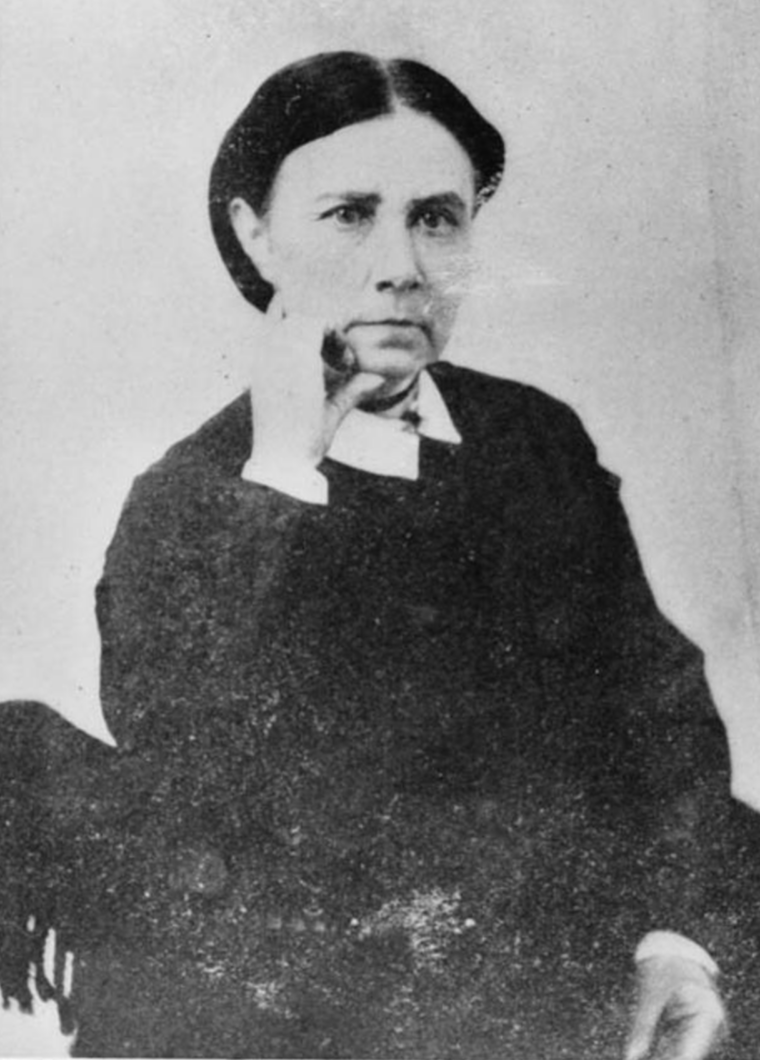
Myrta Lockett Avary in the early twentieth century, when she began her career as an author with the publication of A Virginia Girl in the Civil War in 1903. Courtesy of Kenan Research Center at Atlanta History Center.
This piece contains original unedited versions of all content. That content may contain racist language or depictions, negative stereotypes, and offensive language. These items are presented as part of the historical record for the purpose of education and research.
In late 1936 and early 1937, “Atlanta’s ‘queen of writers’” went on a press run.[1]
Her stops included the Atlanta Journal, where she had worked as a reporter to support herself after the collapse of her marriage, and WSB Radio, where her friend Medora Field Perkerson spoke with her about her writing process.[2] Her book focused on the drama of the Civil War and Reconstruction, and the press promoted it as “a book of decided interest to all Southerners,” though its appeal to readers across the country was also touted in reviews.[3]
Who was this “queen of writers?” She was not Margaret Mitchell, whose recently published novel, Gone With the Wind, had just received the 1937 Pulitzer Prize for Fiction.
Rather, she was Myrta Lockett Avary, and she was promoting a republished edition of her 1906 book, Dixie After the War: An Exposition of Social Conditions Existing in the South During the Twelve Years Succeeding the Fall of Richmond. One of many publications from the era perpetuating the Lost Cause narrative, Dixie After the War wasn’t receiving all that attention based on the strength of Avary’s writing alone. In fact, it had gone out of print shortly after its original publication.
But it owed Gone With the Wind a debt of gratitude. Dixie After the War was taken up for republication in late 1936 thanks to Avary’s savvy marketing skills and help from her friend and mentee Margaret Mitchell.
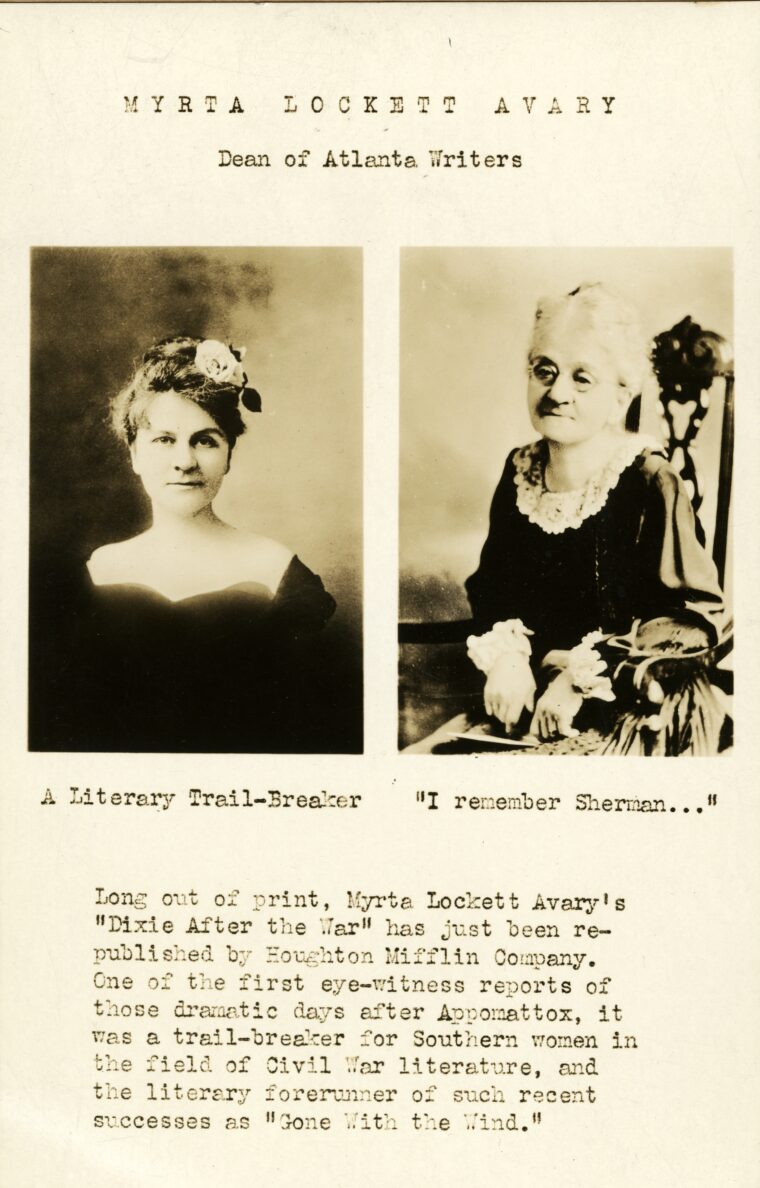
Myrta Lockett Avary circa 1906 and 1936, when her book, Dixie After the War was published and republished. Courtesy of Kenan Research Center at Atlanta History Center.
Though she had lived much of her life in wealth and comfort, by 1936, Avary was struggling financially. Her heart problems forced her into a nursing home shortly after her eightieth birthday, and she feared the specter of the local tax assessor, who was investigating her for tax fraud. [4]
Mitchell, who had been aware of these issues for some time, did what she could to help her friend well before Gone With the Wind was published, visiting or sending her small amounts of pocket money. After Gone With the Wind was published in June 1936 and Mitchell’s success as an author became clear, Avary began to develop a scheme to build on Gone With the Wind’s popularity and asked her friend for a more complicated favor.
In December of 1936, Avary wrote to her publisher to request that they return the print plates for Dixie After the War, in hopes that she might get it republished by “a local print shop.”[5] Just two days after Avary sent her initial request, her ambitions broadened, and she had a powerful ally.
“Margaret Mitchell,” she wrote, “wishes to get some of my books into print; I think she can if I can assure her at once and authoritatively of my right to have some other publisher than yourselves do this.” Mitchell had even offered to pay the $35 fee (over $800 today) to buy back the plates.[6]
Things continued to move quickly. Four days later, Avary, who was anxious that her book be republished for more than just reasons of finance, gave Mitchell the rights to Dixie After the War in case of her death, so that the process could go on.[7]
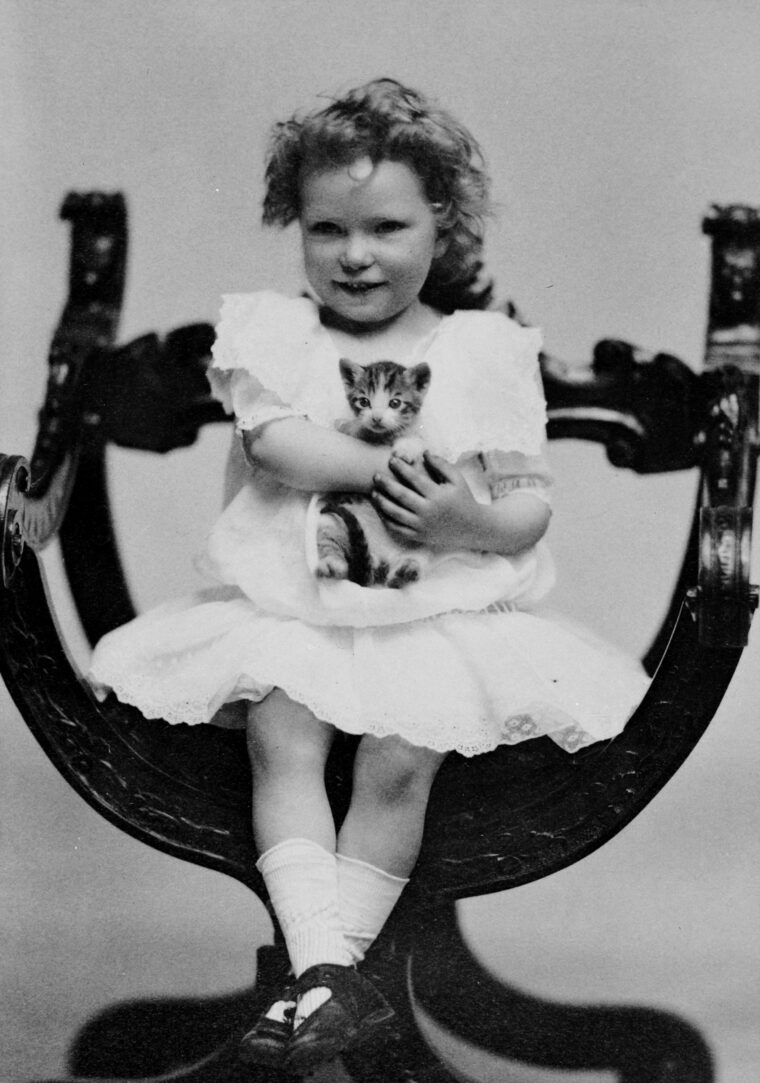
Margaret Mitchell as a small child. This photo was taken roughly when Myrta Lockett Avary would have been publishing her books for the first time. Courtesy of Kenan Research Center at Atlanta History Center.
Things didn’t always go smoothly. In addition to her heart problems, Avary’s mental health declined. Shortly after granting Mitchell the posthumous rights to Dixie After the War, Avary became convinced that Mitchell was attempting to steal her book, and she later leveled similar accusations against her publisher.[8] Though her paranoia slowed the process, Dixie After the War was republished in early 1937.
The new edition was marketed alongside Gone With the Wind not only because of the books’ focus on the Civil War and Reconstruction, or even because of Mitchell’s friendship with Avary; Margaret Mitchell relied heavily on Dixie After the War as she wrote and researched Gone With the Wind, along with another of Avary’s books, A Virginia Girl in the Civil War, 1861-1865: Being a Record of the Actual Experiences of the Wife of A Confederate Officer.
Both books were dramatized compilations of other women’s Civil War stories that Avary put together in the early twentieth century. Their contents shaped Gone With the Wind, which would not have been the book that it is without Avary and her writing.
Margaret Mitchell always loved history.
Her parents raised her on stories of Atlanta and Georgia’s past, and her father, Eugene Mitchell, was one of the founding members of the Atlanta Historical Society, now known as Atlanta History Center. She fondly remembered spending Sunday afternoons sitting “on the bony knees of veterans and the fat slick laps of great aunts and [hearing] them talk about the times when Little Alex [Alexander Stephens, Vice President of the Confederacy] was visiting and how much fried chicken Father Ryan [a prominent Confederate poet] could put away […].”[9]
When she started writing Gone With the Wind, this love (and a desire to avoid older relatives coming down on her like “a duck on an June bug” over incorrect details) ensured she worked hard to make her novel historically accurate.[10]
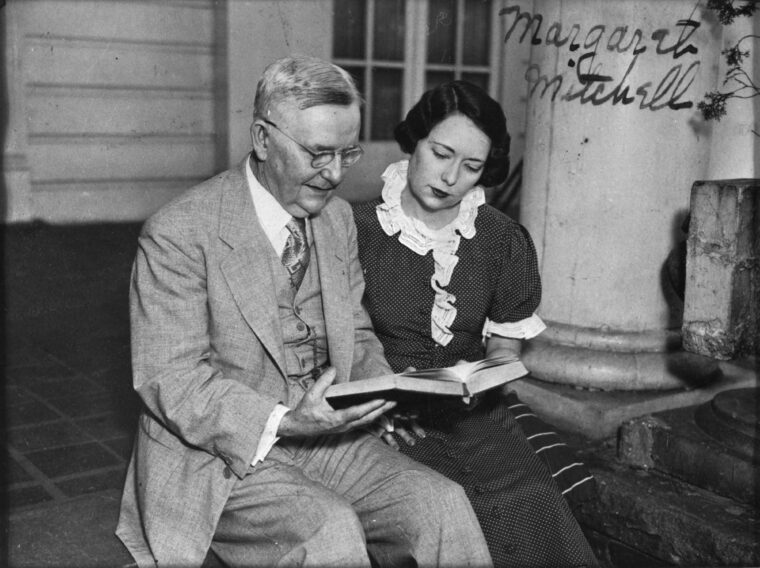
Margaret Mitchell with her father, Eugene Mitchell, looking at a copy of Gone With the Wind. Eugene, a Civil War history buff, was a founding member of the Atlanta Historical Society (now Atlanta History Center). His love of Civil War history encouraged Mitchell’s rigorous research process and helped her find sources. Courtesy of Kenan Research Center at Atlanta History Center.
She wrote to one fan, “Practically all of the incidents in the book are true. Of course, they didn’t all happen to the same person and a few of them didn’t happen in Atlanta,” but, Mitchell argued, the historical record made clear that the incidents in question could have occurred, making them excellent candidates for plot points in Gone With the Wind.[11]
Many of the iconic moments in her story, such as Scarlett, Prissy, and Melanie’s escape from a burning Atlanta, come directly from the works of memoirists of the Civil War and Reconstruction like Myrta Lockett Avary. Scarlett and Melanie’s escape, for example, comes from Mary Ann Harris Gay’s Life in Dixie During the War, which includes an account of a collapsing cart, decrepit horse, and ailing pregnant women frantically fleeing Atlanta.
Margaret Mitchell read dozens of memoirs as part of her research for Gone With the Wind and was very proud of their influence on her book. When Steven Vincent Benét, one of her favorite authors, noticed how many stories from Confederate memoirs were in Gone With the Wind, she was thrilled: “Do you know, you’re the only reviewer who has picked up the diaries and memoirs out of my background? Of course, I used everybody from Myrta Lockett Avary to Eliza Andrews and Mary Gay and Mrs. Clement Clay and Miss Fearn and Eliza Ripley and the Lord knows how many unpublished letters and diaries.”[12]
Mitchell’s reliance on these authors shows in her personal library, which her husband donated to the Atlanta Public Library after her death in 1949. One third of the books Mitchell owned before the publication of Gone With the Wind were the memoirs of former Confederates. Myrta Lockett Avary comes first in the list of influential memoirists in Mitchell’s letter to Benét. She is also a prime example of the two ways Mitchell used the memoirs of former Confederates: as sources of plot and examples of historical reality.
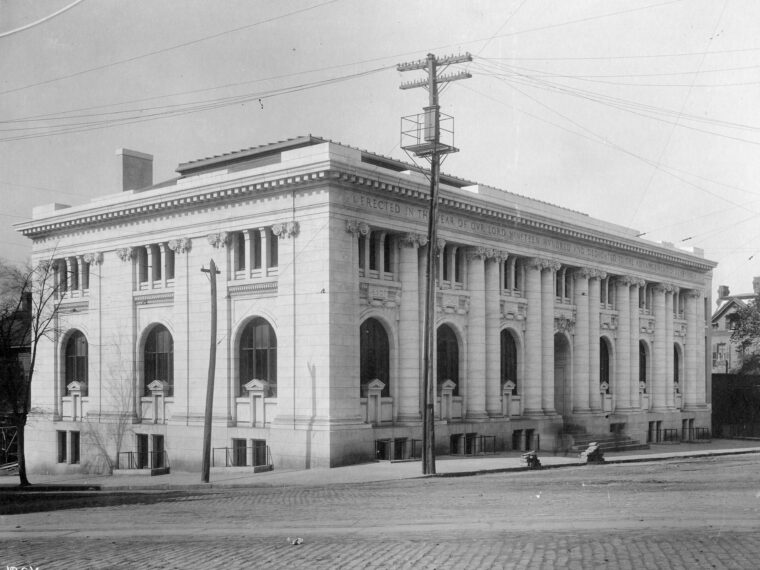
Atlanta’s Carnegie Library, now the Atlanta Fulton County Public Library, where Margaret Mitchell did much of her research for Gone With the Wind. Mitchell’s copy of Dixie After the War was donated to the library after her death. Courtesy of Kenan Research Center at Atlanta History Center.
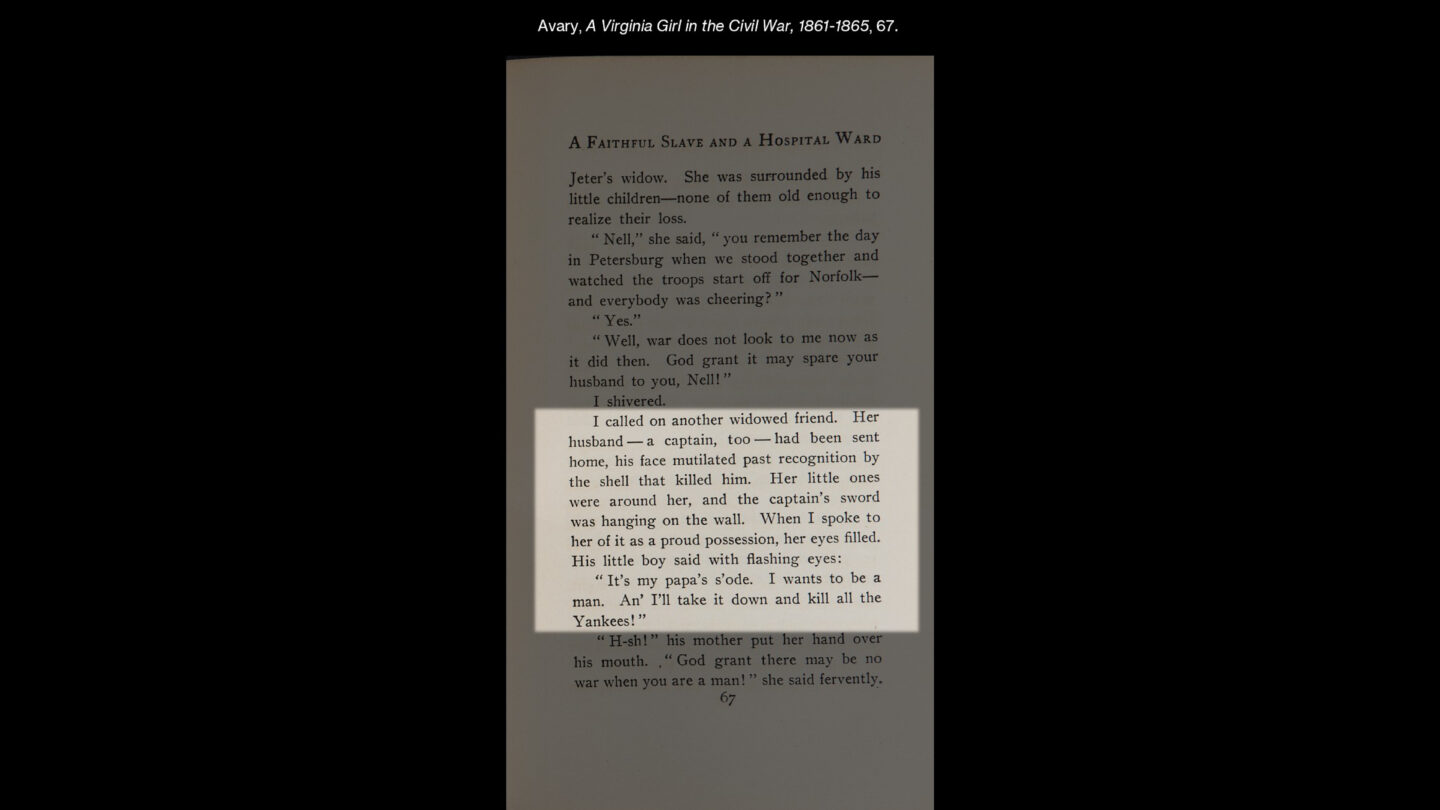
One of the clearest examples of Avary’s influence on the plot of Gone With the Wind comes during Scarlett’s early days in Civil War-era Atlanta, in one of the story’s most famous scenes – Scarlett’s dance with Rhett Butler at a fund-raising bazaar for the Confederacy:


This scene is a much more dramatic (and significantly longer) version of a story told by Myrta Lockett Avary in A Virginia Girl:


Avary’s story is more sedate, and reflects her Victorian standards, rather than Mitchell’s Jazz age morals. Despite variation reflecting these differences – Dan, Avary’s hero, buys copious trinkets from his love interest, rather than a dance as Rhett, Mitchell’s hero, does – specific details in each story match exactly. An old friend persuades both young women’s chaperones to allow them to participate despite their state of mourning, they sell wares from behind booths with similar decorations; even details of their outfits, such as onyx mourning jewelry, match.
Later in Gone With the Wind, when Scarlett has returned to Tara, her family home, and is attempting to protect it from Union soldiers marching through Georgia with General Sherman, another story very similar to one of Avary’s appears:


Margaret Mitchell didn’t just use Myrta Lockett Avary’s books to add color to Gone With the Wind. Passages from Avary’s writing appear in the voice of Gone With the Wind’s omniscient narrator, delivering information on the historical happenings of Reconstruction in the second half of the book:
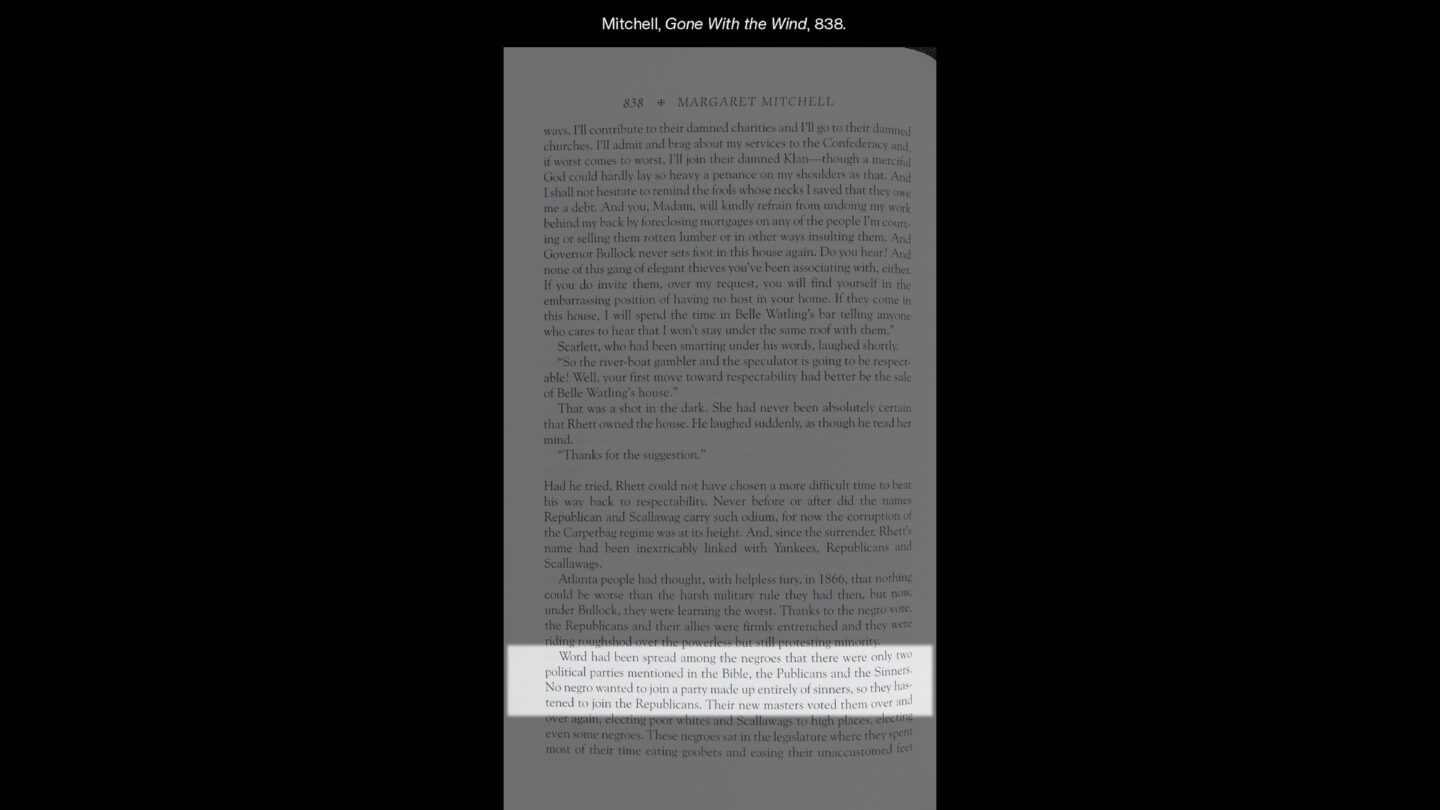
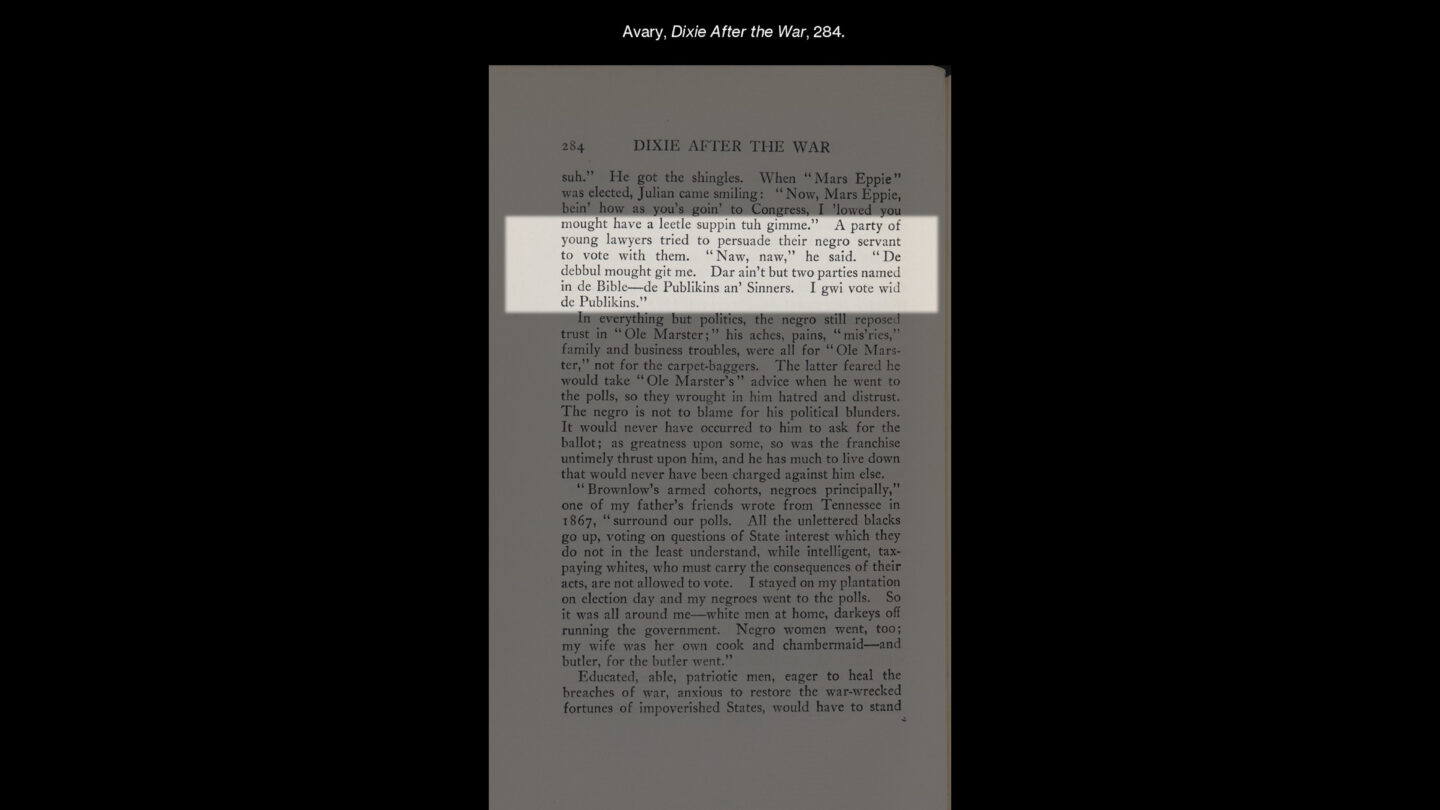
Passages like this are invaluable when trying to understand how a painstakingly detailed researcher like Margaret Mitchell could write a book that is filled with both historical detail and inaccurate information reflecting the Lost Cause narrative rather than the Civil War-era South.
Like many Confederate memoirs owned by Mitchell, Myrta Lockett Avary’s books traffic heavily in the narrative of the Lost Cause, which attempted to justify Confederate states’ rebellion against the United States government and downplay slavery as a motivating factor in the war. In keeping with this narrative, these books depict the Confederacy as innocent, embodying the ideals of chivalry, and ordained by God. They argue that the Confederacy fought to defend states’ rights, and that slavery was brought into the war by the malicious agitations of misguided abolitionists. They depict slavery as a benign institution and justify it through deeply racist depictions of Black people. In Avary’s books, Union soldiers are barely human monsters who revel in committing war crimes (it’s worth noting that she was praised for her evenhanded portrayal in 1906). Avary also depicts Reconstruction as an apocalyptic period of torturous and undeserved social and political persecution for white Southerners.
Avary makes these arguments in part through the use of tropes – repeated scenes, characters, or ideas – that reoccur throughout her book and serve as shorthand for specific ideas that support her view of the Civil War and its aftermath. These tropes appear regularly in Avary’s books, and in many other Confederate memoirs Margaret Mitchell used to research Gone With the Wind.
Mitchell’s characters and narrator repeatedly use information from Avary’s books to describe Gone With the Wind’s historical background, incorporating the tropes Avary used to develop her Lost Cause stories in the process.
Glorified White Womanhood


Avary’s descriptions of plantation mistresses’ roles, and Mitchell’s adaptations of those descriptions were partly based in fact. A great deal of work went into managing what historian Catherine Clinton calls the “[l]ush, conspicuous splendor […] meant to hide the wrenching work [enslaved labor] necessary to maintain the[se] grandiose estates.”[13]
For wealthy white women like Scarlett’s mother Ellen, this typically meant housekeeping on a scale closer to managing a small company. They would have been responsible for managing their enslaved workforce and their living conditions, including distributing food and clothing and delegating labor. Though the work described by Mitchell and Avary touches on the reality of life for planter-class white women, their labor was far from the holy endeavor the two authors described.
Wealthy white women did this work because it was expected of them, and often passed less desirable tasks to the enslaved housekeepers Mitchell and Avary portray as being their symbiotic partners. Though they might have expected to handle births, deaths and medical care of enslaved people, in practice, many enslaved people handled these things on their own whenever possible. White women’s responsibilities also regularly involved a task Mitchell and Avary do not mention at all; they meted out violent punishments to those who failed to carry out household tasks to their satisfaction.[14]
The version of wealthy white women’s work in the antebellum South described in Dixie After the War and Gone With the Wind was not reality, but a tropified version of it, built around idealized expectations of white women and used to make an argument about the morality of slavery in the aftermath of the Civil War. This trope relied on the separate spheres ideology, which argued that men and women were inherently biologically different, and that men ought to lead their families in the world and in the home, while women, subservient to their male family members, managed domestic affairs.
In the antebellum South, this hierarchical structure also helped justify slavery as a positive system in which a white man’s “protective” control extended to the people he enslaved as well, mirroring the guiding, fatherly care provided by God to humanity in the Bible.[15]
In one letter, Mitchell wrote that she “wanted to picture in ‘Melanie’ as in ‘Ellen’ the true ladies of the Old South, gentle and dear, frail of body perhaps, but never of courage, never swerving from what they believed the right path, and no matter what they were called upon to do, by rude circumstance, always remaining ladies.”[16]
Mitchell’s comment makes clear that she understood much of Avary’s depictions of Southern white women as fact. To her, Ellen and Melanie were the “true” ladies of the Old South.
Union Soldiers
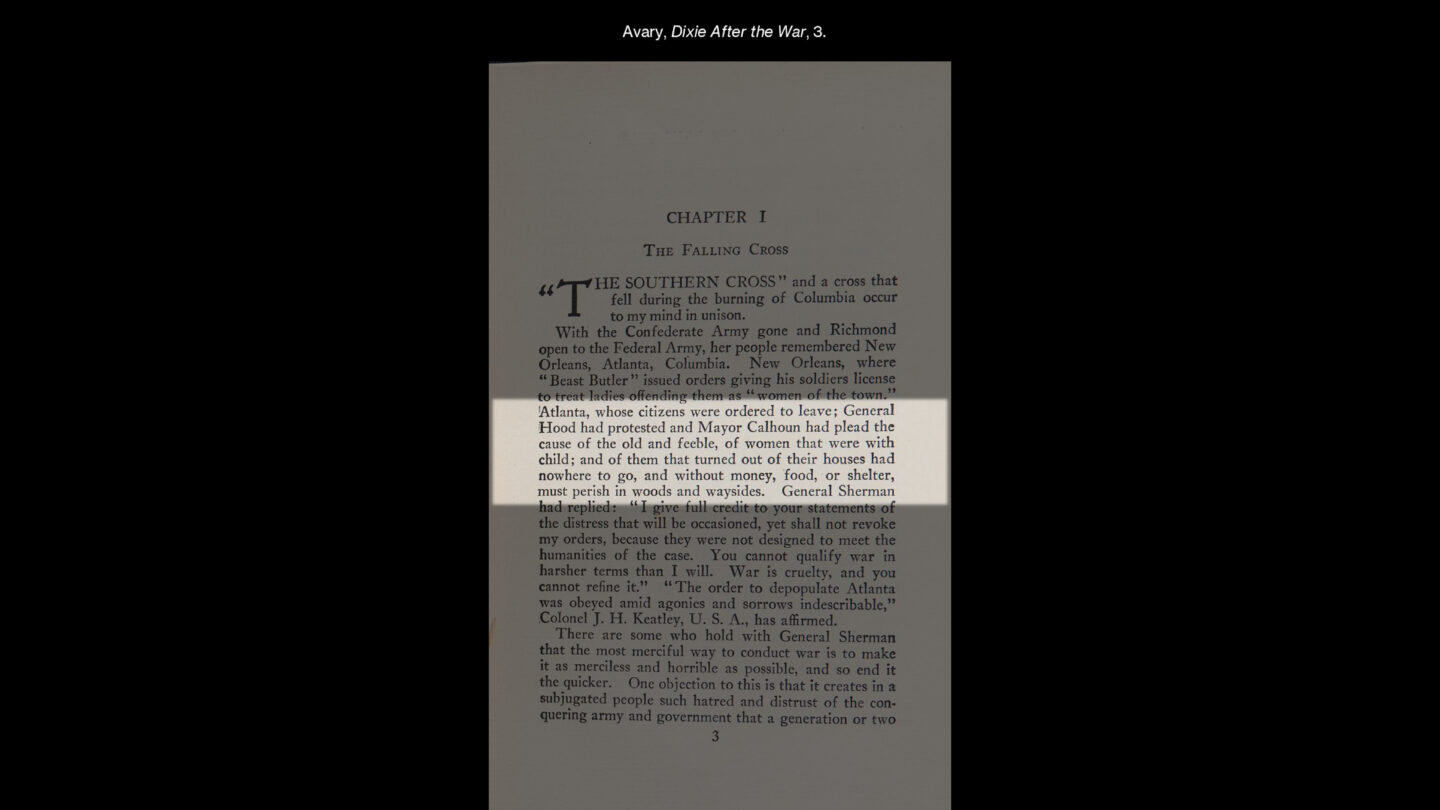


Like so many of the myths used to make moral arguments in Confederate memoirs, stories of mistreatment by Union soldiers had some basis in fact but relied heavily on tropes . Of course, Confederate civilians did suffer psychological and physical wounds from Union troops, as do all civilians during wartime; however horrible war is, their mistreatment was not uniquely malevolent.
In many cases, particularly those of well-connected, wealthy, white residents of cities like Atlanta, Confederate citizens received relatively merciful treatment at the hands of Union soldiers compared to that faced by many of their contemporaries in earlier American wars or nineteenth-century wars in Europe. For example, they could – and did – regularly petition for Union guards to protect their property from Union troops.[17]
The ill treatment of white civilians by Union troops capturing Confederate cities was a consistent concern of both Myrta Lockett Avary and numerous other Confederate memoirists. Avary’s words here are far from the only source Mitchell relied on that describe the evacuation of Atlanta this way. They likely have their source in one original memoir that shaped Civil War myths for decades after it was published.
Stories like Avary’s and, as a result, Mitchell’s, of the evacuation exchange fact for drama and emotional expression. Both Mitchell and Avary rely on the memoir of a prominent Confederate General, John Bell Hood, for their accounts of the evacuation of Atlanta.
In his memoir, Advance and Retreat: Personal Experiences in the United States and Confederate States Armies, Hood published the letters he exchanged with Union General William T. Sherman, who was attempting to ensure Hood’s help putting his order evacuating civilians from Atlanta into practice as he approached the city. “Many poor women,” Hood wrote to Sherman, “are in advanced state[s] of pregnancy, others having young children, and whose husbands, for the greater part, are either in the Army, prisoners or dead.” Hood’s indignant plea for suffering pregnant women made its way into the works of both Margaret Mitchell and Myrta Lockett Avary.
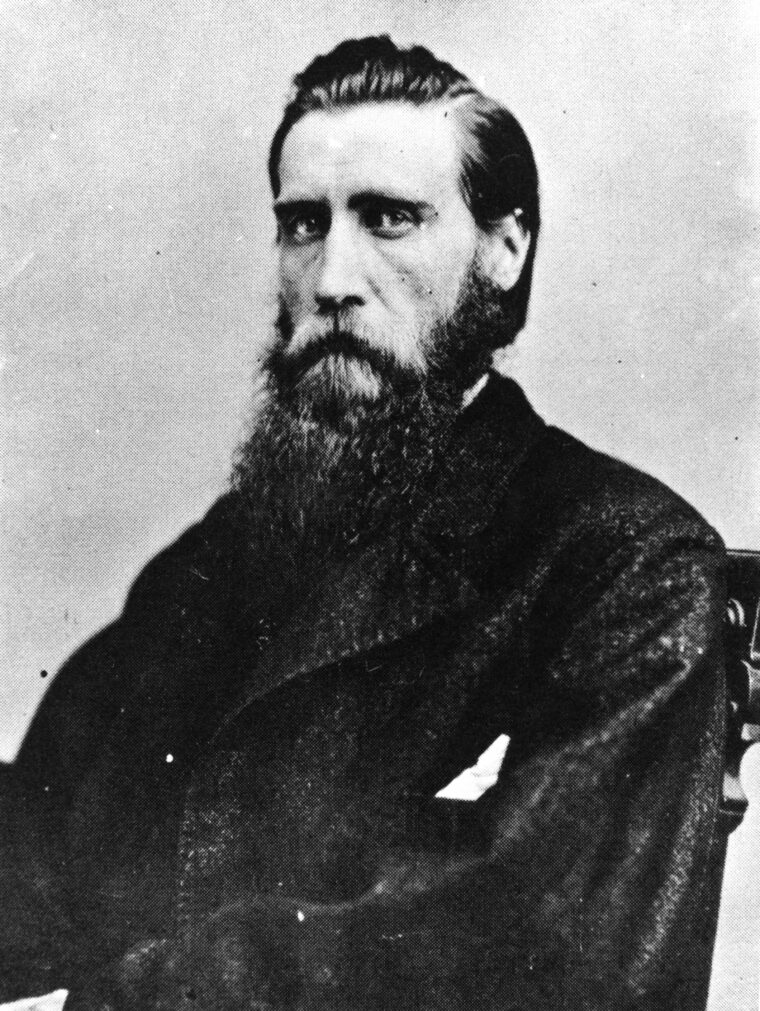
Confederate General John Bell Hood, whose account of his surrender of Atlanta to Union General William T. Sherman, published in his 1880 memoir Advance and Retreat, served as a basis for Myrta Lockett Avary and Margaret Mitchell’s descriptions of the event. Courtesy of Kenan Research Center at Atlanta History Center.
Sherman’s letter responding to Hood did not appear in either work. Sherman’s writing makes clear that he intended the evacuation of Atlanta to keep Confederate civilians from harm, and to protect his troops from spies or civilian guerillas; he even offered to send Atlantans behind Confederate military lines: “Atlanta is no place for families or non-combatants, and I have no desire to send them North if you will assist in conveying them South.”[18]
Avary’s and Mitchell’s description of Sherman’s order as an act of sadism flattened historical context of the March and portrayed Union soldiers as monsters, rather that men participating in a historical event. Mitchell’s description of Sherman having “dumped” Atlanta’s civilian population outside of Rough and Ready, Georgia, contradicts his letter, published in Hood’s memoir, in which he expressed his desire that families be moved South “with as little discomfort as possible.”[19]
Distortions like this allowed authors like Avary to assert the moral superiority of the Confederacy, feeding the Lost Cause argument that, though the Confederacy lost the war, it was fighting on the morally right side.
Reconstruction


The majority of Gone With the Wind takes place during Reconstruction, the roughly twelve-year period that followed the Civil War. Mitchell’s interpretation of Reconstruction – often delivered to the audience through the observations of her omniscient narrator , relies heavily on memoirists’ arguments.
As is the case with stories of Union soldiers’ mistreatment of Confederate civilians, Avary’s books are some of many that influenced Gone With the Wind. They serve as particularly good examples of this trope because of Avary’s fixation on the Reconstruction period. For Myrta Lockett Avary, Reconstruction was a time defined not just by the “political persecution” of former Confederate elites but also racialized sexual terror.
Avary, like many other former Confederate memoirists, depicted the threat of Black men sexually assaulting white women as one of the primary concerns of the period. This depiction fit with popular stereotypes in the early twentieth century that portrayed Black men as lascivious beasts intent on violating white womanhood. It was also untrue. There is little evidence that white women experienced a sudden surge of sexual violence at the hands of Black men in the aftermath of the Civil War.[21] Stories of violence against white women were, instead, used to justify lynchings and other racial violence perpetrated by groups like the Ku Klux Klan, particularly in the early twentieth century – when Avary was first publishing her books.
Both during the Reconstruction period and in the early twentieth century, the Ku Klux Klan was a terrorist group that used violence to intimidate Black Americans and limit their participation in the United States’ political system. During Reconstruction, the original Klan explicitly stated its goals and did not rely on often-false accusations of violence against white women to support itself, though it did use them occasionally; it did not need to hide its motivations.
During the early twentieth century, justification of violence through accusations of sexual assault became more common in keeping with a popular culture that depicted Klansmen as heroic defenders of white women through films like The Birth of a Nation.
The blending of the first and second iterations of the KKK that appears in Gone With the Wind was used in Myrta Lockett Avary’s books to argue that Reconstruction and its political ideals were dangerous, that slavery was a good thing, and that Black people couldn’t be trusted with freedom.
Stories like the one Tony Fontaine tells Scarlett O’Hara in Gone With the Wind rest on arguments that Black people “needed” to be led – if they weren’t being “positively” influenced by the people who previously enslaved them, they would be “negatively” influenced by the Freedman’s Bureau, an organization dedicated to rebuilding the South and helping formerly enslaved people establish themselves as citizens. The Bureau’s mission was politically and socially charitable and difficult to argue against. Arguments about the damage it did to white women and their families were a way for pro-Confederate memoirists to criticize an institution that had enjoyed general support by their Northern audiences during its tenure in the South.
Through her memoirs, Myrta Lockett Avary made partial arguments about the Civil War – about who was right or wrong in the conflict, who suffered or didn’t suffer under slavery and in its aftermath, and what the United States owed to the former Confederacy. Margaret Mitchell’s usage of the memoirs as historical sources makes clear that many of these arguments felt like fact to her. Arguments in the Lost Cause tradition reaffirmed stories she heard her whole life from people she loved, trusted, and saw as authorities: people like Myrta Lockett Avary herself.
But, although her stories of the Civil War era might have supported the very real emotions she felt about the war and its aftermath, Myrta Lockett Avary’s books were far from factual, and she knew it.
Myrta Lockett Avary’s memoirs are not her own. She collected and edited them, but relied on the stories of others – which she wrote in the first person – to fill in the drama and history of the Civil War the books contain. Her first book, A Virginia Girl in the Civil War, was published in 1903. It was inspired by the life of a friend – Mrs. Joseph Van Holt Nash – who Avary shared a boardinghouse room with in the late 1880s. Avary took notes on Nash’s stories of the war, and the two discussed collaborating on her memoirs. In the early 1900s, after Avary moved to New York City and was trying to make it as a writer, Nash wrote to request Avary’s notes on their conversations. She was getting older and wanted to jog her memory of the Civil War years. Avary refused to send them. Twice.
Avary wrote that she “recogniz[ed] another personality, not my friend’s in these letters; her hand but not her tone,” and assumed that someone else was trying to publish Nash’s memoirs. Rather than respect Nash’s wishes, Avary decided to “proceed with my book, without reference to [Nash] or her family.” She also sought legal advice on the subject, making sure that Nash was without contractual rights to her story. Avary changed the names of Nash and her friends and family to avoid a lawsuit and published just a few months after Nash’s death.[22]
Avary’s rush to publish, and her personal circumstances at the time (she was separated from her abusive husband and living alone in New York), indicate that, though she saw Nash’s stories of the Civil War as historically important, she was motivated to publish for profit. Her early drafts of the book also reveal her drive to publish. In addition to changing characters’ names, Avary heavily edited Nash’s original stories. She added dramatic details and gave characters internal narratives and emotions absent in the original material.[23]
Avary also changed language to describe characters’ races, switching standard descriptions to derogatory terms popular in the biased mainstream media of the early twentieth century. For example, a “colored servant,” in an early version of chapter thirteen became a “darkey” in the final edit. Details like these increased the drama, readability, and popular appeal of A Virginia Girl, none of which made its history more accurate, but all of which increased its appeal to readers.
Avary’s other books demonstrate a similar concern with increased profit over factual accuracy. Dixie After the War, an anthology of reminiscences Avary collected to demonstrate the tragedy of Reconstruction as she saw it, was also edited for dramatic effect. For example, characters living through events like the burning of Columbia, South Carolina, die thanks to the cruelty of Union soldiers even though not a single civilian lost their life that night.[24]
Avary’s notes on her editions of the diaries of Alexander Hamilton Stephens, Vice President of the Confederacy and Mary Boykin Chesnut, wife of a prominent South Carolina Senator, reveal that she took significant editorial license to further the Lost Cause narrative. Entire passages of Stephens’s letters are moved, altered, or eliminated in her Recollections of Alexander H. Stephens, and her version of Chesnut’s diary, A Diary From Dixie, famously excludes months of Chesnut’s original diary where she expresses anti-slavery sentiments.[25]
Throughout her career as an author, Myrta Lockett Avary blended fact and fiction to create a version of the Civil War that fit comfortably within her belief in the Lost Cause narrative. She did not write objective history, and she received critiques for her failure to do so during her time from those who might otherwise have agreed with her. When the New York Times reviewed Dixie After the War in 1906, the reviewer noted, “The judicious reader will probably accept many of [Avary’s] statements of the comparative superiority of the African in bondage,” although he felt that the reader might “find it hard to believe that the exhilarating air of freedom suddenly became laden with the bacilli of tuberculosis and that ‘the negroes began to grow mad’” as Avary claimed in Dixie After the War.[26]
The review concluded that “[a]s a collection of anecdotes and observations the book may be found entertaining, but it should not profess, as it does to be an exposition of social conditions in the South. […] To borrow a phrase of Mark Twain’s, it is a literary delirium tremens.”[27] Even in the early twentieth century, when pro-Confederate and anti-Reconstruction sentiments were at their height across the United States, Avary’s book was seen as melodramatic to the point of compromising its factuality.
Margaret Mitchell knew that the memoirs she used to research Gone With the Wind were melodramatic. In fact, she joked about it in the same letter she wrote to a fan detailing the truth of the stories in Gone With the Wind. “Of course,” she wrote “I had to tone down the numbers of incidents to make them barely credible, so I get a loud laugh when reviewers speak of the book being too melodramatic. For any one who cares to study that period, there lies the discovery that melodrama is too mild a word to use!”[28]
Mitchell clearly did not see this melodrama as a strike against the books’ reliability as historical sources, perhaps because of arguments like the one Myrta Lockett Avary made when defending Mitchell against reviewers’ assessment of Gone With the Wind as overly dramatic, “Exaggeration […] has been charged to every Southern account of Secession’s War and Reconstruction.”[29]
Mitchell was quick to acknowledge Avary’s long influence on her when Gone With the Wind was published, sending Avary an inscribed copy that read, “For Myrta Lockett Avary, who broke the trail for writers like me. For with out you and your books, this book would never have been written. With Much love, Margaret Mitchell.”[30]


Mitchell wasn’t alone in giving inscribed copies of her book as a gift. In March of 1936, just a few months before Gone With the Wind was published, Avary gave Mitchell a signed copy of Dixie After the War. Her inscription was simple. It read: “To my dear friend Peggy Mitchell Marsh.” The book’s inscription date – during the period when Mitchell was editing Gone With the Wind for publication – speaks to Avary’s relationship with Mitchell as a writer. She knew her friend was working on a book, and had already given her advice on dealing with the emotional toll of the editing process. Mitchell and Avary’s close relationship clearly impacted the relationships between their books, particularly after Gone With the Wind was published. It also complicates Mitchell’s heavy reliance on Avary as a source of Civil War history.
For much of her adult life, Myrta Lockett Avary struggled with an addiction to morphine. Margaret Mitchell knew about her friend’s struggles, and even commiserated with the publisher she was working with to republish Dixie After the War about how she felt they impacted Avary’s paranoia about her friends’ and allies’ alleged attempts to steal her work.[31] But, Mitchell noted to the publisher, she did not think that Avary’s addiction could “account altogether for her [Avary’s] odd behavior,” of which she thought the addiction might be a symptom, rather than the cause.[32]
“Perhaps,” Mitchell theorized, “if she had been born to this present time when resentments of children and frustrations of young people are better understood, something could have been done to help her.”[33]
The “resentments” and “frustrations” Mitchell was referring to were Avary’s experiences as a child living through the Civil War. Born in Halifax County, Virginia in 1857 to a wealthy slaveholding family, Avary was only about eight years old at the end of the Civil War. Along with countless other families of a similar social position, the Locketts lost much of their wealth and influence as a consequence of their investments in the Confederacy and the abolition of slavery. Avary, who had been raised to believe that the wealth and privilege to which she was born were her natural rights, felt her family’s decline keenly. The anger and bitter rhetoric in her books indicates that she struggled to cope even in her adult years.
The voices Myrta Lockett Avary features in her books were those of white women with a similar social standing to her own, but who experienced the war differently in many ways, the biggest difference being that the women Avary featured were adults during the war. The way that Avary wrote her books often makes it difficult to tell when she exchanges one narrator for another, and narrators’ stories are never credited to their originator. This fact, combined with the vast difference between Avary and her sources’ perspectives on the war, would raise red flags about her credibility and reliability for modern historians. The fact that she struggled so much with the war’s impacts on a personal level would only further raise their concerns about the veracity of her accounts.
Margaret Mitchell knew all of these things about Myrta Lockett Avary, but these facts did not affect her assessment of Avary’s accuracy as a historian. Avary, and authors whose emotional experiences of the period had mirrored hers, were the source of the vast majority of Margaret Mitchell’s information on the Civil War and Reconstruction. Their pain and resentment shaped their perception of the past. Their books and their stories, imbued with this perception, shaped Mitchell’s understanding of history in turn.
That Mitchell, who was so dedicated to careful, factual research, freely used these sources speaks to who these memoirists were to her. The people who shaped Margaret Mitchell’s understanding of the Civil War weren’t just the people who lived through the event. They were family, and her family’s close friends, and they had been telling her Lost Cause stories of the Civil War from her earliest childhood.
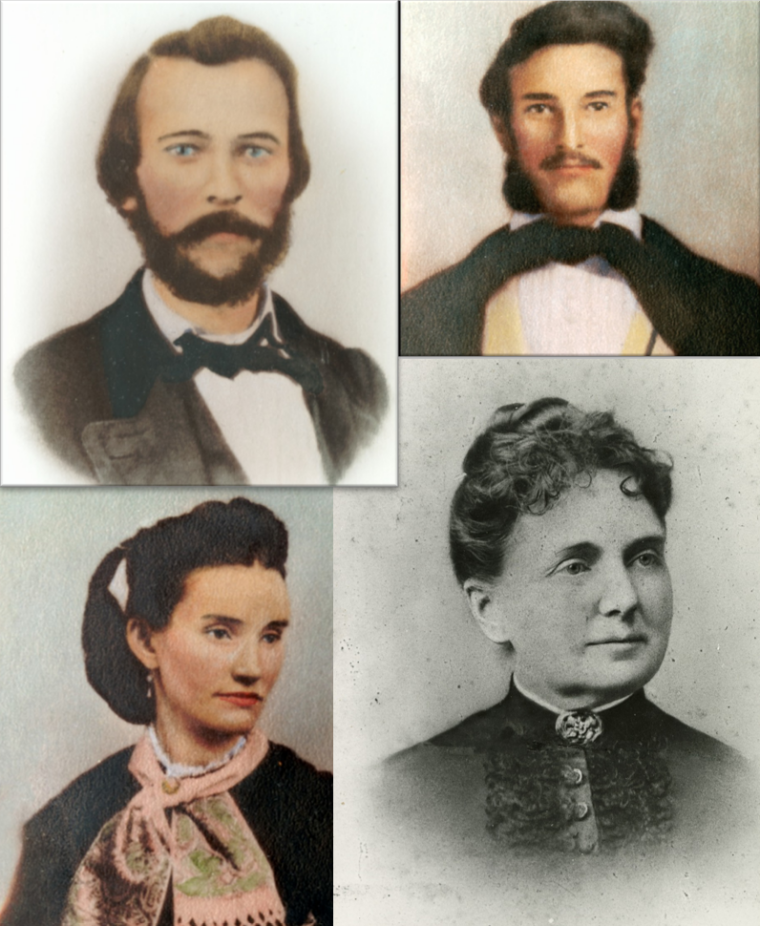
Margaret Mitchell’s grandparents, all of whom through the Civil War. Her grandfathers both fought for the Confederacy. Clockwise from the top left image is John Stephens, Russell Crawford Mitchell, Annie Elizabeth Fitzgerald Stephens, and Deborah Sweet Mitchell.
By the mid-1930s, as Gone With the Wind was heading toward publication, the drama of Margaret Mitchell’s beloved Civil War memoirs and stories was no longer mainstream. Though their myths remained popular, many people saw their content as overwrought, tropey, and Victorian. With Gone With the Wind, Mitchell repackaged not only the history contained in these memoirs, but their drama as well, giving it the charming, well-developed, and flawed cast that was so popular with an audience of young women sick of female characters who lacked the gumption and flair of Scarlett O’Hara.
Gone With the Wind’s style as a novel demonstrates Mitchell’s careful work to modernize aspects of the stories she grew up enjoying. Its historical background demonstrates that she found the history that came with those stories unimpeachable. Margaret Mitchell’s painstaking research process made sure that her descriptions of troop movements, Atlanta’s street grid, and the fashions of Civil War-era Georgia were accurate.
Memoirists like Myrta Lockett Avary could describe the mourning jewelry featured in A Virginia Girl in the Civil War and Gone With the Wind because they had grown up wearing it. But that also meant that Avary and others like her struggled to remove themselves from their emotional experiences of the war and its aftermath. Their narrative of the Civil War created the echo chamber Margaret Mitchell grew up in, and the sources that further confirmed its reality for her. Mitchell’s focus on these sources alone compromised much of the broader history she’d worked so hard to make accurate, and that her enormously popular book spread across the United States and the world. As time has passed, much of the history in Gone With the Wind has moved into the realm of mythology.
Notes
[1] “Atlanta’s Queen of Writers is 80,” The Atlanta Journal (Atlanta, Georgia), June 20, 1937.
[2] “Historian-Novelist Heard on Journal Editorial Hour,” The Atlanta Journal, August 28, 1937.
[3] “A Book of Decided Interest,” The Atlanta Journal, August 25, 1937.
[4] Myrta Lockett Avary, “March 9, 1936 Letter from Myrta Lockett Avary to Margaret Mitchell,” March 9, 1936, University of Georgia Special Collections.
[5] Myrta Lockett Avary, “Carbon Copy of December 8, 1936 Letter from Myrta Lockett Avary to Her Publisher,” December 8, 1936, University of Georgia Special Collections.
[6] Myrta Lockett Avary, “Copy of a December 10, 1936 Letter from Myrta Lockett Avary to Lillian A. Comstock,” December 10, 1936, University of Georgia Special Collections.
[7] Myrta Lockett Avary, “Dixie After the War Rights,” December 14, 1936, University of Georgia Special Collections.
[8] Myrta Lockett Avary, “January 27, 1936 Letter to Margaret Mitchell,” January 27, 1936, University of Georgia Special Collections; Margaret Mitchell, “Letter to Miss Leath about Myrta Lockett Avary,” August 23, 1948, University of Georgia Special Collections.
[9] Richard Harwell, ed., Margaret Mitchell’s Gone With the Wind Letters 1936-1949 (Macmillan Publishing Co., 1976), 4.
[10] Margaret Mitchell, “Aug. 1, 1935 Letter from Margaret Mitchell to Harold Latham,” August 1, 1935, Macmillan Company Records Author Files, New York Public Library Archives.
[11] Harwell, Margaret Mitchell’s Gone With the Wind Letters 1936-1949, 43-44.
[12] Harwell, Margaret Mitchell’s Gone With the Wind Letters 1936-1949, 36.
[13] Catherine Clinton, Tara Revisited: Women, War, & The Plantation Legend (Abbeville Press, 1995), 27, Kenan Research Center.
[14] Thavolia Glymph, Out of the House of Bondage: The Transformation of the Plantation Household (Cambridge University Press, 2003), 32–33, http://ebookcentral.proquest.com/lib/cwm/detail.action?docID=355457.
[15] Drew Gilpin Faust, Mothers of Invention: Women of the Slaveholding South in the American Civil War (The University of North Carolina Press, 1996), 6–7, http://ebookcentral.proquest.com/lib/cwm/detail.action?docID=475176.
[16] Marian J. Morton, “‘My Dear, I Don’t Give a Damn’: Scarlett O’Hara and the Great Depression,” Frontiers: A Journal of Women Studies 5, no. 3 (Autumn 1980): 55.
[17] Jacqueline Glass Campbell, When Sherman Marched North From the Sea: Resistance on the Confederate Home Front (The University of North Carolina Press, 2003), 10–30; “Perkerson Letter,” n.d.
[18] John Bell Hood, Advance and Retreat: Personal Experiences in the United States and Confederate States Armies (Published for the Hood Orphan Memorial Fund [by] G. T. Beauregard, 1880), 230, https://www.loc.gov/resource/gdcmassbookdig.advanceretreatpe00hood/.
[19] Hood, Advance and Retreat, 230.
[20] Margaret Mitchell, Gone with the Wind, 1964th ed. (Macmillan, 1964), 335. (452-453 in 75th Anniversary Edition)
[21] Martha Hodes, “The Sexualization of Reconstruction Politics: White Women and Black Men in the South after the Civil War,” Journal of the History of Sexuality 3, no. 3 (1993): 409, 415-416.
[22] Myrta Lockett Avary, “Typescript of ‘The Way Opener,” ca 1938, Myrta Lockett Avary Papers, Box 1, Folder 1, Kenan Research Center at Atlanta History Center.
[23] Myrta Lockett Avary, “Typescript of ‘A Virginia Girl in the Civil War’ with Edits,” ca 1900, Myrta Lockett Avary Papers, Box 2, Folder 3, Kenan Research Center at Atlanta History Center.
[24] Myrta Lockett Avary, Dixie After the War: An Exposition of Social Conditions Existing in the South, During the Twelve Years Succeeding the Fall of Richmond (Doubleday, 1906), 4.
[25] Avary, “Typescript of ‘A Diary From Dixie’ with Edits.”; Myrta Lockett Avary, “Typed Pages from Avary’s ‘Biographical Sketch of Stephens,’” ca 1910, Myrta Lockett Avary Papers, Box 3, Folder 5, Kenan Research Center at Atlanta History Center; Mary Boykin Miller Chesnut, Mary Chesnut’s Civil War (Yale University Press, 1981).
[26] “Clipping of Two Contradictory Reviews of ‘Dixie After the War,’” Ca 1906, Myrta Lockett Avary Papers, Box 1, Folder 1, Kenan Research Center at Atlanta History Center.
[27] “Clipping of Two Contradictory Reviews of ‘Dixie After the War.”
[28] Richard Harwell, ed., Margaret Mitchell’s Gone With the Wind Letters 1936-1949 (Macmillan Publishing Co., 1976), 43–44.
[29] Myrta Lockett Avary, “A Political Delerium Tremens,” Circa 1936, University of Georgia Special Collections.
[30] Unknown, “Memo on Myrta Lockett Avary’s Influence on Margaret Mitchell,” circa 1936, University of Georgia Special Collections.
[31] Margaret Mitchell, “Letter to Miss Leath about Myrta Lockett Avary,” August 23, 1948, University of Georgia Special Collections.
[32] Mitchell, “Letter to Miss Leath about Myrta Lockett Avary.”
[33] Mitchell, “Letter to Miss Leath about Myrta Lockett Avary.”