

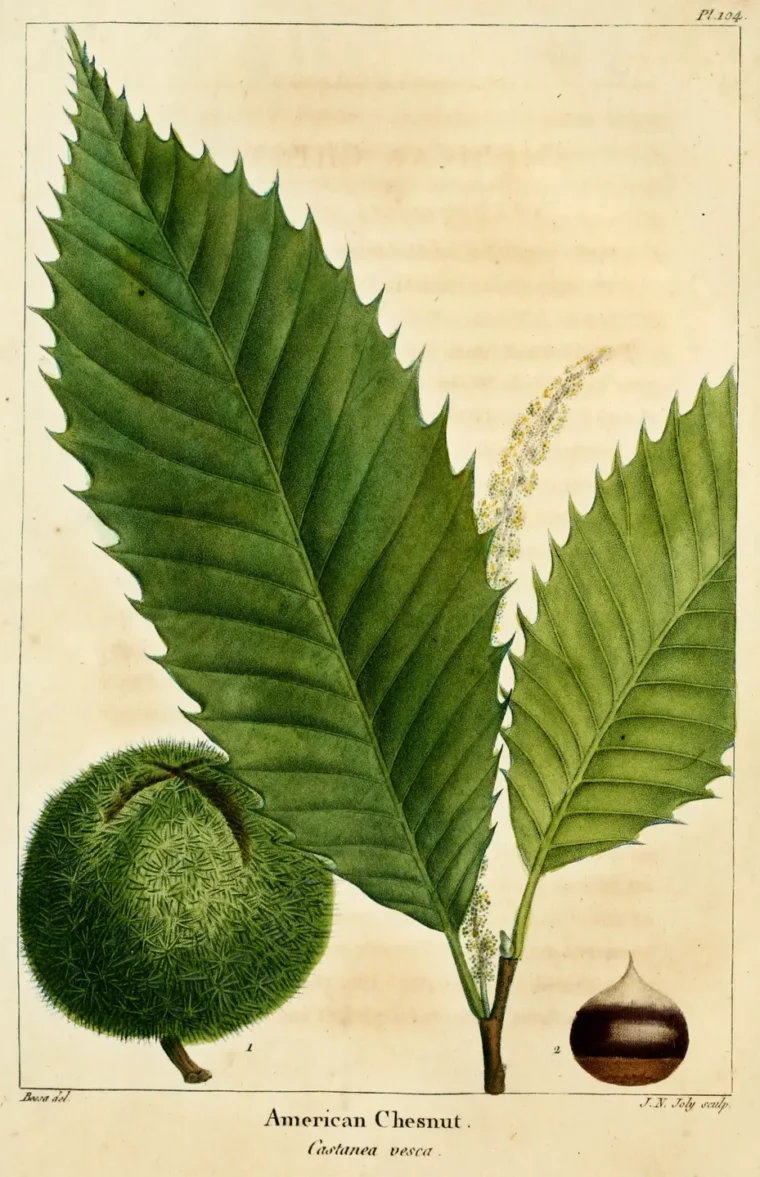
The American chestnut (Castanea dentata) was of huge cultural significance to the Muscogee (Creek) people, whose ancestral homeland includes modern-day Atlanta. In fact, the months coinciding with September and October in the Muscogee calendar are named for the chestnut: Otvwoskuce (Little Chestnut-Thrashing) and Otvwoskv-Rakko (Big Chestnut-Thrashing).
The Muscogee name for the chestnut tree is oto, which, unlike the more elaborate names for other tree species, bears close similarity to their general word for tree, eto, indicating the foundational importance of the chestnut tree to the Muscogee people as the definitive tree of their land and language.
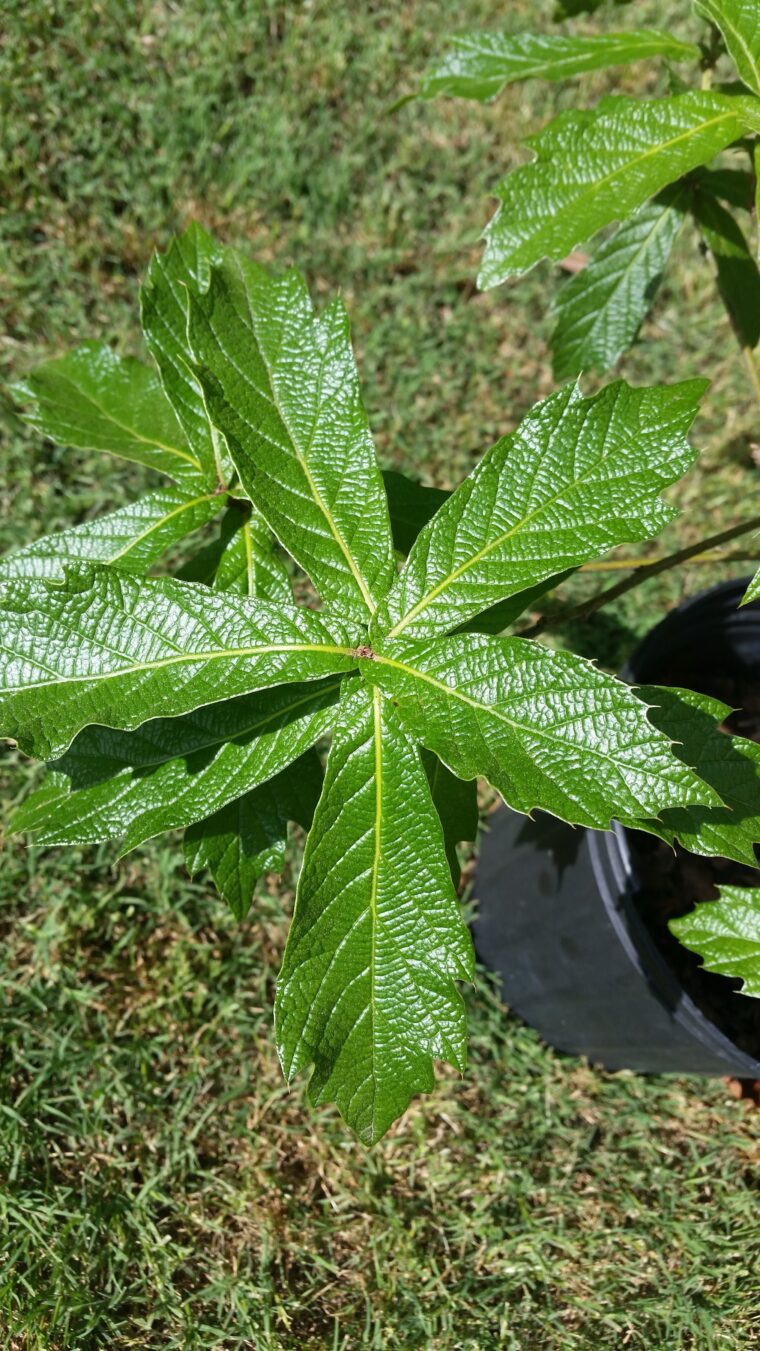
Muscogee villages often had cultivated and meticulously maintained groves of oto, as it had many uses in Muscogee culture. The nuts were a vital food source, harvested every fall in a process called “thrashing” where a long pole is used to knock the nuts out of the lower branches. The leaves were boiled for medicine, with whole leaves used for wound-dressing and the tea was drunk to treat various ailments.
The bark is high in tannins, which can be extracted and used to turn animal hides into leather. The wood is excellent for building, with tannins making it rot resistant and durable, and the straight trunks and even wood grain make it easy to work by hand into building materials.
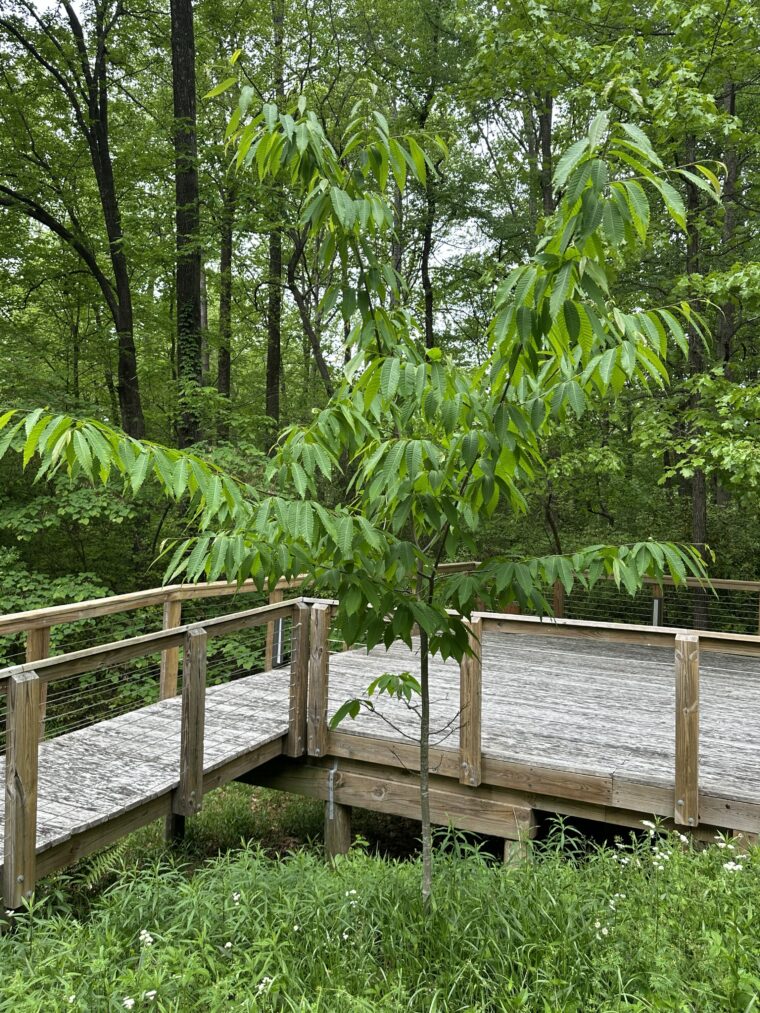
Most Muscogee people were forcibly removed from their homeland and sent to Oklahoma during the 1830’s as part of the Trail of Tears. Here in this unknown land, they found no oto, with the tree’s natural range ending at the Mississippi River; many other staple sources of food, medicine, and supplies were also left behind. They and the other Southeastern tribes removed by the Trail of Tears were forced to adopt a new way of life to survive.
We encourage you to visit the upcoming exhibition Exile from Georgia: The Cherokee and Muscogee Trails of Tears to experience the stories and perspectives of the Muscogee and Cherokee people as they were forced to leave their homeland and travel west. The exhibition opens November 19th.