As fall makes way for winter, plants enter dormancy and food becomes increasingly scarce for wildlife. What will feed the animals that do not migrate away? Late-season fruit and nut producing plants are very important for helping the year-round residents get through winter.
Hollies
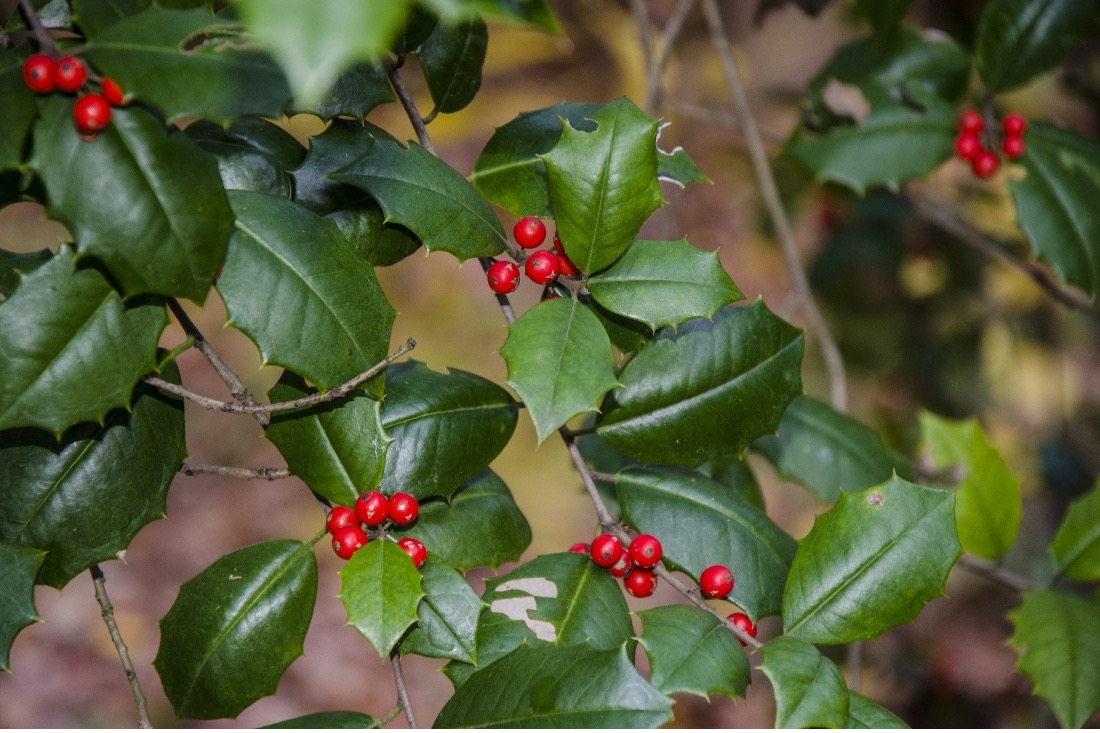
Photo Credit: Mt. Cuba Center
There are many species of holly native to Georgia that produce berries in the fall and winter months. Some are evergreen, like American holly (Ilex opaca) and yaupon (Ilex vomitoria), but many are deciduous, like winterberry (Ilex verticillata) and bearberry (Ilex decidua). The bright red fruits are not the most tasty or nutritious for wildlife compared to other winter bounties, but the fruits persist through late winter, making them a critical “last resort” food when other more preferred foods have run low. Countless species of birds and mammals will feed on native holly fruits during the winter.
Viburnums
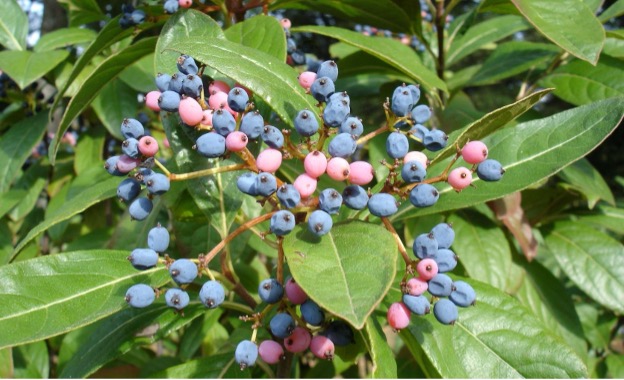
Photo Credit: Mt. Cuba Center
Viburnums are mostly known for their fragrant flowers, but did you know their colorful fruit is a big deal for winter wildlife? There are multiple viburnums native to Georgia, such as possumhaw (Viburnum nudum) and black haw (Viburnum prunifolium). After the fragrant spring flowers have faded, the berries develop over the course of the summer and then persist through fall and winter. The fruit of native viburnum species is very rich, with a fat content of 40% or higher! These calorie-rich berries help migratory birds bulk up in the fall and help year-round residents get through the winter.
Persimmon
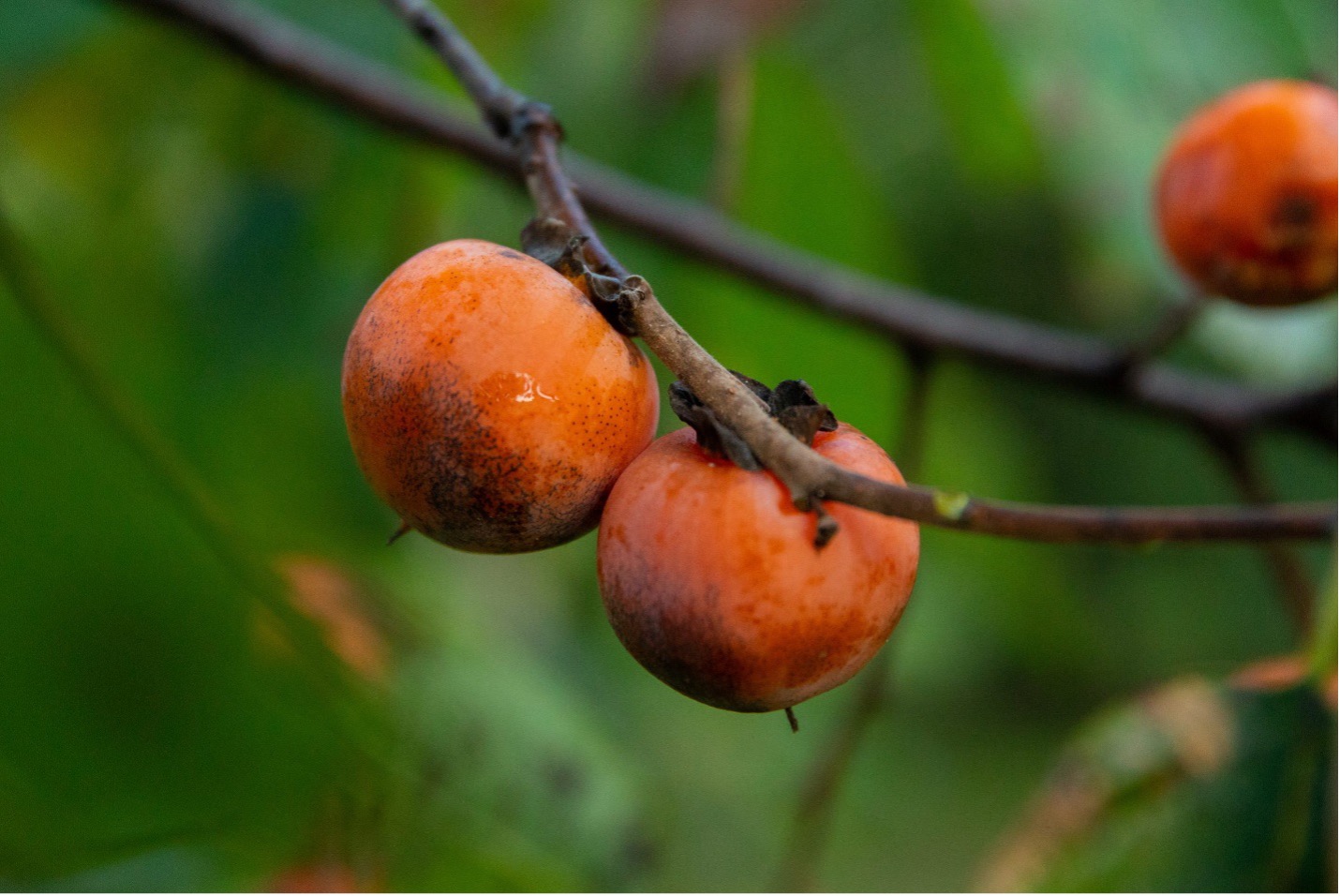
Photo Credit: Chestnut Hill Nursery
Persimmons aren’t only beloved by people; they’re a favorite fruit for wildlife too! There is one species of persimmon native to Georgia: the American persimmon (Diospyros virginiana). It is a highly adaptable tree, being native across the eastern United States. The large bright orange fruits ripen through fall and winter, with the flesh changing from hard and astringent to soft and sweet, though the skin often retains its sourness. American persimmons are one of the top fruits favored by all manner of wildlife during this time of year.
Oaks
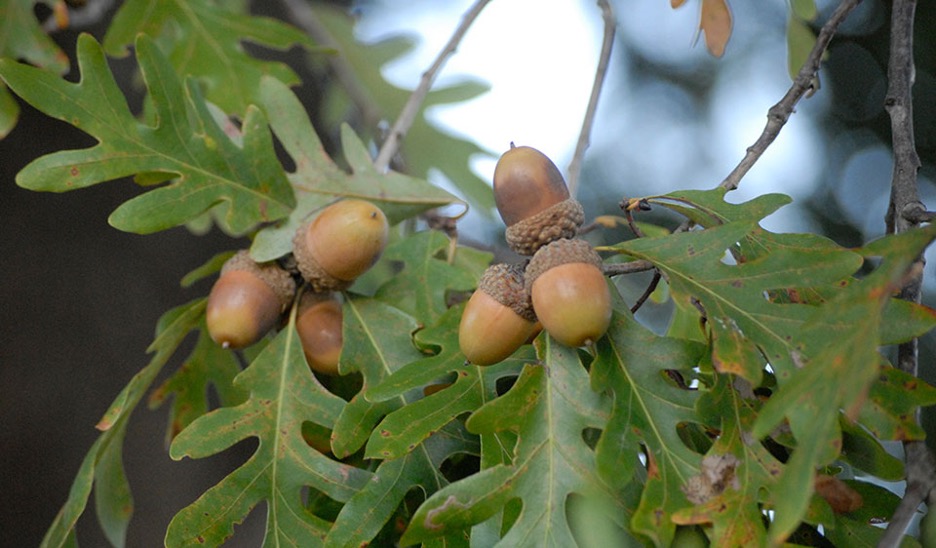
Photo Credit: Mossy Oak
Oaks are everywhere in Georgia! There are many species found across the state, but one of the most common is the white oak. White oaks are considered one of the most ecologically valuable tree species in North America! They feed countless animals and insects all year-round. During fall and winter, they produce large quantities of acorns, which are a critical, highly nutritious food source for many different mammals and birds.
Hickories
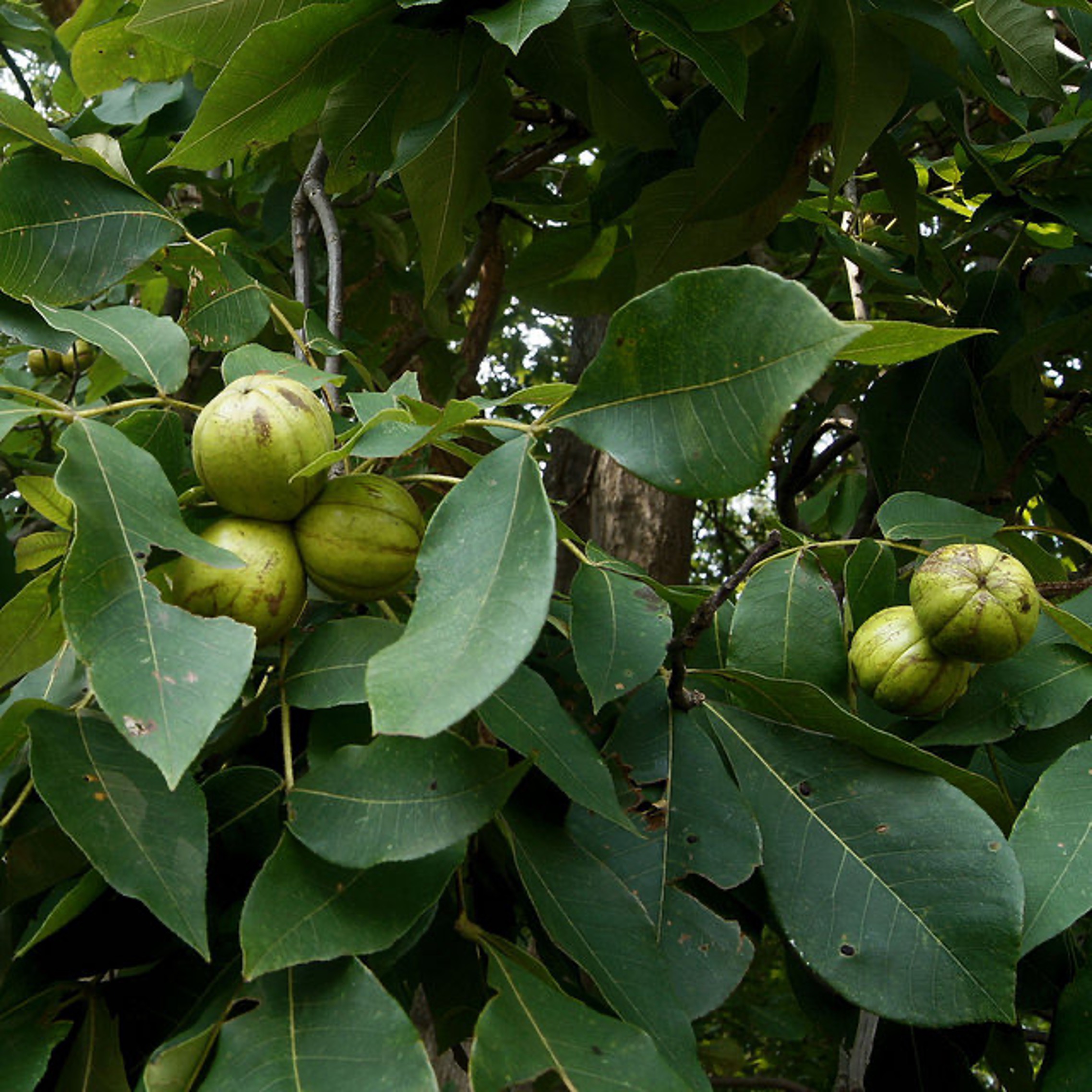
Photo Credit: Maryland Biodiversity Project
Hickories are common across Georgia, with pignut hickory (Carya glabra) and mockernut hickory (Carya tomentosa) being two of the most common species. Similar to oaks, the plentiful and nutritious nuts produced by these trees are very important for wildlife during fall and winter. Hickory nuts, like acorns, can last a long time in the right conditions, continuing to feed animals late into the winter.
Beech
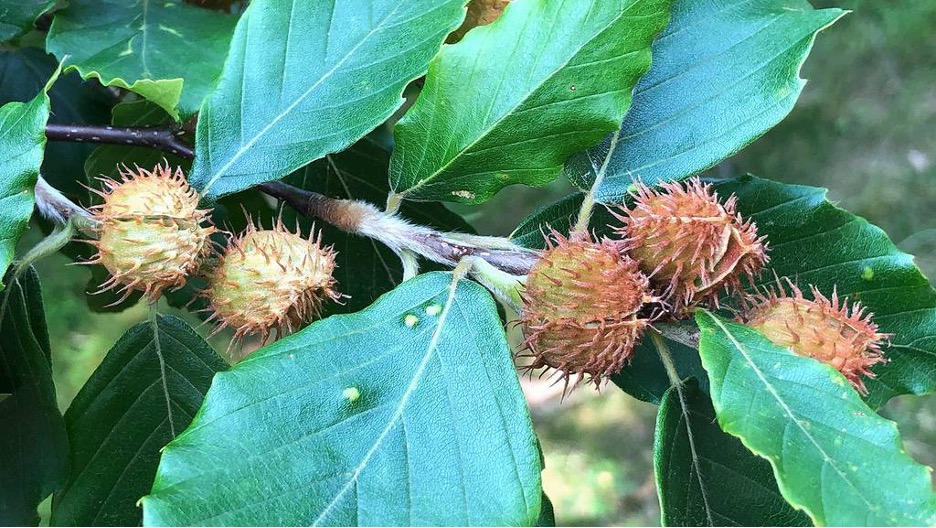
Photo Credit: New England Forestry Foundation
The American beech (Fagus grandifolia) is a common member of forests across the eastern United States. Like oaks and hickories, beech trees produce large quantities of nuts in the fall, but this isn’t so obvious to people as it is to wildlife. The nuts are tiny in comparison to the other major mast-producing trees, but they pack a heavy nutrient punch. Beech nuts are high in fat and can have up to double the protein content of acorns. These nuts are highly sought after by all manner of wildlife, even bears!
Hazelnuts
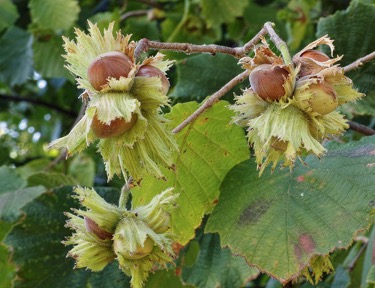
Photo Credit: Leaves for Wildlife
There are two species of hazelnut native to Georgia, American hazelnut (Corylus americana) and beaked hazelnut (Corylus cornuta), both being found mostly in the northern half of the state. These thicket-forming shrubs produce highly nutritious nuts in the fall. They do not produce such large quantities of nuts as hickories and oaks, nor are they as dominant in presence, but they still serve as an important food source for resident wildlife. These nuts are more nutritious than acorns and even beech nuts, making them highly desirable to hungry critters!
As the growing season comes to a close, native trees and shrubs continue to play an important role in sustaining wildlife. From persistent holly berries to acorns and nuts scattered across the forest floor, these plants provide essential food throughout the colder months. In turn, wildlife plays an important role in the survival and spread of these plants. Animals such as squirrels and blue jays carry and bury nuts, dispersing seeds far beyond where they would naturally fall. Those left uneaten may eventually germinate, helping to regenerate forests. This mutually beneficial relationship reminds us of the many ways plants and wildlife depend on one another, even during the quietest months of the year.