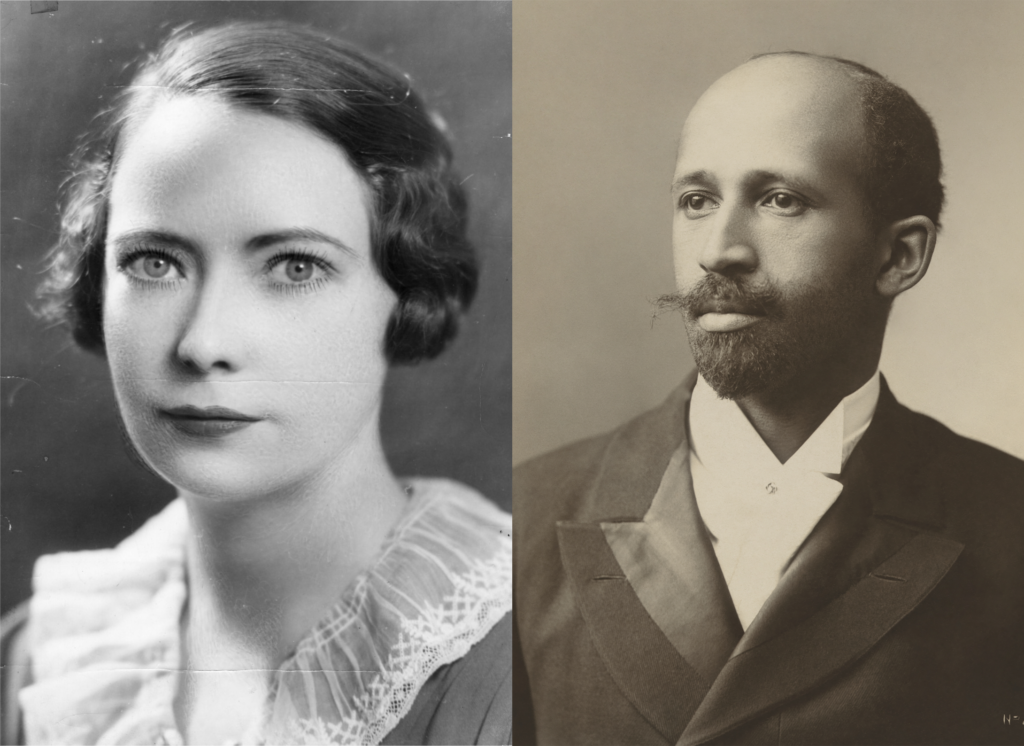
Following the publication of Gone With the Wind in June of 1936, reviewers immediately praised what they saw as its remarkable historical accuracy. The Daily Oklahoman speculated that it might even be “almost too realistic.”1 In The Saturday Review, one of Margaret Mitchell’s favorite authors, Stephen Vincent Benet, called Gone With the Wind “realistic in detail” and mentioned the Confederate diaries and memoirs that he assumed Mitchell had used to help give her book its historical background.2
Mitchell glowed. Not only had one of her literary idols reviewed her book; he noticed her dedicated research process. Mitchell was proud of the hours she spent in Atlanta’s Carnegie Library, the State of Georgia’s archives at Rhodes Hall, the Atlanta Historical Society’s archives, and her and her father’s book collections, double-checking everything from details of women’s fashion to battle lines. 3
To Mitchell, Gone With the Wind was the result of years of painstaking work to create a novel that was as historically accurate as she thought possible. “Practically all of the incidents in the book are true,” she wrote to one curious reader.4
But hers was not the only perspective. In 1935, just a few months after Mitchell shared her manuscript with the Macmillan Publishing Company, her fellow Atlanta author, prominent Black scholar and activist W.E.B. Du Bois, published the book he called his “magnum opus,” Black Reconstruction in America: An Essay Toward a History of the Part Which Black Folk Played in the Attempt to Reconstruct American Democracy 1860-1880.5
Black Reconstruction was a nonfiction history of the Civil War and Reconstruction, and in it, Du Bois mentions many of the memoirs and other sources that contributed so much to the historical fabric of Gone With the Wind, but in an entirely different way. In a section of his bibliography entitled “Propaganda,” Du Bois listed these sources not as authorities, but as prime examples of works by authors that “select and use facts and opinions in order to prove that the South was right in Reconstruction, the North vengeful or deceived, and the Negro stupid.”6
Margaret Mitchell and W.E.B. Du Bois used similar sources to write books on similar topics to incredibly different results. Segregation’s impact on their lives, and how the differences it created affected their perceptions of fact, fiction, reality, and myth, can provide us with a fascinating window into how segregation shaped the way Americans thought and the way they remembered the past, and how that impact shaped both authors’ legacies.
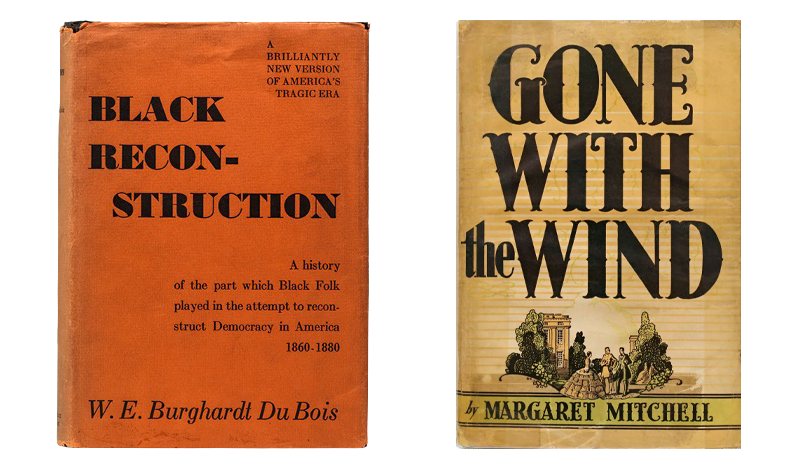
Both Black Reconstruction and Gone With the Wind focus primarily on Reconstruction, the roughly twelve-year period that followed the Civil War. Their interpretations of Reconstruction, much like Du Bois and Mitchell’s feelings about Confederate memoirs, are vastly different.
In the words of the omniscient narrator of Gone With the Wind, Reconstruction was “the astonishing spectacle of half a nation attempting, at the point of a bayonet, to force upon the other half the rule of negroes, many of them scarcely one generation out of the African jungles.”
Du Bois saw Reconstruction entirely differently. “White historians,” he wrote, “have ascribed the faults and failures of Reconstruction to Negro ignorance and corruption. But the Negro insists that it was Negro loyalty and the Negro vote alone that restored the South to the Union [and] established the new democracy.”
Mitchell and Du Bois’s very different perceptions of Reconstruction were grounded in their different life experiences. The similar timelines on which they wrote their books, and the similar places in which they did their writing, highlight the impacts of those differences:
1868
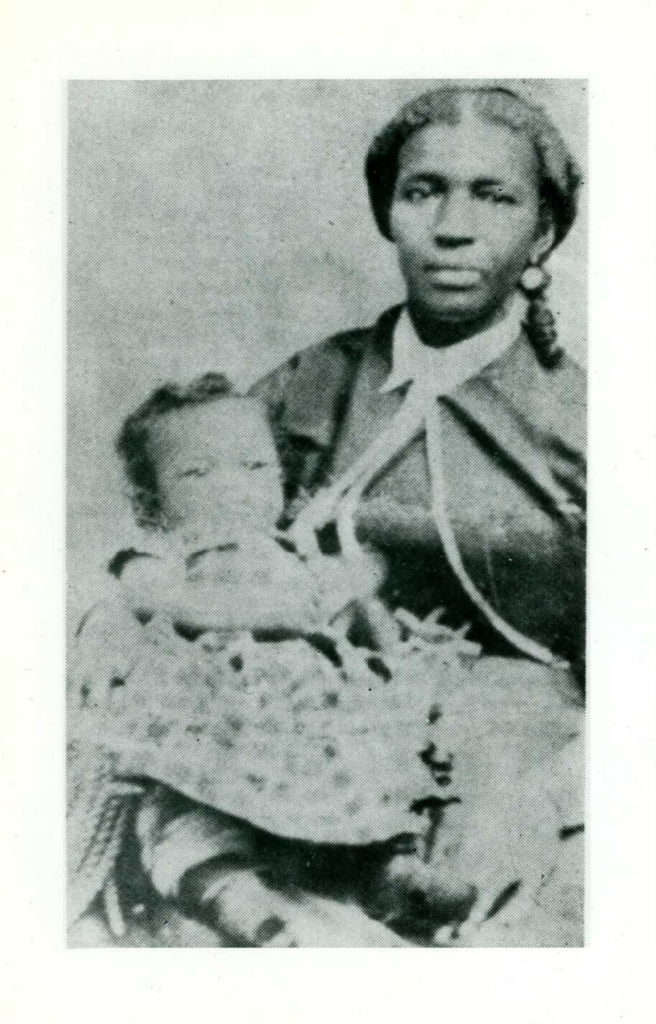
W.E.B. Du Bois is born in Great Barrington, Massachusetts.
W.E.B. Du Bois and his mother Mary Silvina, 1868
1888
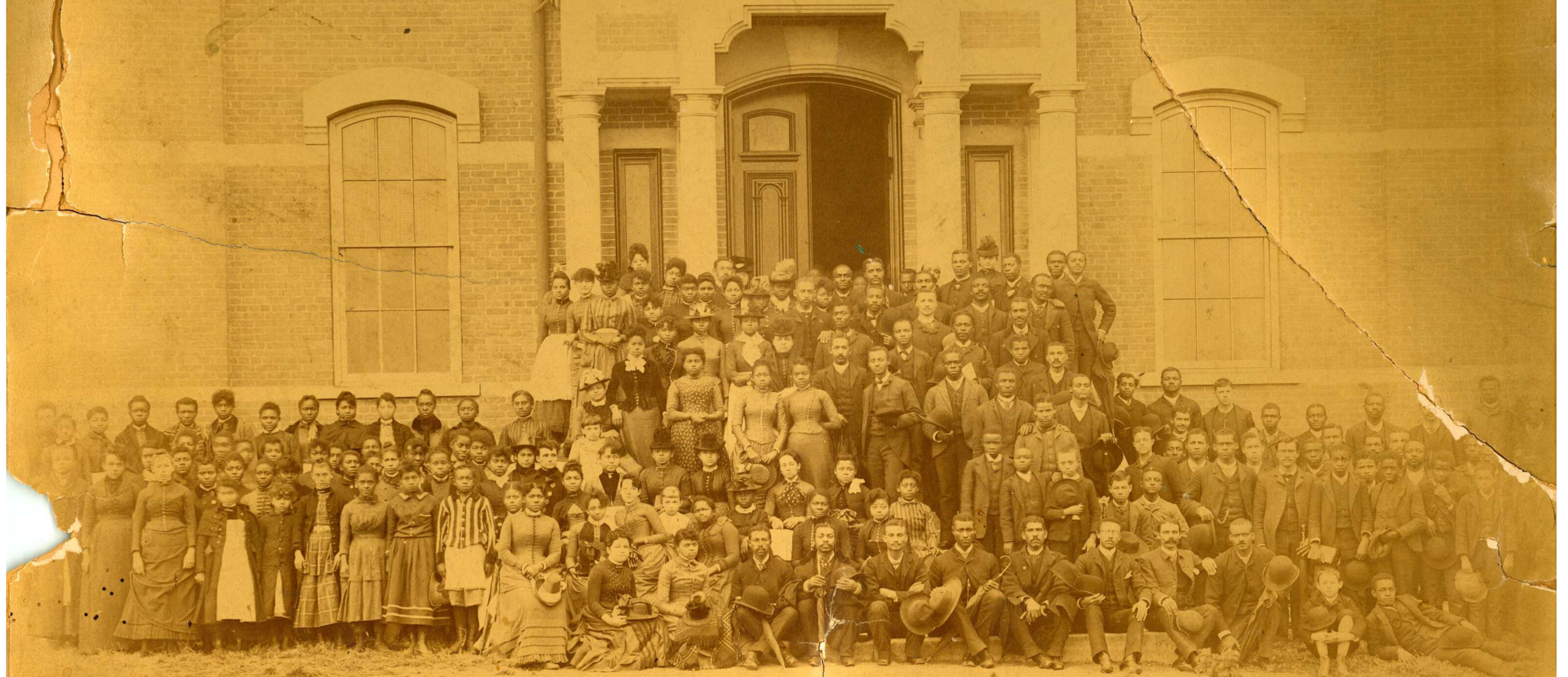
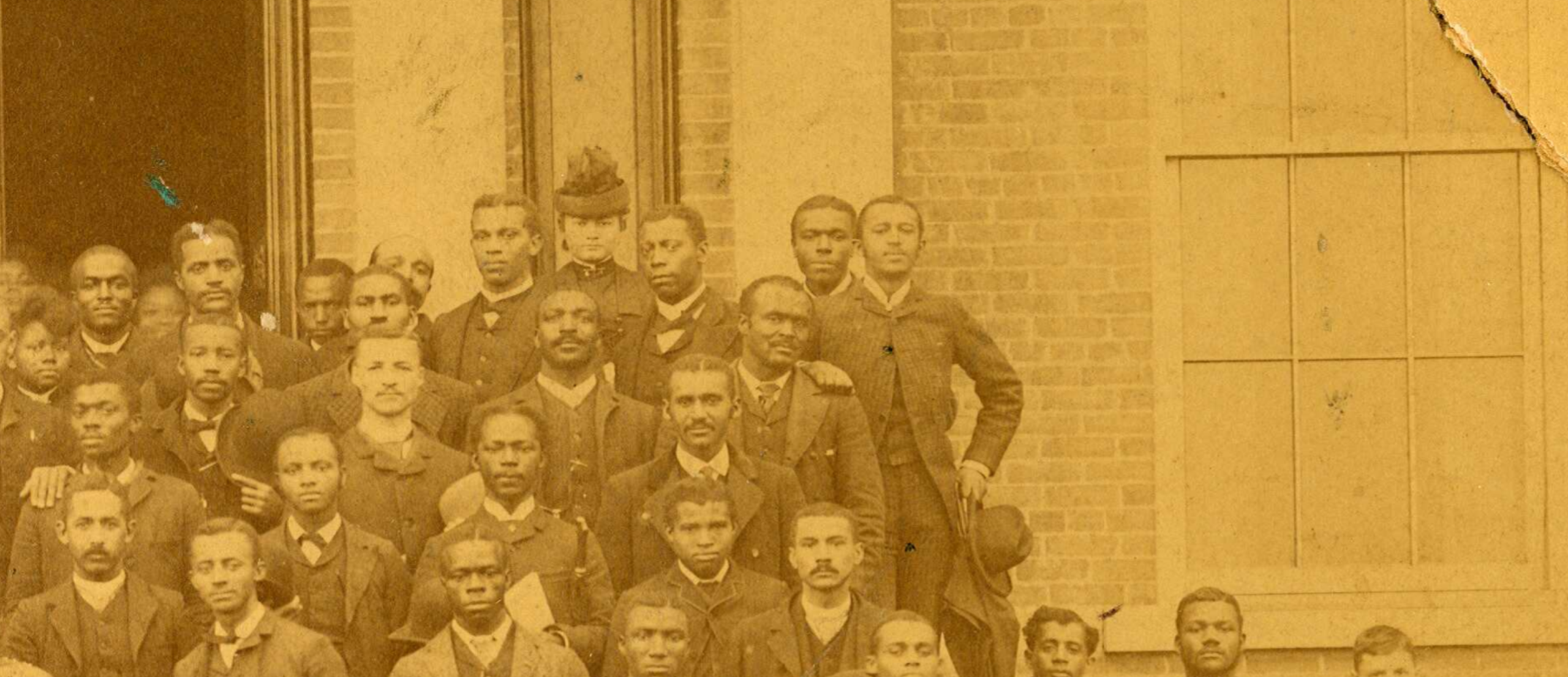
Du Bois graduates from Fisk University, a historically Black college in Nashville, Tennessee.
Fisk University faculty and students in front of Jubilee Hall, ca. 1887. W. E. B. Du Bois is standing , derby in hand, in top row at far right.
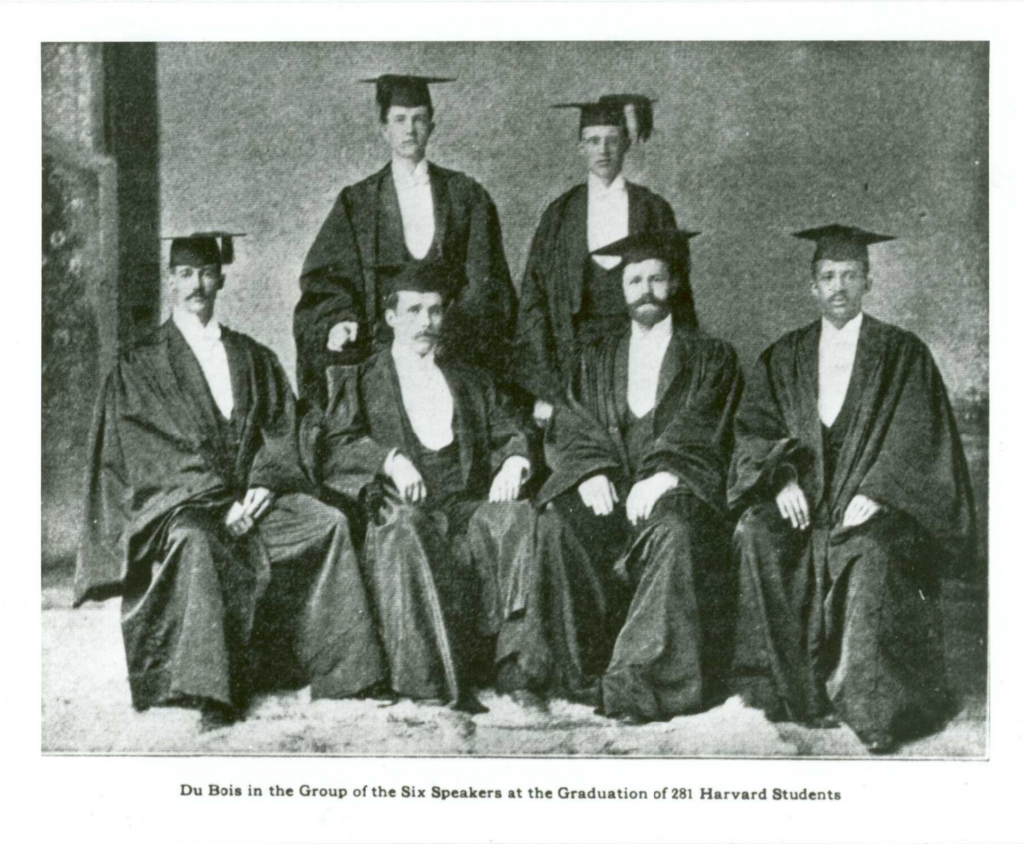
1897
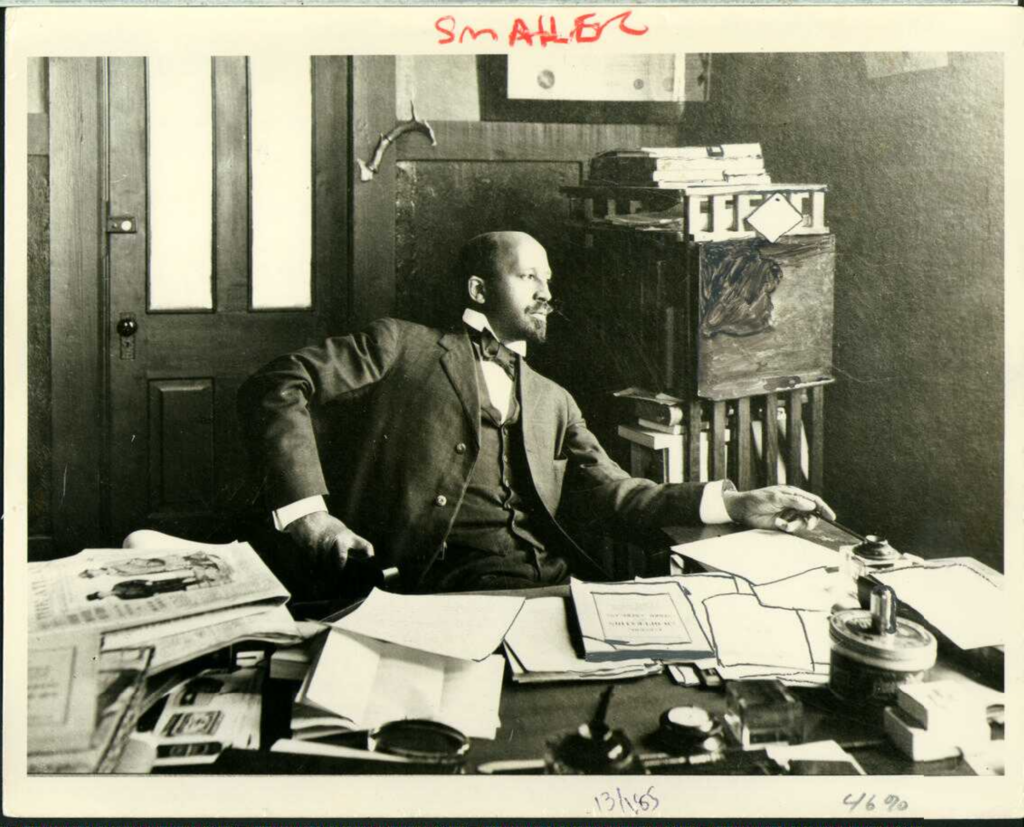
Upon returning from postdoctoral studies in Germany, W.E.B. Du Bois moves to Atlanta, Georgia, to teach sociology at Atlanta University.
1900
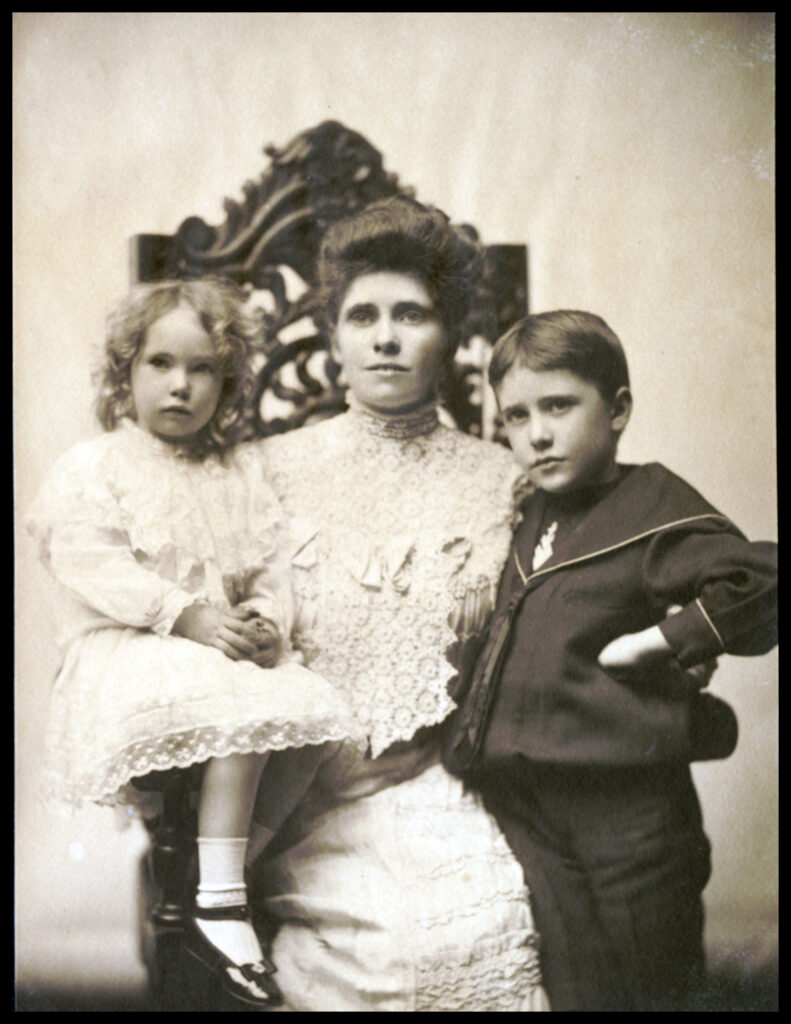
Margaret Mitchell is born in Atlanta, Georgia.
1901
W.E.B Du Bois publishes his first article on Reconstruction in The Atlantic.
The article pushes back against the predominant understanding of the period. That understanding, first articulated by a group of scholars known as the Dunning School, argued that Reconstruction was a failure because its central goal was cementing the equal social and civic treatment of Black and white men.
1903
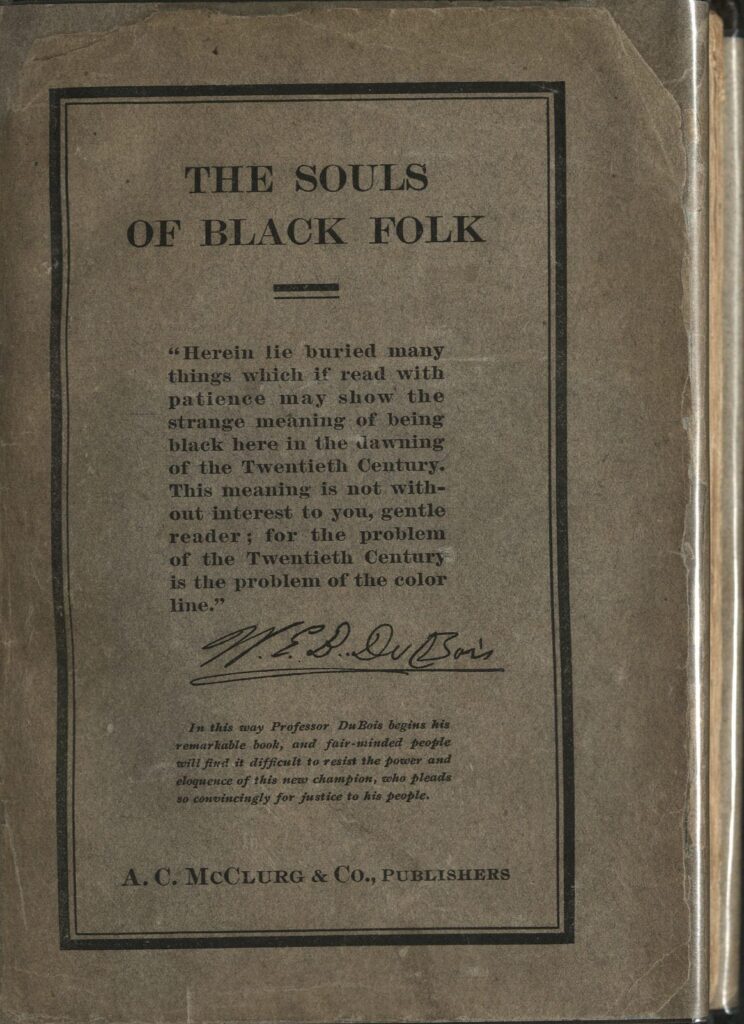
Du Bois publishes his first book, a collection of essays titled The Souls of Black Folk.
The now famous work is the beginning of a literary career that will span twenty-one other books and countless articles.
1905
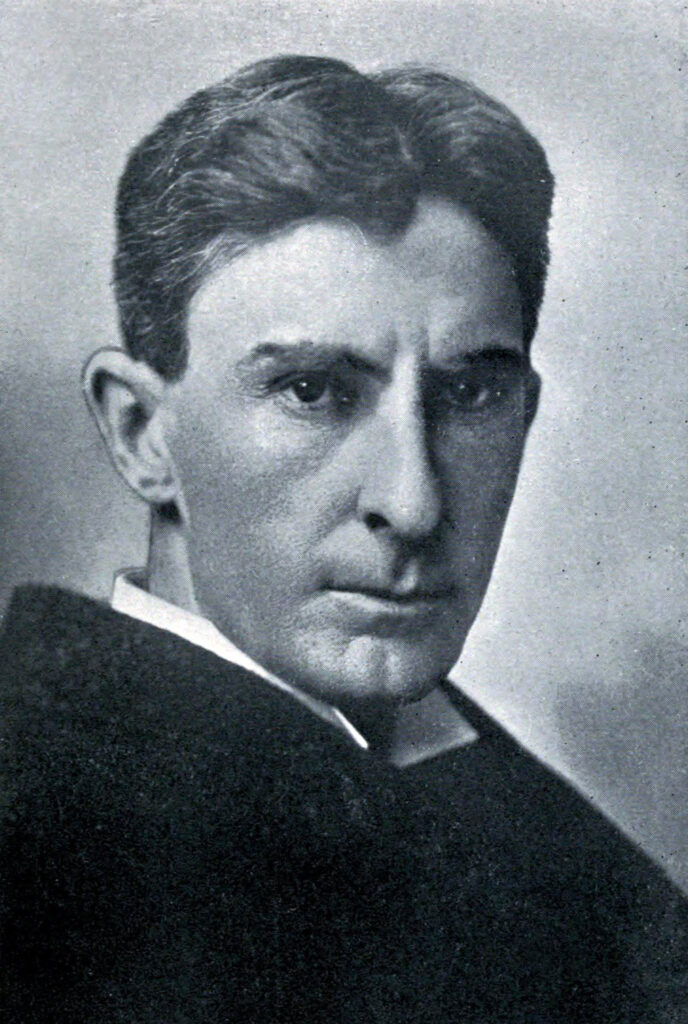
Thomas Dixon, Jr., a minister and politician from North Carolina, publishes a book titled The Clansman.
Set during Reconstruction, it was an immediate hit, and relied on negative stereotypes of Black people for much of its plot, which lionized the Ku Klux Klan as protectors of white women against lascivious, beastly Black men.
W.E.B. Du Bois, appalled that the book was so broadly popular, writes his contact at Doubleday Publishing that he is working on a new book, but that their support of Dixon’s book is making him consider taking his business elsewhere.
1901-1915
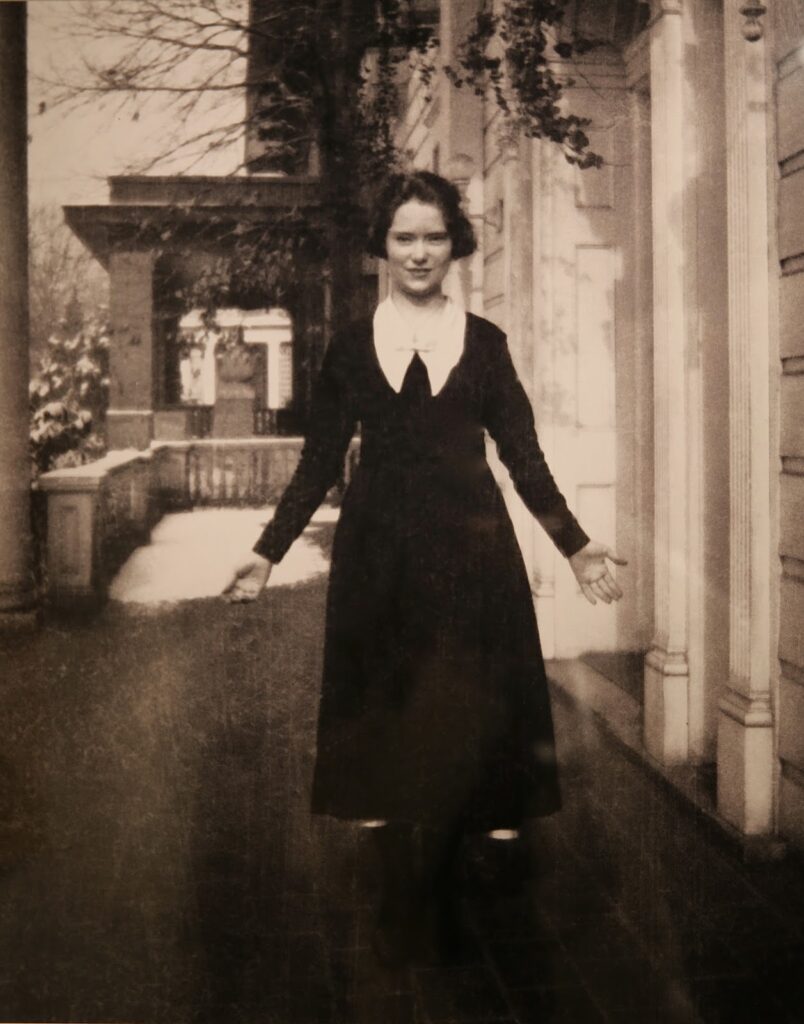
Margaret Mitchell grows up surrounded and fascinated by stories of the Civil War.
Margaret Mitchell grows up surrounded and fascinated by stories of the Civil War. Told from the pro-Confederate perspective of her family and friends, many of whom (like her grandfather) were former Confederate soldiers, these stories include everything from the Civil War songs her mother sang as lullabies to novels written by authors like Mary Johnston and Thomas Dixon.
1910
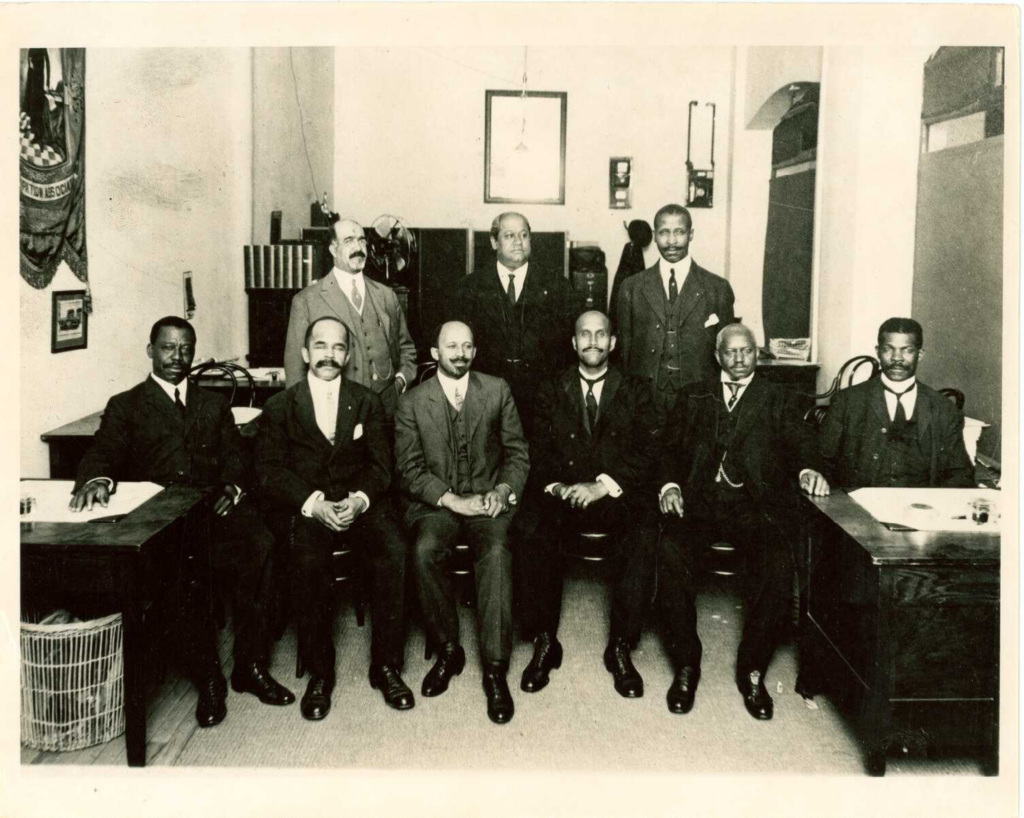
Du Bois, disgusted with the Jim Crow South and looking to shake up his career, moves to New York City to focus on his work for the NAACP.
1910
Du Bois takes his research on Reconstruction further.
He presents it to the American Historical Association, directly countering the arguments of the Dunning School at a meeting attended by its founder, William Archibald Dunning:
“Let us not forget that the white South believed it to be of vital interest to its welfare that the experiment of negro suffrage should fail ignominiously, and that almost to a man the whites were willing to insure this failure either by active force or passive acquiescence; that beside this there were, as might be expected, men, black and white, Northern and Southern, only too eager to take advantage of such a situation for feathering their own nests. The results in such case had to be evil but to charge the evil to negro suffrage is unfair.”
1915
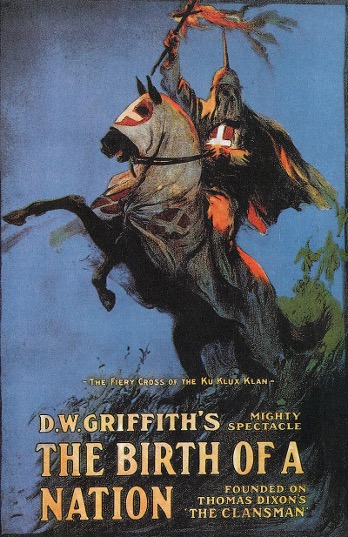
Filmmaker D.W. Griffith adapts Thomas Dixon’s novel, The Clansman, as The Birth of a Nation.
The film is the United States’ first blockbuster, and inspires the rebirth of the Ku Klux Klan on Stone Mountain that same year.
1915
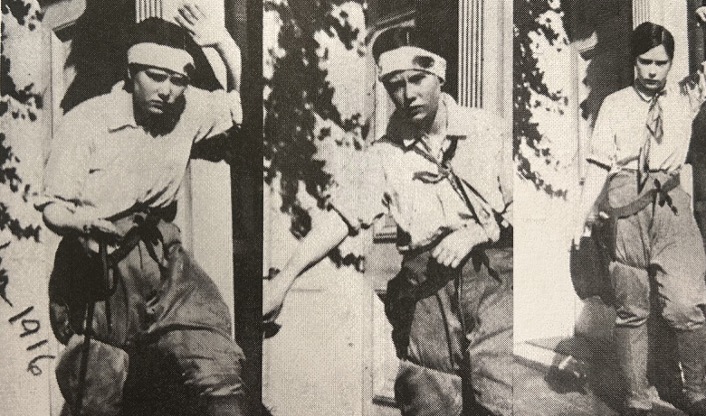
Teenage Margaret Mitchell adapts another of Dixon’s books about the Ku Klux Klan, The Traitor, as a play, in which she also stars.
She later writes to Dixon that she “was practically raised on [his] books and love[d] them very much.”10
1918
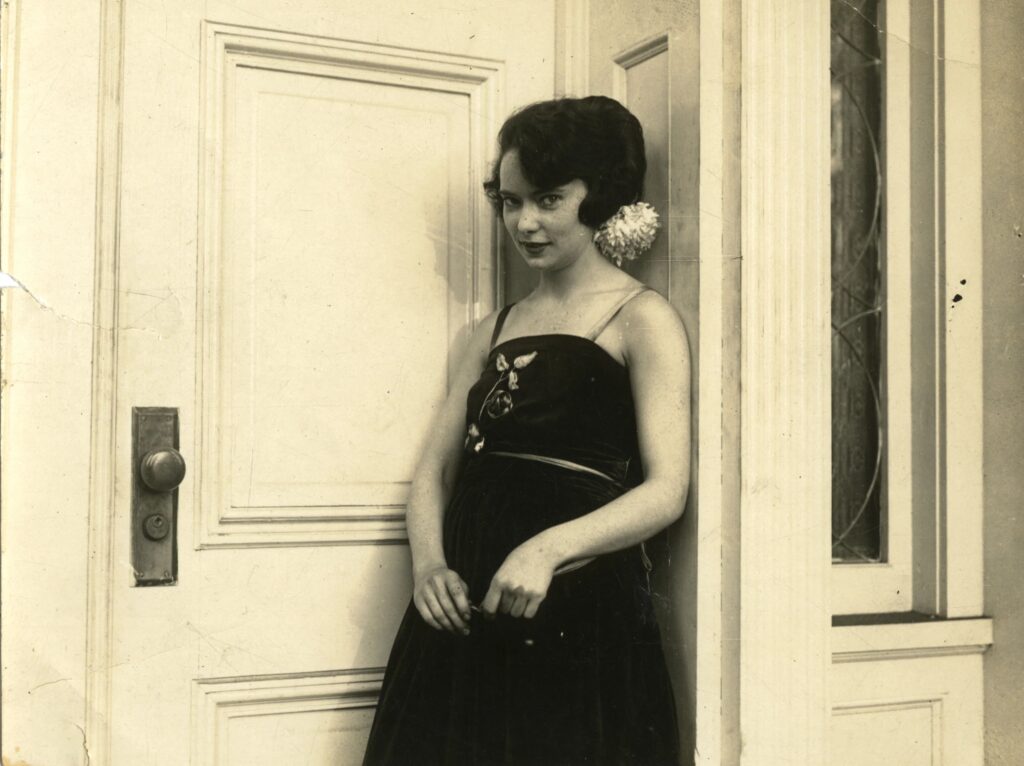
Margaret Mitchell moves to Northampton, Massachusetts, to begin her education at Smith College.
It will be the only time she lives outside of Atlanta.
1919
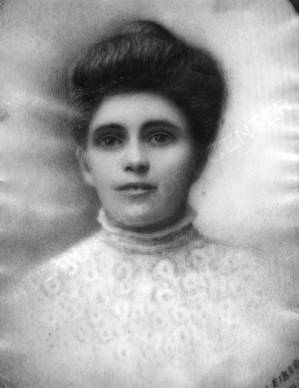
Margaret Mitchell’s mother, Maybelle, dies suddenly, bringing her daughter home from school.
Though Mitchell returns to Smith to complete her first year, she decides to remain in Atlanta permanently and take over her mother’s responsibilities for the family home.
1922
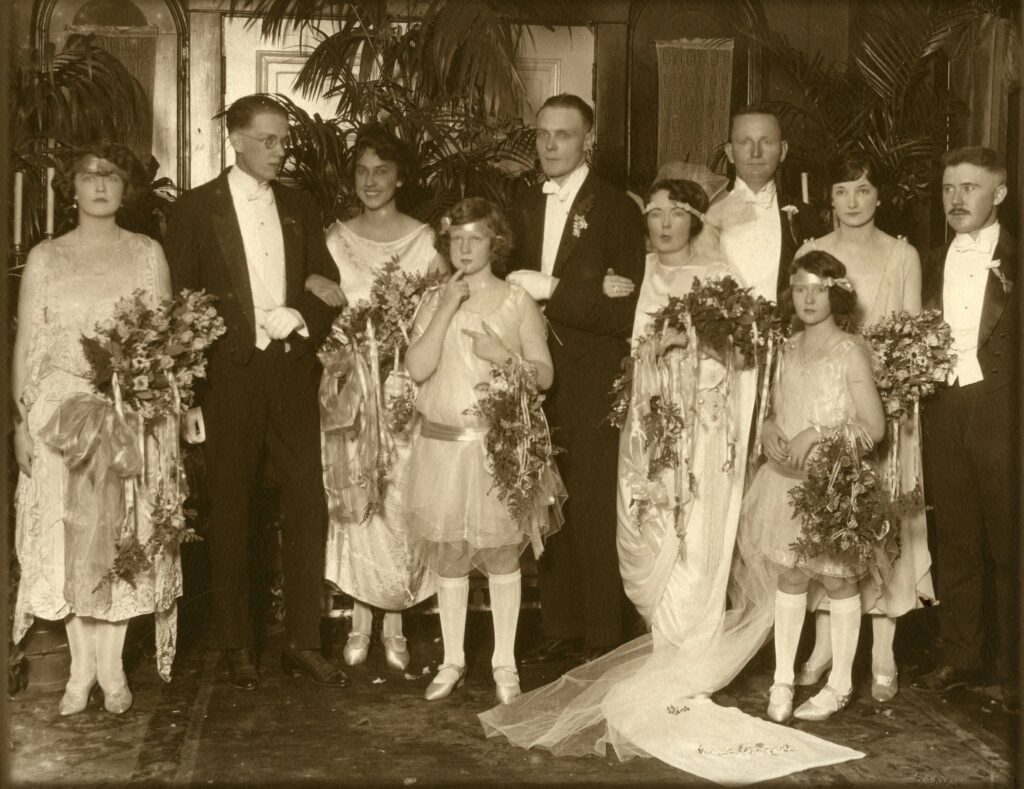
Margaret Mitchell marries “Red” Upshaw.
By the end of the year, their marriage has collapsed thanks to Upshaw’s abusive behavior. Mitchell starts looking for a way to support herself financially and takes a job as a reporter for the Atlanta Journal.
1925
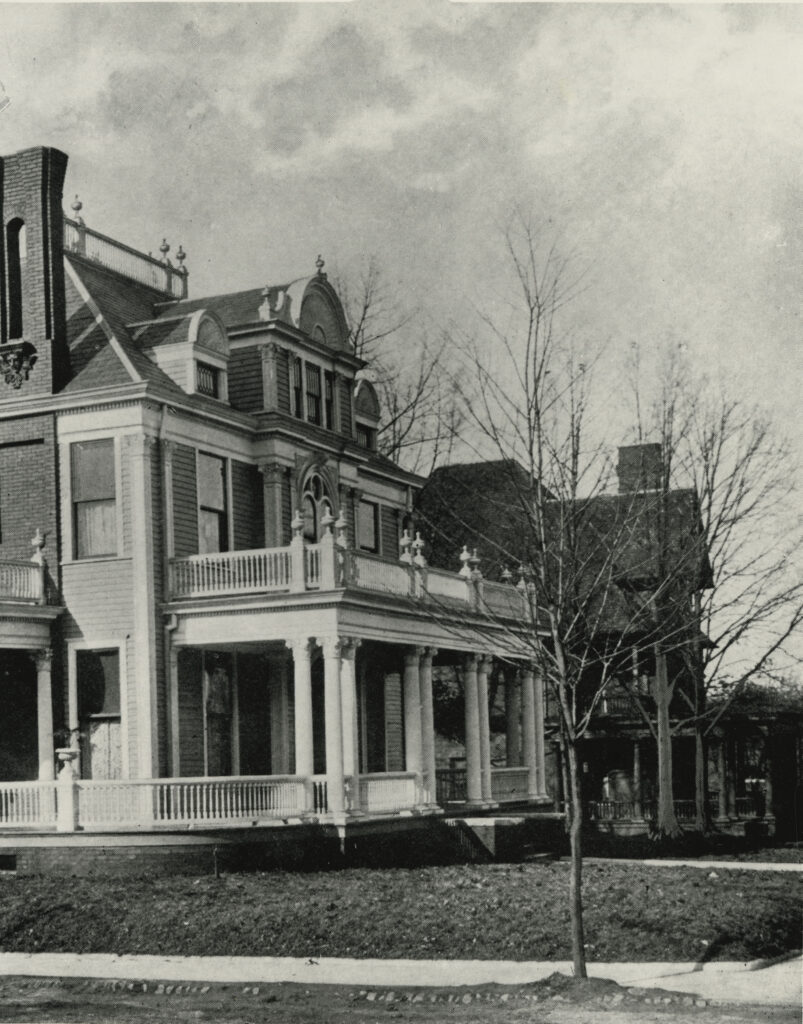
Margaret Mitchell and John Marsh, who was the best man at her first wedding, are married on July 4th.
They move into a small apartment on Peachtree Street. Today, that apartment is part of the “Margaret Mitchell House. ”
1926
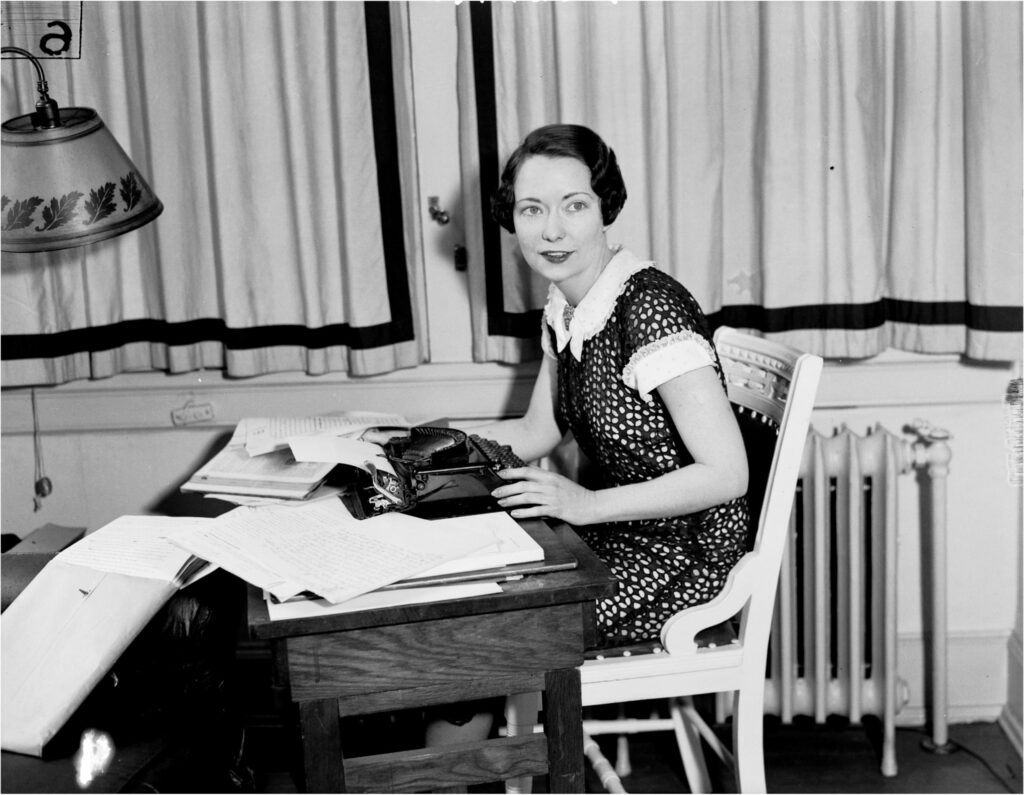
After an ankle injury traps her at home, Margaret Mitchell begins writing a book:
“[I was] on crutches for about three years with no prospect of ever walking again. I read swiftly and enormously and can and will and do read anything, murder stories, love stories, history, medicine, archaeology. Poor John [her husband] wore himself out lugging home arm loads of books every night. […]. Finally he brought home a pound or so of copy paper and said ‘write a book. I can’t find anything at the Carnegie that you haven’t read, except books on the exact sciences.’ So I started [Gone With the Wind].”11
1926
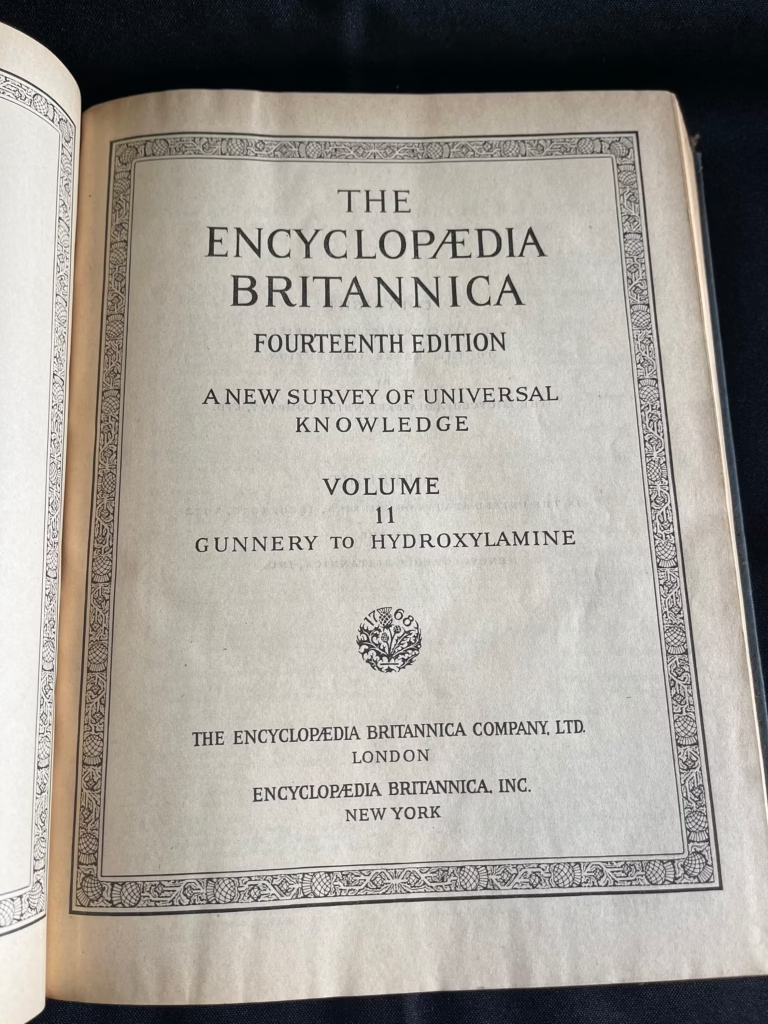
W.E.B. Du Bois is invited to contribute to the African American history sections of the Encyclopedia Britannica‘s 14th edition.
1929
Du Bois’s partnership with the encyclopedia has begun to sour as Britannica’s editors have made changes to his original manuscript, softening or eliminating well-supported statements about violence and the re-establishment of white supremacy during Reconstruction.
He decides to leave the project after the encyclopedia’s editors refuse to publish his argument that:
“White historians have ascribed the faults and failures of Reconstruction to Negro ignorance and corruption. But the Negro insists that it was Negro loyalty and the Negro vote alone that restored the South to the Union; established the new Democracy, both for white and black, and instituted the public schools.”12
1929
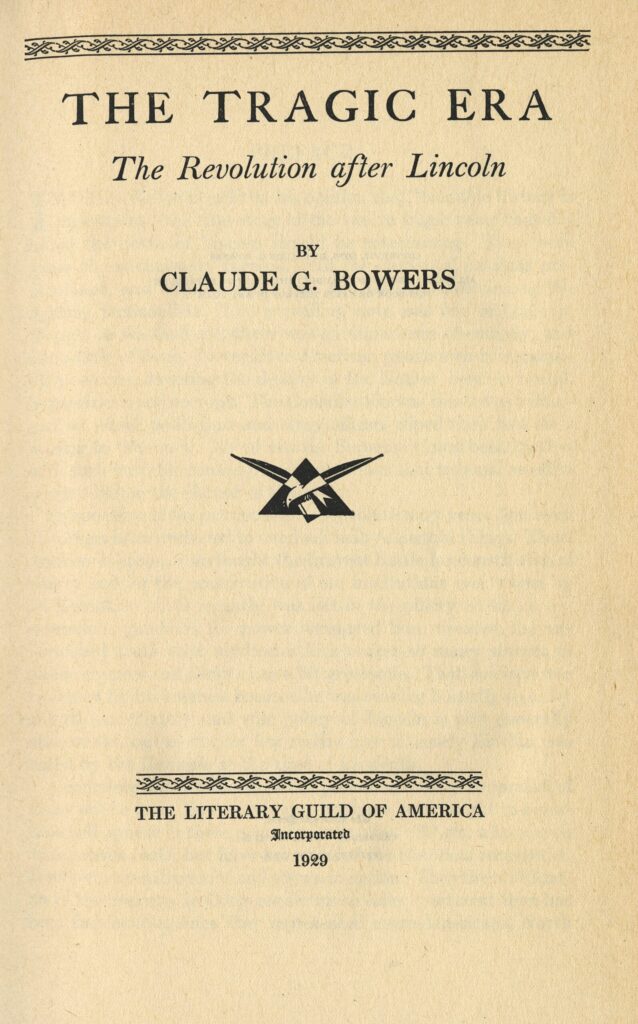
Journalist and politician Claude Bowers publishes a history of Reconstruction called The Tragic Era: The Revolution After Lincoln.
Bowers’ book repeats the Dunning School’s most biased arguments, pairing them with racially charged melodrama like Thomas Dixon’s. It’s selected for recommendation by the Literary Guild.13
1929
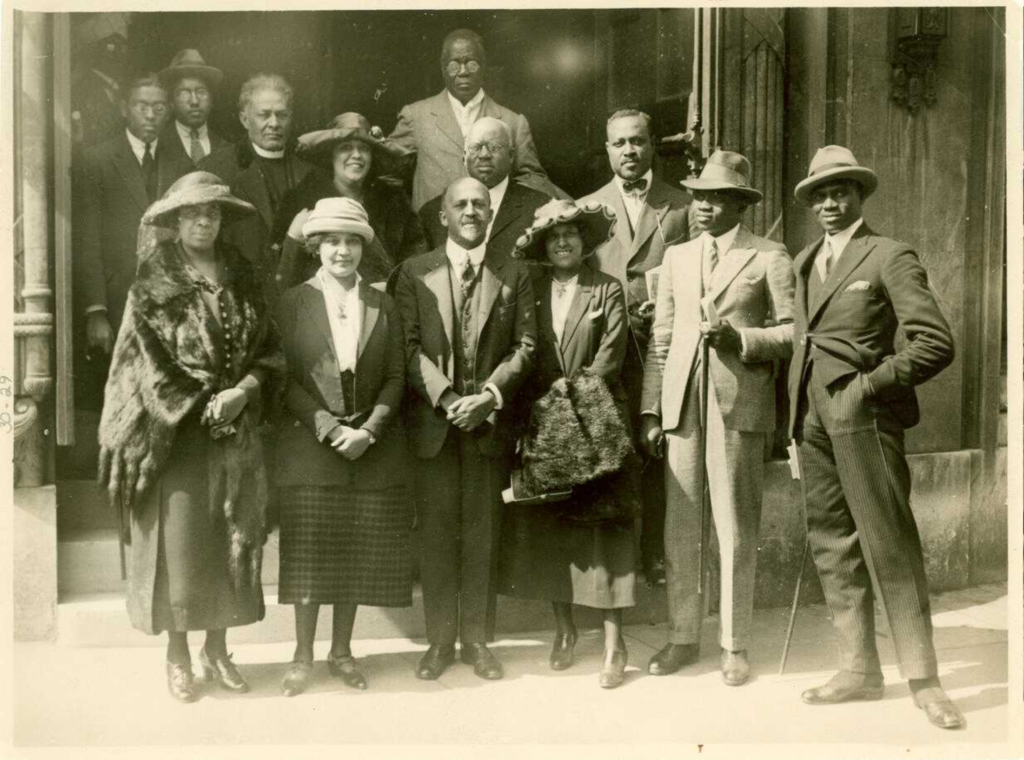
Du Bois starts to write a history of the Reconstruction era.
Spurred on by letters from concerned friends about the popularity of The Tragic Era and still angry at the Encyclopedia Brittanica’s edits, he sets out to write a well-researched history of the Reconstruction era that would prove the Dunning School wrong and highlight the contributions of Black Americans to the United States. It will become Black Reconstruction.
1929
Margaret Mitchell reads The Tragic Era and includes specific passages and arguments from it in the novel that will become Gone With the Wind.
1934
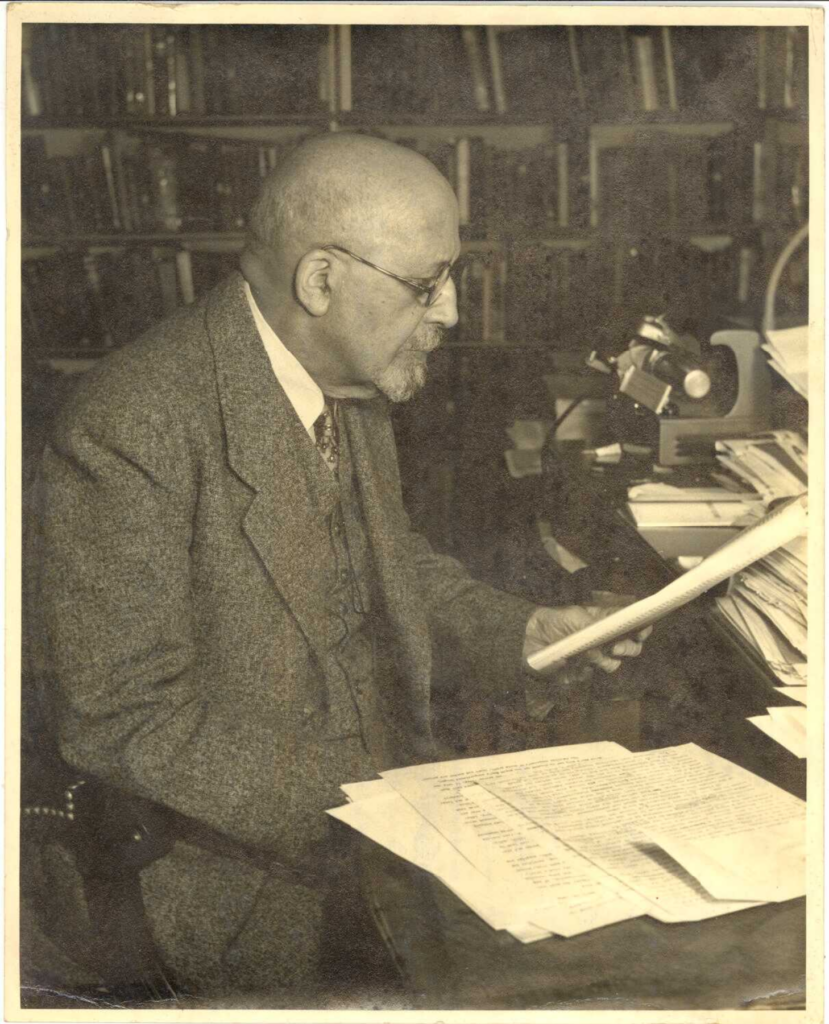
Du Bois returns to Atlanta for his second stint as a professor at Atlanta University.
1935
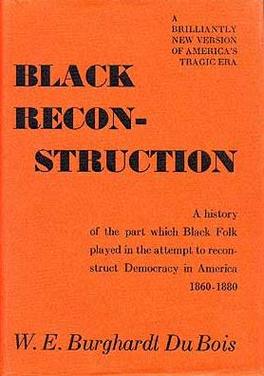
W.E.B. Du Bois publishes Black Reconstruction.
It’s lauded by his Black friends and colleagues, and appreciated by many racially moderate white academics. The New York Times calls it “a stirring, bitterly eloquent brief for the part the American Negro played in the effort to create an egalitarian democracy of black and white alike in the post-Civil War South; […].”14 It’s interesting to academic and activist audiences, but not widely read. It sold only 2,000 copies in the first four years in print.
1936
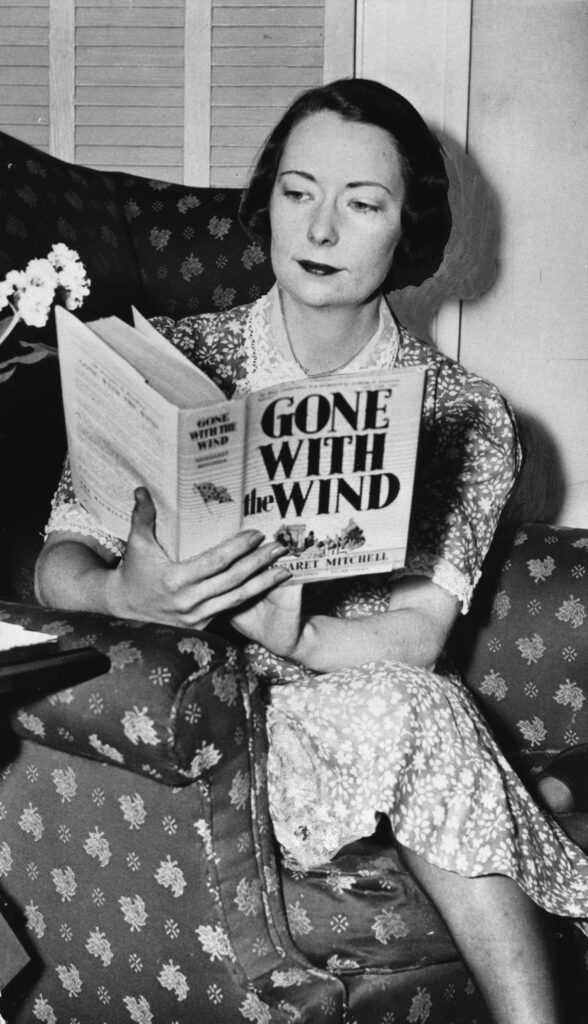
Margaret Mitchell publishes Gone With the Wind.
The novel is applauded for its perceived historical accuracy, and the New York Times reviews it as “beyond a doubt one of the most remarkable first novels produced by an American writer.”15 It sells over one million copies in its first six months in print.
Margaret Mitchell and W.E.B. Du Bois’s life experiences not only changed what they were taught about the Civil War and its aftermath; they changed how the two authors perceived the same materials, like the writings of Thomas Dixon or Claude Bowers.
To Du Bois, a highly trained academic, the history of the Civil War and Reconstruction should not have been based on “flowery romance and the personal reminiscences of [slavery’s] protected beneficiaries” trying to defend themselves and their families thirty or more years after the war. 16
To Mitchell, those same “personal reminiscences” were the trustworthy words and stories of her adored family members and friends. The impassioned and biased words of authors like Myrta Lockett Avary, a Confederate memoirist whose stories about the Civil War Mitchell included word-for-word in Gone With the Wind, felt like fact to her. Du Bois had an entirely different opinion of Avary. One of her books, Dixie After the War was among those he included in the bibliography of Black Reconstruction in order to denounce it as racist propaganda.
Much like Mitchell and Du Bois’s writing processes, the reception of Black Reconstruction and Gone With the Wind after they were published reflected and perpetuated the issues of race that plagued the United States during the Jim Crow era. The fictional, often biased and inaccurate work of a white woman was seen as factual – so factual that some readers believed its characters were real people. The non-fiction, meticulously researched work of a Black man was questioned and presented as biased because its author treated Black historical figures as “average and ordinary human being[s].”17
Margaret Mitchell and W.E.B. Du Bois read the same books, were interested in the same topics, and lived in the same place. But they never overlapped, ideologically or spatially. On the rare occasions their orbits brushed, both reacted with hostility or detachment.
When asked to comment on the popularity of Gone With the Wind and its possible damage to perceptions of the Black community, Du Bois said it was, “conventional provincialism about which Negroes need not get excited.”18 Mitchell, for her part, wrote several letters to her editor Harold Latham, expressing her disdain for “The Communists” who:
“…have been using my book to sweep the Southern Negroes into the Communist Party even as the Abolitionists once used ‘Uncle Tom’s Cabin’ to rally the Northern anti-slavery sentiment. The Communistic papers and many Northern Negro newspapers have denounced the book as ‘an insult to the Nego race – a vilification of the Negro.’ You, knowing my feelings about Negroes, realize the absurdity of this accusation.”19
Du Bois, a passionate and prominent Marxist, was just the sort of “Northern Communist” against whom Mitchell railed. Their closest connections, however, were not comments on each other’s work, but their relationships with two very different men: white supremacist author Thomas Dixon, Jr., and civil rights leader Dr. Benjamin E. Mays.
In 1939, Dixon published another novel that relied on many of the same biased narratives of the Ku Klux Klan and Reconstruction that he had used in The Clansman and The Traitor. This new novel, The Flaming Sword, took its title from a line in Black Reconstruction – and that was far from Dixon’s only reference to Du Bois. In fact, he caricatured the scholar and activist as The Flaming Sword’s central villain, whose wicked writings encouraged Black people to advocate for social equality and therefore free sexual access to white women for Black men.20 Dixon’s book also included extensive quotations from Black Reconstruction, and from Du Bois’s earlier work, The Souls of Black Folk.
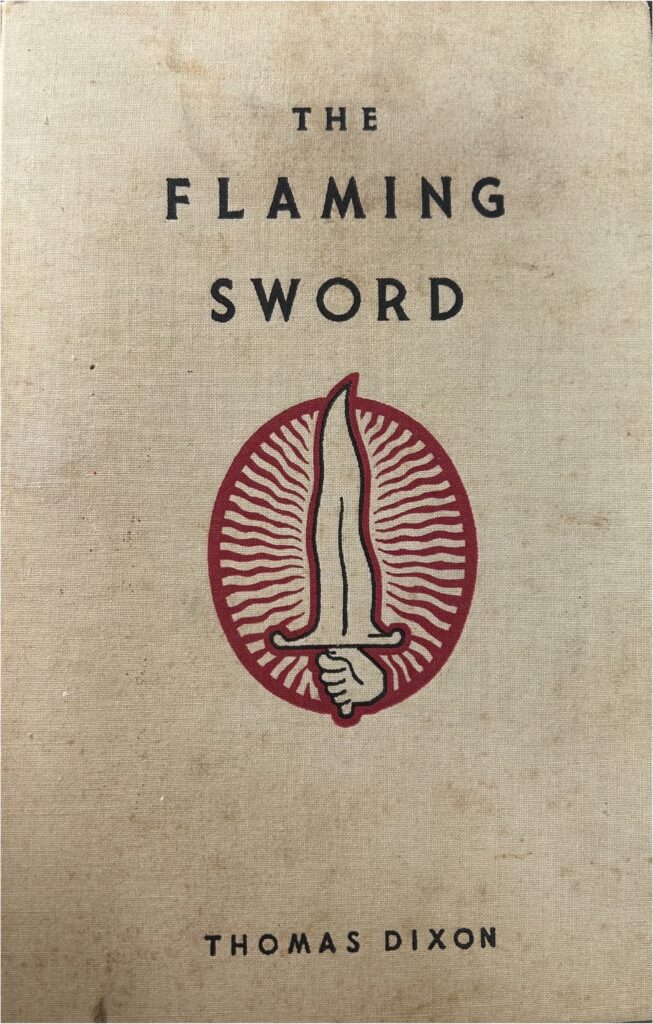
It is very likely that Margaret Mitchell read The Flaming Sword. After Gone With the Wind was published, Dixon wrote to Mitchell to congratulate her on her success. The authors exchanged a few letters, and Mitchell mentioned to Dixon that she was, “most interested to learn, […] that you are at work on “The Flaming Sword” and I hope I will have the pleasure of reading it soon.”21 If Mitchell did in fact read Dixon’s novel, it may have been her only exposure to the work of W.E.B. Du Bois.
Dixon and Du Bois were not correspondents, but both Du Bois and Mitchell exchanged letters with Dr. Benjamin Mays, civil rights activist and president of Morehouse College from 1940 to 1967. Over the course of the late 1940s, at Mays’s urging, Mitchell gave several modest scholarship donations to Black medical students studying at Morehouse. After the death of her laundress, Carrie, showed Mitchell the pitfalls of Atlanta’s underfunded segregated medical system, those donations became a larger yearly scholarship about which Mitchell and Mays occasionally exchanged letters.22
Du Bois likewise donated modestly to Morehouse in the 1940s to help grow the college’s endowment, but his relationship with Mays was far closer.23 Beginning in 1930, the two scholars exchanged notes on Mays’s research and the two attended many of the same parties and receptions while living in Atlanta.24
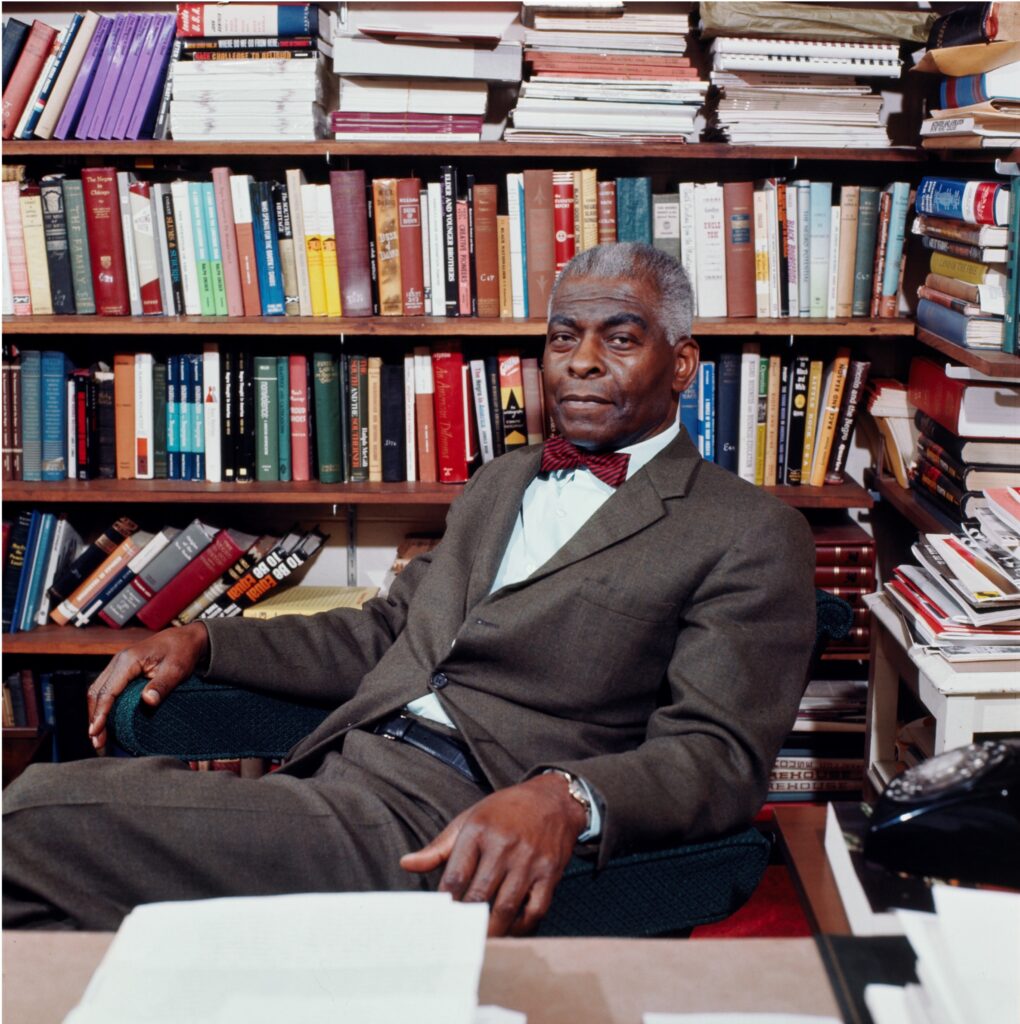
Mitchell and Du Bois both valued Morehouse’s mission, but for reasons that mirrored why Gone With the Wind and Black Reconstruction were so different. For Mitchell, donating to Morehouse was a way of ensuring that Black people like Carrie, trapped in a dysfunctional, segregated system, would have better access to care within that same segregated system.25 For Du Bois, donating to Morehouse was a way to provide Black men with a university education, which he believed was a key part of uplifting the Black community and contributing to the fight for racial equality to which he dedicated his life and career.
The segregated world in which Margaret Mitchell and W.E.B. Du Bois lived constantly changed the way they thought about similar aspects of their lives. Their understanding of the same media, the same periods in United States history, the same people, and the same institutions changed completely depending on the ways segregation impacted their lives and their experiences of their country.
Today, the cultural standings of Gone With the Wind and Black Reconstruction have shifted. While Gone With the Wind remains an icon of popular culture, modern historians widely reject its portrayal of the Civil War and its aftermath. Black Reconstruction, on the other hand, has had an impact that far outpaced its originally modest sales. It now forms the basis of much modern scholarship on the Civil War and Reconstruction.
Key Sources
- Bois, W. E. Burghardt Du. “Reconstruction and Its Benefits.” The American Historical Review 15, no. 4 (1910): 781–99. https://doi.org/10.2307/1836959.
- Du Bois, W. E. B. (William Edward Burghardt). Black Reconstruction in America; an Essay toward a History of the Part Which Black Folk Played in the Attempt to Reconstruct Democracy in America, 1860-1880. With Internet Archive. Cleveland, World Pub. Co, 1964. http://archive.org/details/blackreconstruct00dubo
- Harwell, Richard, ed. Margaret Mitchell’s Gone With the Wind Letters 1936-1949. Macmillan Publishing Co., 1976.
- Mitchell, Margaret. Gone with the Wind. 1964th ed. Macmillan, 1964.
1 – N.C.K., “Red Clay and Red War in the North Georgia Hills,” The Daily Oklahoman, July 19, 1936.
2 – Stephen Vincent Benet, review of Georgia Marches Through, by Margaret Mitchell, The Saturday Review, July 4, 1936.
3 – Margaret Mitchell, “Letter from Margaret Mitchell to Wilbur Kurtz,” November 19, 1935, Margaret Mitchell Papers, Box 46, Folder 60, University of Georgia Special Collections.
4 – Richard Harwell, ed., Margaret Mitchell’s Gone With the Wind Letters 1936-1949 (Macmillan Publishing Co., 1976), 43–44.
5 – Herbert Aptheker, The Literary Legacy of W.E.B. Du Bois (Kraus International Publications, 1989), 221.
6 – W. E. B. (William Edward Burghardt) Du Bois, Black Reconstruction in America; an Essay toward a History of the Part Which Black Folk Played in the Attempt to Reconstruct Democracy in America, 1860-1880, with Internet Archive (Cleveland, World Pub. Co, 1964), 732, http://archive.org/details/blackreconstruct00dubo
7 – Margaret Mitchell, Gone with the Wind, 1964th ed. (Macmillan, 1964), 462.
8 – W. E. B. (William Edward Burghardt) Du Bois, “The Propaganda of History,” in Black Reconstruction in America (Routledge, 2017), 637, https://www.taylorfrancis.com/reader/download/5f08be6c-f958-4fb9-9b6e-373d572c5344/book/epub?context=ubx
9 – W. E. Burghardt Du Bois, “Reconstruction and Its Benefits,” The American Historical Review 15, no. 4 (1910): 781–99, https://doi.org/10.2307/1836959
10 – Margaret Mitchell, “October 3, 1938 Letter from Margaret Mitchell to Thomas Dixon,” October 3, 1938, Margaret Mitchell Papers, Box 21, Folder 89, University of Georgia Special Collections; Margaret Mitchell, “Letter from Margaret Mitchell to Thomas Dixon,” August 15, 1938, Margaret Mitchell Papers, Box 21, Folder 89, University of Georgia Special Collections.
11 – Harwell, Margaret Mitchell’s Gone With the Wind Letters 1936-1949, 5.
12 – Aptheker, The Literary Legacy of W.E.B. Du Bois, 216.
13 – Aptheker, The Literary Legacy of W.E.B. Du Bois, 216.
14 – Aptheker, The Literary Legacy of W.E.B. Du Bois.
15 – J. Donald Adams, “A FINE NOVEL OF THE CIVIL WAR,” The New York Times, July 5, 1936.
16 – Du Bois, “The Propaganda of History.”
17 – Du Bois, Black Reconstruction in America; an Essay toward a History of the Part Which Black Folk Played in the Attempt to Reconstruct Democracy in America, 1860-1880.
18 – Thomas Cripps, Slow Fade to Black (Oxford University Press, Incorporated, 1977), http://ebookcentral.proquest.com/lib/cwm/detail.action?docID=253377
19 – Margaret Mitchell, “June 7, 1937 Letter from Margaret Mitchell to Harold Latham,” June 7, 1937, Macmillan Company Records Author Files, p. 7, New York Public Library Archives.
20 – Thomas Dixon, The Flaming Sword (Monarch Publishing Company, 1939), 20, 26-27.
21 – Mitchell, “October 3, 1938 Letter from Margaret Mitchell to Thomas Dixon.”
22 – Ira Joe Johnson and William G. Pickens, Benjamin E. Mays & Margaret Mitchell: A Unique Legacy in Medicine (FOUR-G Publishers, 1996), Kenan Research Center at Atlanta History Center https://atlantahistorycenter.on.worldcat.org/oclc/36231295
23 – Benjamin E. Mays, “Letter from Morehouse College to W.E.B. Du Bois, December 20, 1940,” December 20, 1940, W.E.B. Du Bois Papers, Series 1A. General Correspondence, Robert S. Cox Special Collections and University Archives Research Center at UMass Amherst, https://credo.library.umass.edu/view/full/mums312-b092-i205
24 – Benjamin E. Mays, “Letter from Benjamin E. Mays to W.E.B. Du Bois, February 23, 1938,” February 23, 1938, W.E.B. Du Bois Papers, Series 1A. General Correspondence, Robert S. Cox Special Collections and University Archives Research Center at UMass Amherst, https://credo.library.umass.edu/view/full/mums312-b086-i110; W. E. B. (William Edward Burghardt) Du Bois, “Letter from W.E.B. Du Bois to Louie Shivery, ca. 1941,” 1941, W.E.B. Du Bois Papers, Series 1A. General Correspondence, Robert S. Cox Special Collections and University Archives Research Center at UMass Amherst, https://credo.library.umass.edu/view/full/mums312-b272-i091
25 – Johnson and Pickens, Benjamin E. Mays & Margaret Mitchell: A Unique Legacy in Medicine, 58–59.
Adams, J. Donald. “A FINE NOVEL OF THE CIVIL WAR.” The New York Times, July 5, 1936.
Aptheker, Herbert. The Literary Legacy of W.E.B. Du Bois. Kraus International Publications, 1989.
Benet, Stephen Vincent. Review of Georgia Marches Through, by Margaret Mitchell. The Saturday Review, July 4, 1936.
Bois, W. E. Burghardt Du. “Reconstruction and Its Benefits.” The American Historical Review 15, no. 4 (1910): 781–99. https://doi.org/10.2307/1836959
Cripps, Thomas. Slow Fade to Black. Oxford University Press, Incorporated, 1977. http://ebookcentral.proquest.com/lib/cwm/detail.action?docID=253377
Dixon, Thomas. The Flaming Sword. Monarch Publishing Company, 1939.
Du Bois, W. E. B. (William Edward Burghardt). Black Reconstruction in America; an Essay toward a History of the Part Which Black Folk Played in the Attempt to Reconstruct Democracy in America, 1860-1880. With Internet Archive. Cleveland, World Pub. Co, 1964. http://archive.org/details/blackreconstruct00dubo
Du Bois, W. E. B. (William Edward Burghardt). “Letter from W.E.B. Du Bois to Louie Shivery, ca. 1941.” 1941. W.E.B. Du Bois Papers, Seris 1A. General Correspondence. Robert S. Cox Special Collections and University Archives Research Center at UMass Amherst. https://credo.library.umass.edu/view/full/mums312-b272-i091
Du Bois, W. E. B. (William Edward Burghardt). “The Propaganda of History.” In Black Reconstruction in America. Routledge, 2017. https://www.taylorfrancis.com/reader/download/5f08be6c-f958-4fb9-9b6e-373d572c5344/book/epub?context=ubx
Harwell, Richard, ed. Margaret Mitchell’s Gone With the Wind Letters 1936-1949. Macmillan Publishing Co., 1976.
Johnson, Ira Joe, and William G. Pickens. Benjamin E. Mays & Margaret Mitchell: A Unique Legacy in Medicine. FOUR-G Publishers, 1996. Kenan Research Center at Atlanta History Center. https://atlantahistorycenter.on.worldcat.org/oclc/36231295
Lewis, David L. W.E.B. Du Bois: The Fight for Equality and the American Century, 1919–1963. Henry Holt and Co., 2000.
Mays, Benjamin E. “Letter from Benjamin E. Mays to W.E.B. Du Bois, February 23, 1938.” February 23, 1938. W.E.B. Du Bois Papers, Seris 1A. General Correspondence. Robert S. Cox Special Collections and University Archives Research Center at UMass Amherst. https://credo.library.umass.edu/view/full/mums312-b086-i110
Mays, Benjamin E. “Letter from Morehouse College to W.E.B. Du Bois, December 20, 1940.” December 20, 1940. W.E.B. Du Bois Papers, Seris 1A. General Correspondence. Robert S. Cox Special Collections and University Archives Research Center at UMass Amherst. https://credo.library.umass.edu/view/full/mums312-b092-i205
Mitchell, Margaret. Gone with the Wind. 1964th ed. Macmillan, 1964
Mitchell, Margaret. “June 7, 1937 Letter from Margaret Mitchell to Harold Latham.” June 7, 1937. Macmillan Company Records Author Files. New York Public Library Archives
Mitchell, Margaret. “Letter from Margaret Mitchell to Thomas Dixon.” August 15, 1938. Margaret Mitchell Papers, Box 21, Folder 89. University of Georgia Special Collections.
Mitchell, Margaret. “Letter from Margaret Mitchell to Wilbur Kurtz.” November 19, 1935. Margaret Mitchell Papers, Box 46, Folder 60. University of Georgia Special Collections.
Mitchell, Margaret. “October 3, 1938 Letter from Margaret Mitchell to Thomas Dixon.” October 3, 1938. Margaret Mitchell Papers, Box 21, Folder 89. University of Georgia Special Collections.