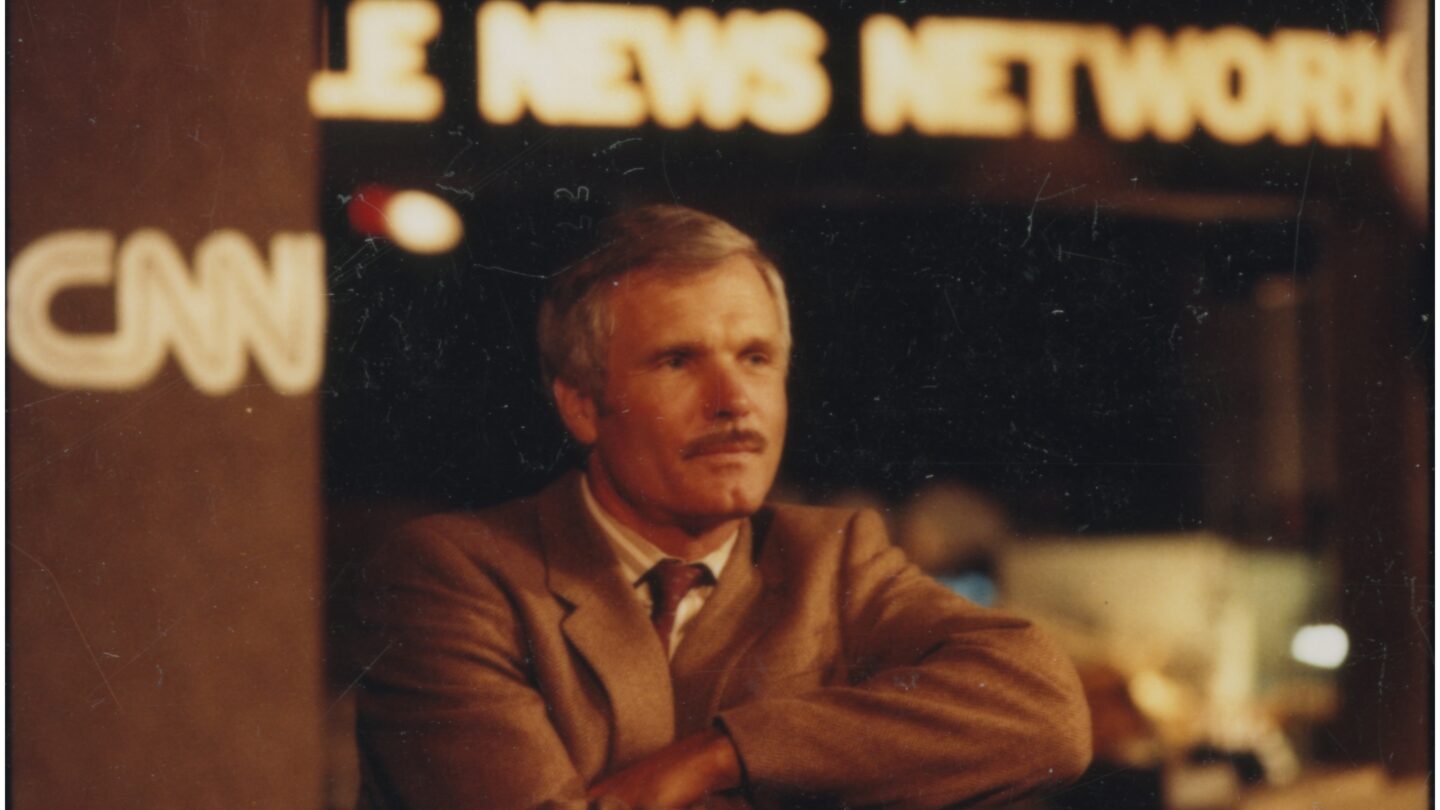
Ted Turner at CNN headquarters in Atlanta, circa 1980. Cotten Alston Photographs, Atlanta History Center.
Robert Edward “Ted” Turner III, who passed away on May 6, 2026 at the age of 87, transformed Atlanta into a media capital of the world. From inheriting a struggling billboard company to founding CNN—the world’s first 24-hour global news network—Turner’s ambition and Atlanta’s were perfectly matched, an embodiment of the “Atlanta spirit.”
Turner was a freewheeling entrepreneur who conquered oceans, built a television empire, became one of the the nation’s largest private landowners, and donated a billion dollars to the United Nations—all in a single lifetime. As his longtime friend and former CNN president Tom Johnson observed, Turner, “was a maverick, and being controlled by others simply did not suit him. He was accustomed to being captain of his own ship.”
March 5, 1963
Rescues his family business in his first venture
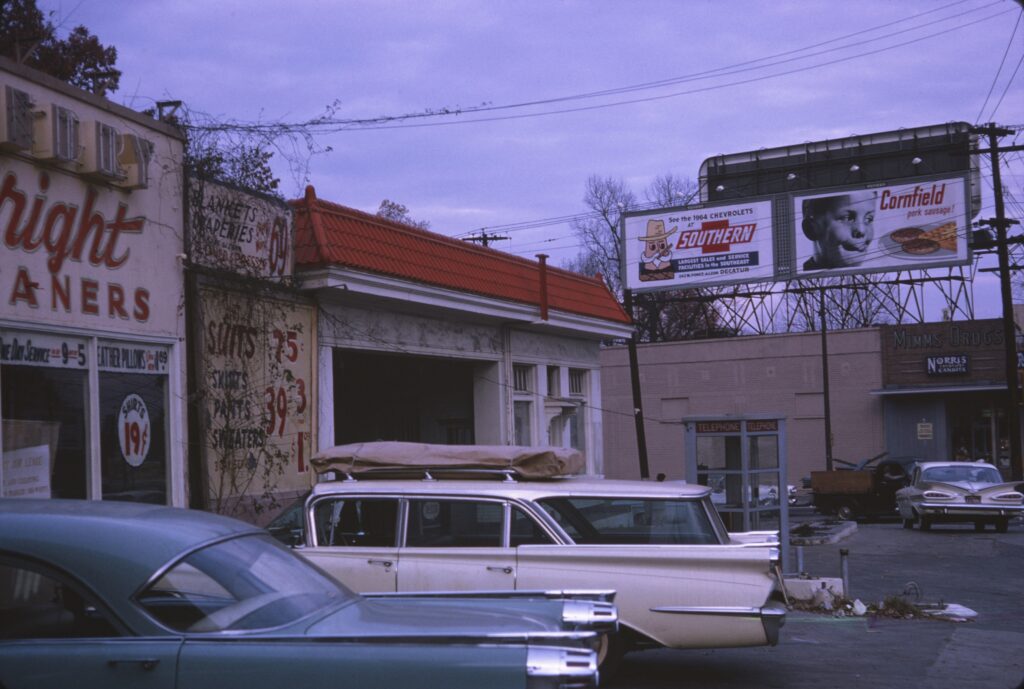
After his father’s sudden death, 24-year-old Ted Turner took over Turner Advertising—a struggling , debt-ridden regional outdoor advertising company based in Macon, Georgia. Turner threw himself into running the business, eventually building it into the largest billboard company in the South.
January 1, 1970
Buys a struggling UHF station on Channel 17
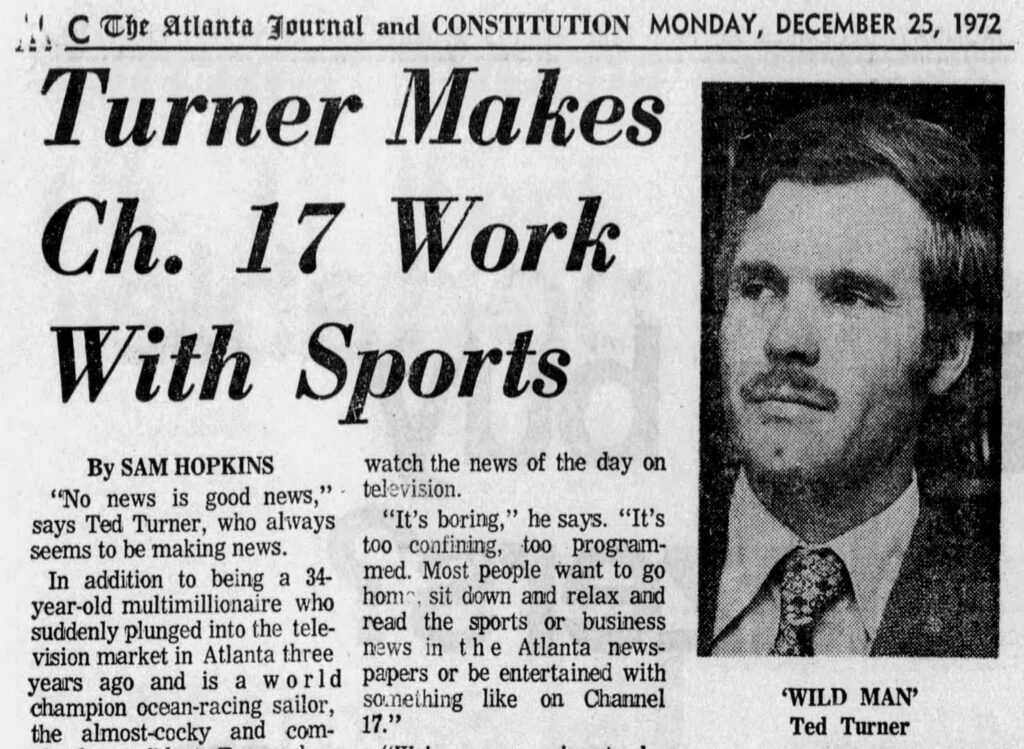
Eager to diversify beyond billboards into something more exciting, Turner set his sights on television. He purchased WJRJ, a small, financially troubled ultra-high frequency (UHF) station in Atlanta that specialized in broadcasting reruns and cartoons. Turner renamed the station WTCG—Turner Communications Group—and shrewdly bought the broadcast rights to old movies and classic TV shows outright, allowing him to air them repeatedly at low cost. The strategy worked and within two years WTCG was one of the few profitable independent stations in the country.
January 3, 1976
Buys the Atlanta Braves
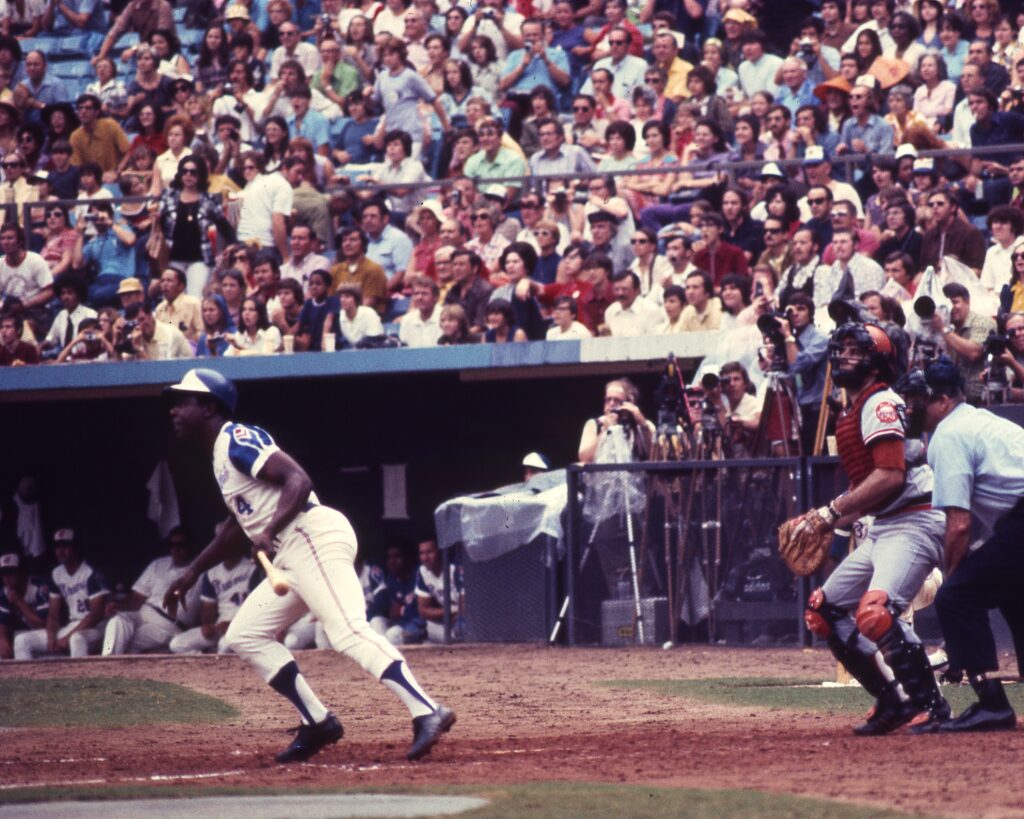
With the team bleeding money, attendance at time low, and relocation to Toronto a real possibility, Turner stepped in and purchased the Atlanta Braves for $10 million to keep them in Atlanta and anchor WTCG’s programming. As media consultant Al Dresser later observed, “what Turner bought was not just a baseball team, it was an incredibly popular [television] series that could run 150 times a year.”
In a brazen advertising stunt during during the 1976 midseason, Turner put new pitcher Andy Messersmith in a uniform bearing the number “17” and the nickname “Channel” stitched onto the nameplate—a move that drew a rebuke from National League President Chub Feeney but earned Turner and his station national headlines.
December 16, 1976
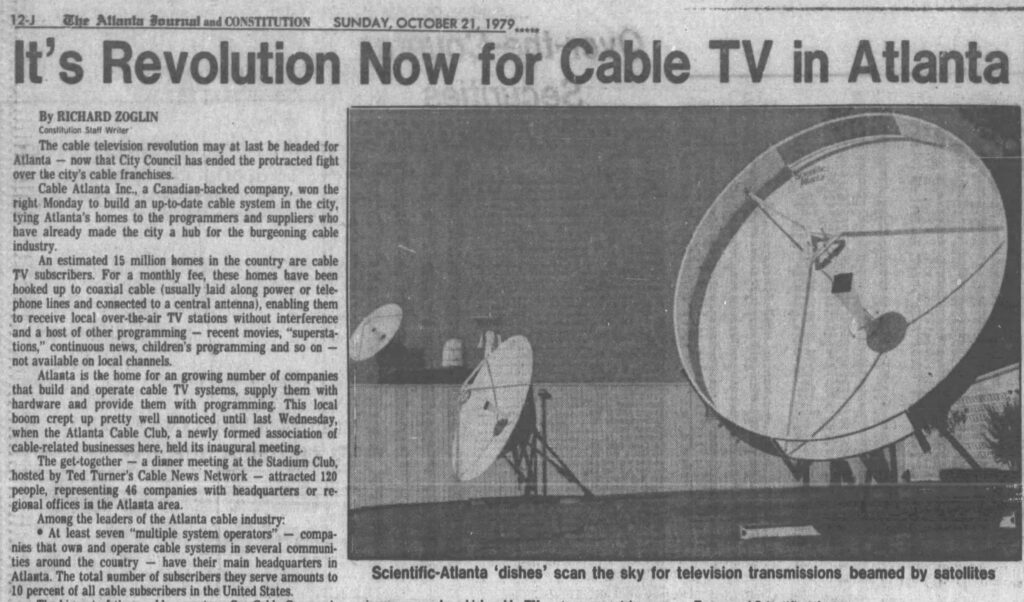
Launches the nation’s first “superstation”
Turner launched the nation’s first “superstation,” using satellite technology to beam WTCG’s signal from Atlanta to cable systems across the country. By bypassing costly long-distance transmission networks controlled by AT&T, Turner made broadcasting to a national audience accessible to smaller operators and helped pioneer the modern cable network.
With Atlanta Braves games at the core of its programing, the station transformed a regional franchise into a national phenomenon. Within three years, viewers from Alaska to Florida had become devoted fans of the Braves, who quickly earned the nickname “America’s Team.”
In 1979, WTCG was renamed WTBS to reflect the company’s new name, Turner Broadcasting System (TBS).
January 28, 1977
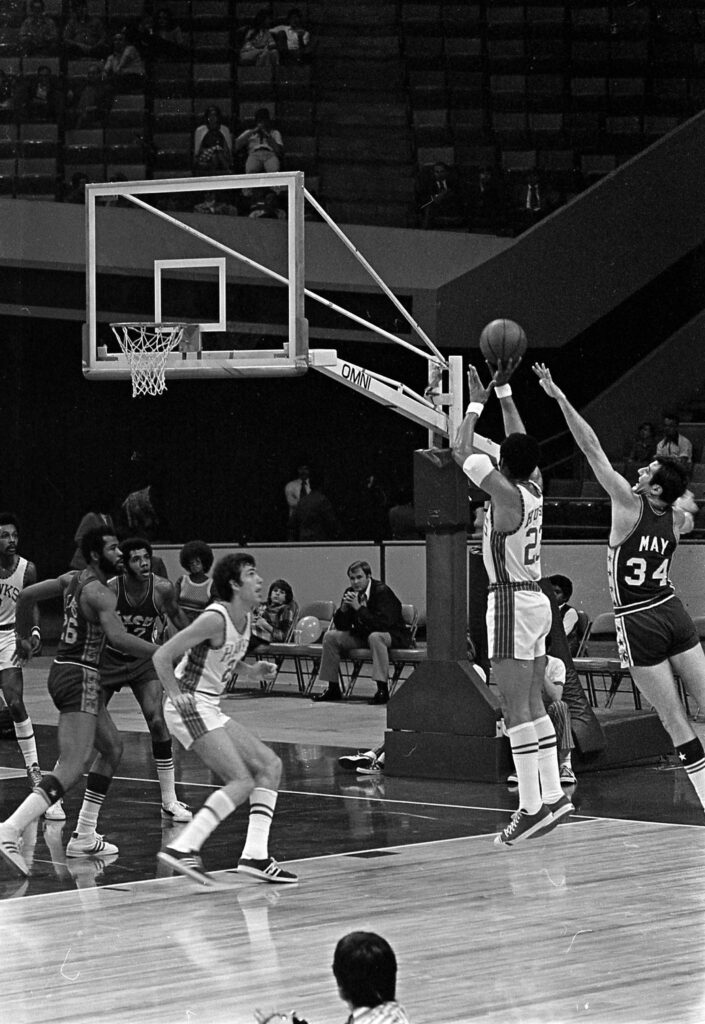
Adds the Atlanta Hawks to his roster
A year after purchasing the Braves, Turner acquired the NBA’s Atlanta Hawks to keep the team from moving out of the city, making him the rare owner of two major professional sports franchises in the same city. For the next two decades the Hawks played at the Omni, the arena complex that would later be home to the CNN Center.
June 1, 1980
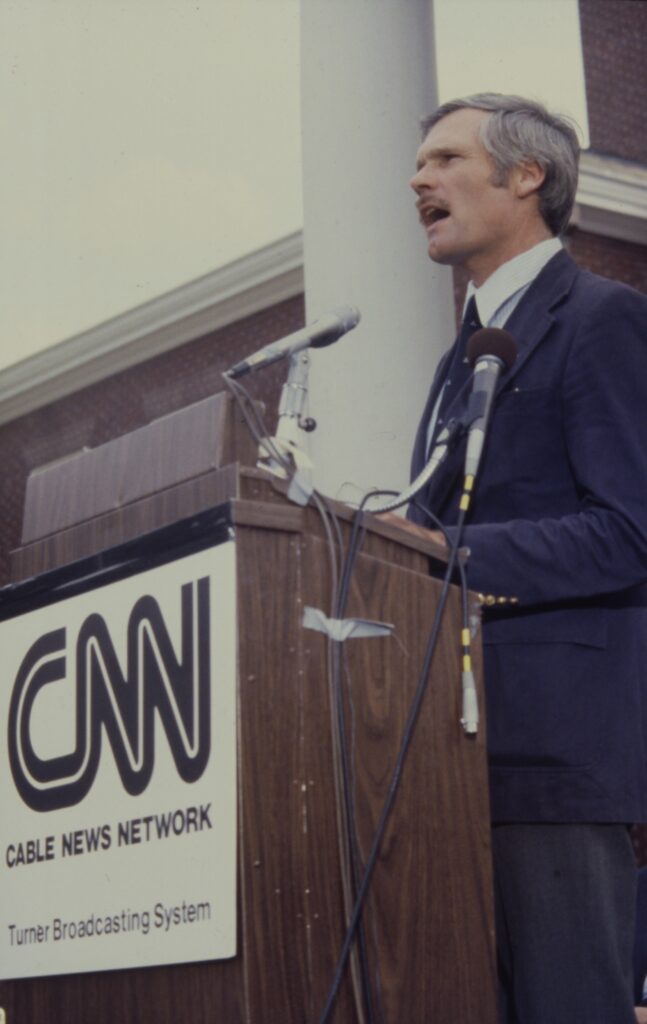
Cable News Network (CNN) begins broadcasting from Atlanta.
Convinced that no one had yet figured out how to make news compelling on television, Turner launched CNN, the world’s first 24-hour all-news television network. He described the concept as “A newspaper you can watch.” The live, round-the-clock format offered viewers a more direct, unedited, and instantly available presentation of the news than the traditional networks provided.
CNN operated from 1050 Techwood Drive, a 21-acre property near Georgia Tech that Turner had purchased for $4.2 million in 1979. The building had a rich history as the former home of the Progressive Club, a Jewish social organization established in 1913.
March 25, 1986
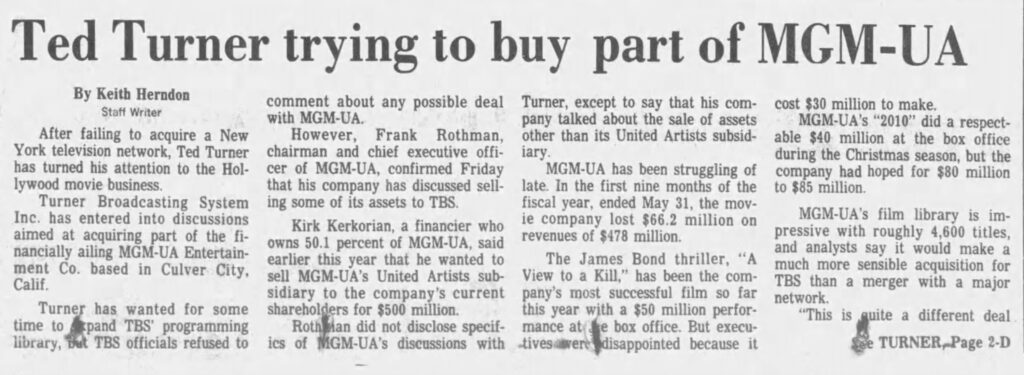
Acquires MGM/UA Entertainment and its film library
Turner paid $1.5 billion for MGM/UA Entertainment Company, a deal that plunged him $1.9 billion in debt with interest payments of nearly $1 million a day. When critics questioned the price, Turner cited the enduring value of the classic films, the programming security they offered, his fear of being outbid, and his dislike for haggling. The financial strain forced him to quickly sell off MGM/UA itself, though he retained the MGM film library, which included more than 4,000 films such as Casablanca, The Wizard of Oz, and Gone with the Wind. A massive fan of the Atlanta-set epic, Turner called Gone With the Wind “the greatest movie ever made” and aired it regularly on TBS.
1987
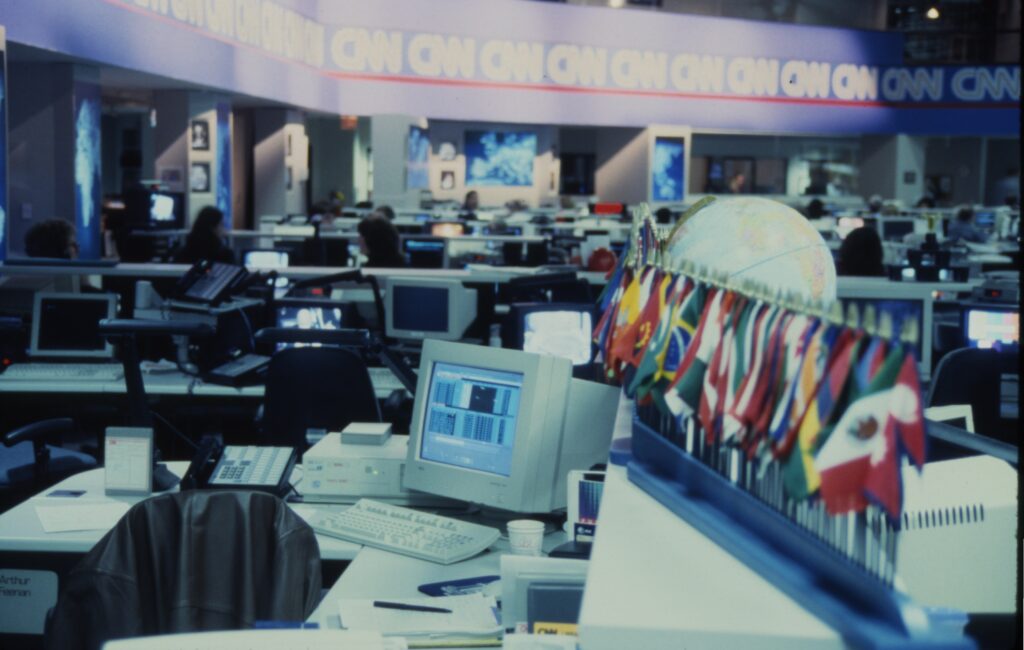
Opened CNN Center
In 1985, TBS purchased the Omni International Complex, a massive mixed-use development in downtown Atlanta. By 1987 the acquisition was complete and the facility was renamed CNN Center. It was home to CNN, Headline News, CNN Radio, and TBS’s corporate offices. The building , with its massive red CNN letters, became one of the most recognizable buildings in Atlanta, a major tourist destination, and a symbol of the city’s growing prominence as a media capital.
January 6, 1992
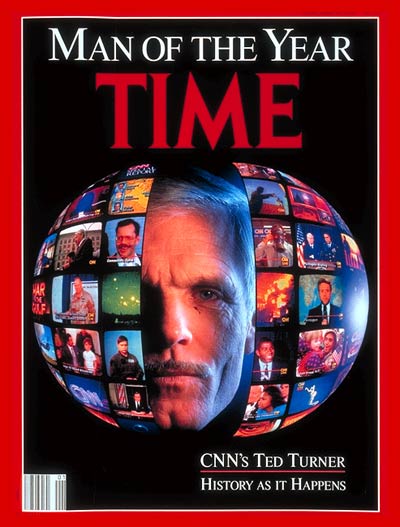
Named Time Magazine’s “Man of the Year”
Recognized for his global influence, Turner was named Time’s “Man of the Year” following CNN’s exhaustive live coverage of the Gulf War, which had fundamentally changed the way the world consumed news.
1997
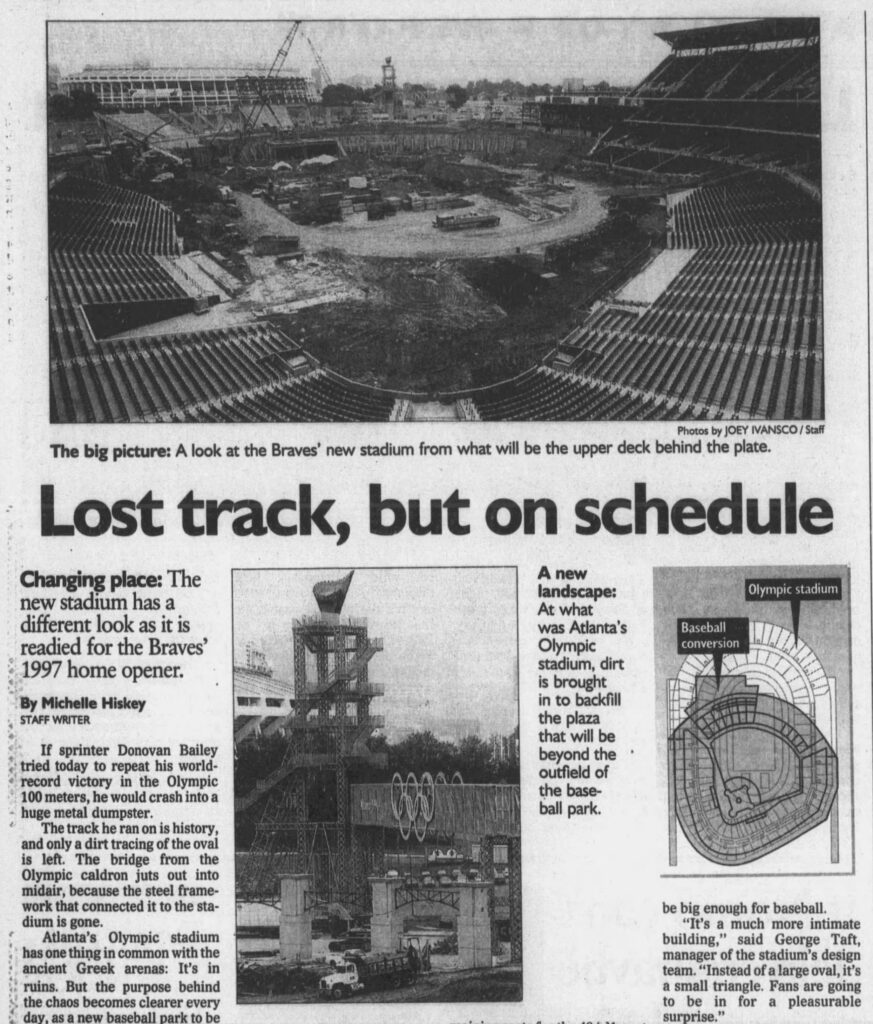
Turner Field named in his honor after the Olympics
Centennial Olympic Stadium, built for the 1996 Summer Olympics, was converted into a 50,000-seat baseball facility for the Braves and renamed Turner Field. The transformation required removing much of the stadium’s north end, shrinking an 85,000-seat enclosed venue into an open-air ballpark. Turner Field served as the home of the Atlanta Braves from 1997 to 2016, when the team relocated to Truist Park in Cobb County. Today, it is home to Georgia State’s football program.
September 18, 1997
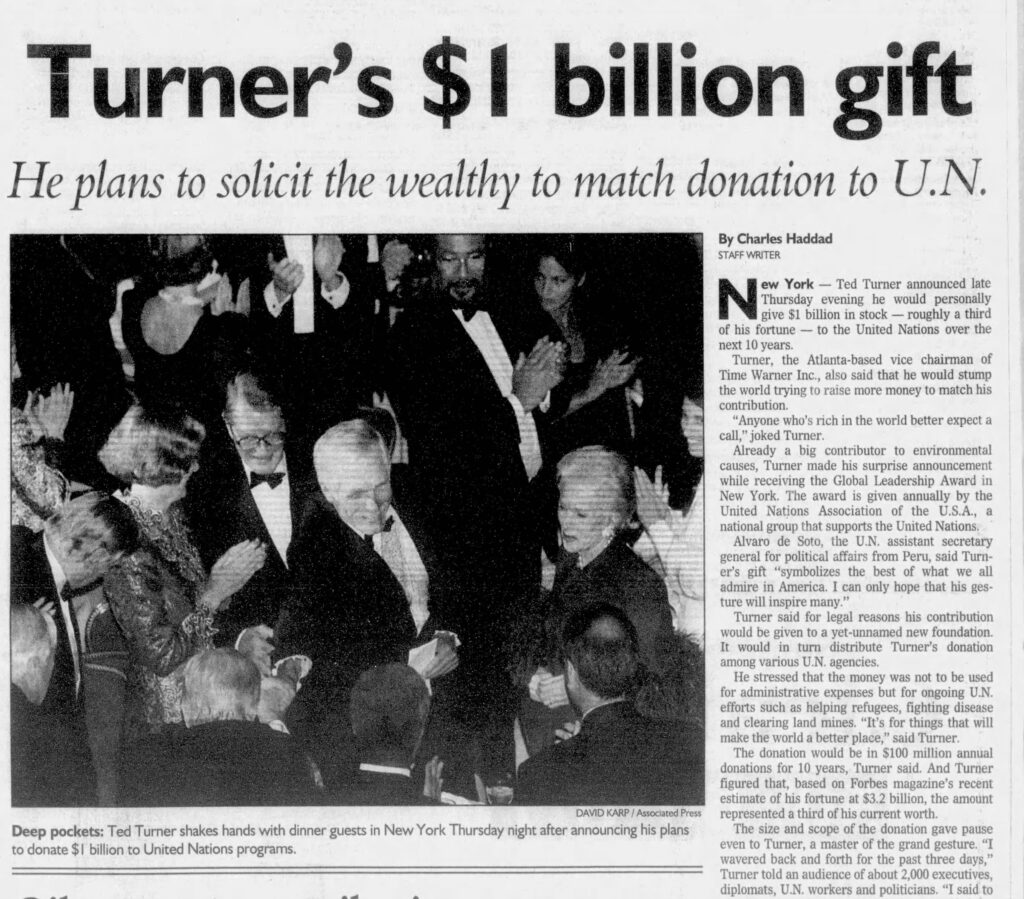
The $1 Billion Gift to the United Nations
Turner stunned a gala audience by announcing a $1 billion donation to the United Nations—the largest private gift in the organization’s history. Because individuals could not donate directly to the UN, he created the United Nations Foundation to manage the gift and support global peace and health initiatives.
January 2002
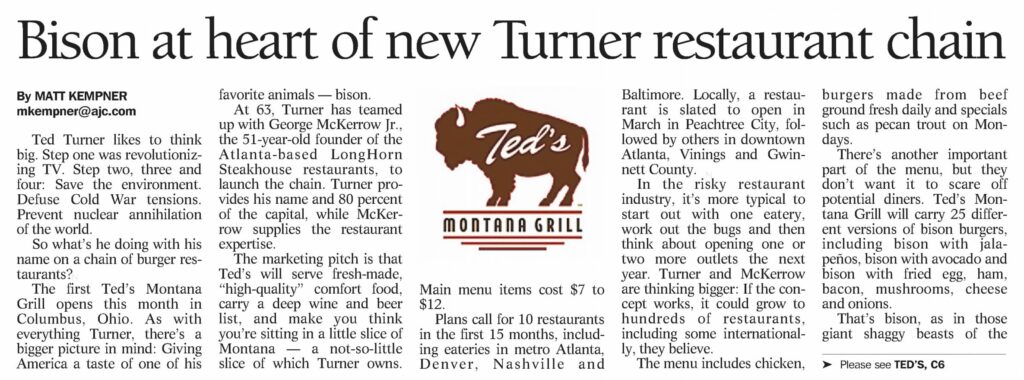
Ted’s Montana Grill opens
Continuing his post-media career as a conservationist, Turner co-founded Ted’s Montana Grill with Atlanta restaurateur George McKerrow Jr., founder of Longhorn Steakhouse. Built around bison burgers and eco-friendly practices, the chain established its headquarters in the historic Bona Allen building on Luckie Street and continues to promote bison restoration.
July 21, 2015
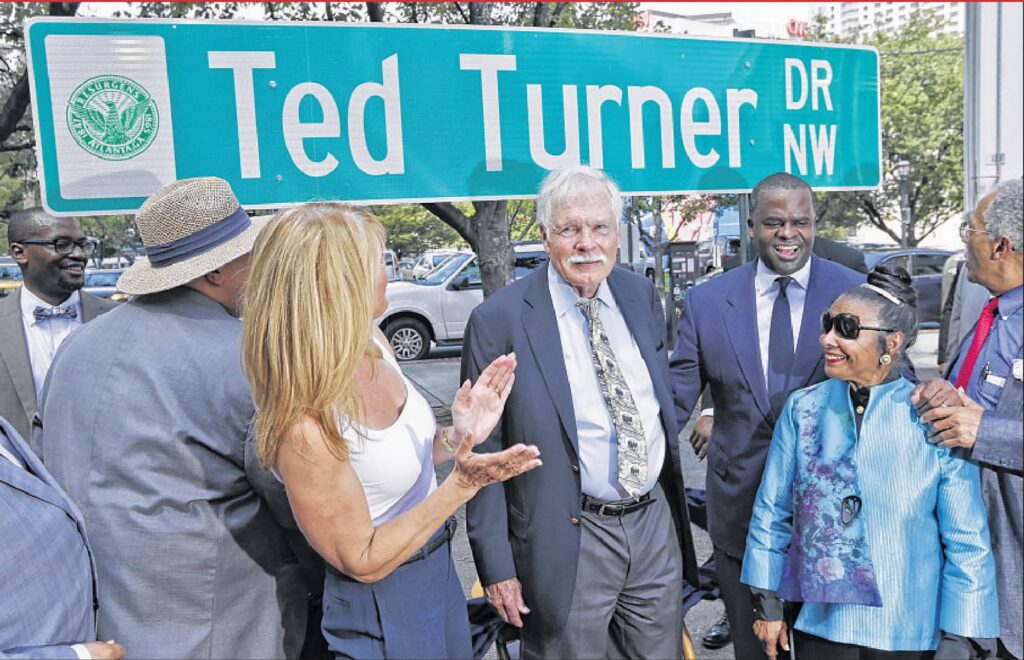
Spring Street becomes “Ted Turner Drive”
The Atlanta City Council renamed eleven blocks of Spring Street near where Turner established some of his most prominent business endeavors, running past the CNN Center and Turner’s Luckie Street building. At the ceremony, councilmember C.T. Martin called Turner “an indelible part of the fabric of Atlanta.” Turner remarked “This has been my hometown since I was a little boy.”